
Source U.S. Fish & Wildlife Service
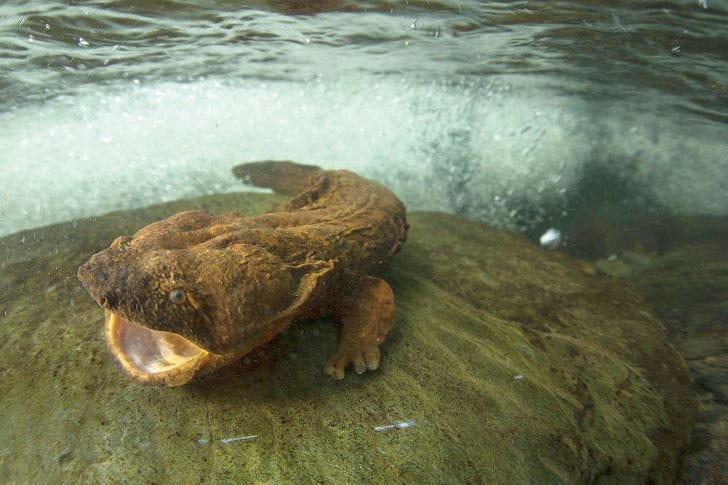
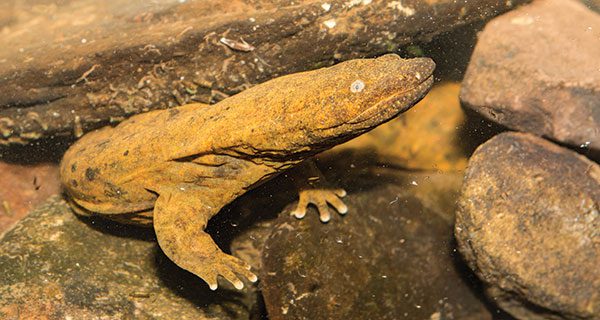
The U.S. Fish and Wildlife Service has announced a proposal to list the eastern hellbender as an endangered species throughout its entire range under the Endangered Species Act. The large, fully aquatic salamander is found in parts of Alabama, Georgia, Illinois, Indiana, Kentucky, Maryland, Mississippi, Missouri, New York, North Carolina, Ohio, Pennsylvania, Tennessee, Virginia, and West Virginia.
“The eastern hellbender is a unique salamander that plays a crucial role in maintaining healthy freshwater ecosystems,” said Will Meeks, the Service’s Midwest Regional Director. “As key indicators of stream and river health, hellbenders need protection that also will help support healthier ecosystems across their range.”
Historically, eastern hellbenders were documented in 626 populations, but recent surveys show only 371 populations—about 59 percent—still remain. Of those, just 45 populations (12 percent) are considered stable. Another 108 populations have an unknown recruitment status, while 218 populations, or nearly 60 percent, are in decline.
The eastern hellbender is one of two hellbender subspecies in the United States. The Ozark hellbender, found in Missouri and Arkansas, was listed as endangered in 2011. More recently, the Missouri distinct population segment of the eastern hellbender received endangered status in 2021.
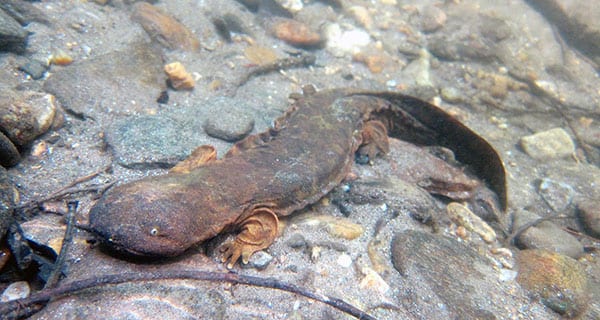
Hellbenders are the largest salamanders in North America, reaching lengths of up to 29 inches and living as long as 30 years. They spend their entire lives in cool, clean, fast-flowing streams and rivers, sheltering beneath large, flat rocks on the streambed. Because hellbenders breathe through their skin, which is folded to maximize oxygen absorption, water quality is critical to their survival. Major threats include sedimentation, declining water quality, disease, habitat loss, and illegal collection for the pet trade.
If listed as endangered, the eastern hellbender would receive protections under the Endangered Species Act, including prohibitions on “take,” which covers harming, harassing, capturing, or killing the species. The listing would also require federal agencies to consult with the U.S. Fish and Wildlife Service to ensure their actions do not jeopardize the species’ survival.
The proposal will be published in the Federal Register on December 13, opening a 60-day public comment period. Instructions for submitting comments are available at regulations.gov by searching docket number FWS–R3–ES–2024–0152.
RELATED STORIES: HAVE YOU SEEN A HELLBENDER?
