

If you grew up on the West Central Gulf Coast of Florida, chances are you fished from a deep-sea fishing boat, also known as “party boats” or “head boats”. In the late 1970s and early 1980s, I would do odd jobs around the neighborhood to save up for the $20 fee it cost to fish either the Two Georges or Miss Milwaukee that launched from the Tarpon Springs Sponge Docks every morning at 8 a.m. For a 10-year-old who couldn’t get enough saltwater, this was the mountaintop.
These large, deep-sea fishing boats cater mostly to tourists but attract regulars and locals as well. They provide a public vessel that takes many anglers offshore to fish, offering an affordable and accessible alternative to a private charter. Many of these businesses rely on a sustainable grunt fishery.
Key West Grunts, White Grunts, or simply grunts, are relatively easy to catch when anchored over nearshore to offshore hard bottom. They are commonly found in large schools in 25-125 ft. of water, and will eat shrimp, squid, cut bait, etc. Averaging 8-18”, they aren’t monsters, but what they lack in size, they make up for with their delicious, flaky white filets. They’re great table fare no matter how cooked, but you can’t go wrong frying them, which is the most common method. 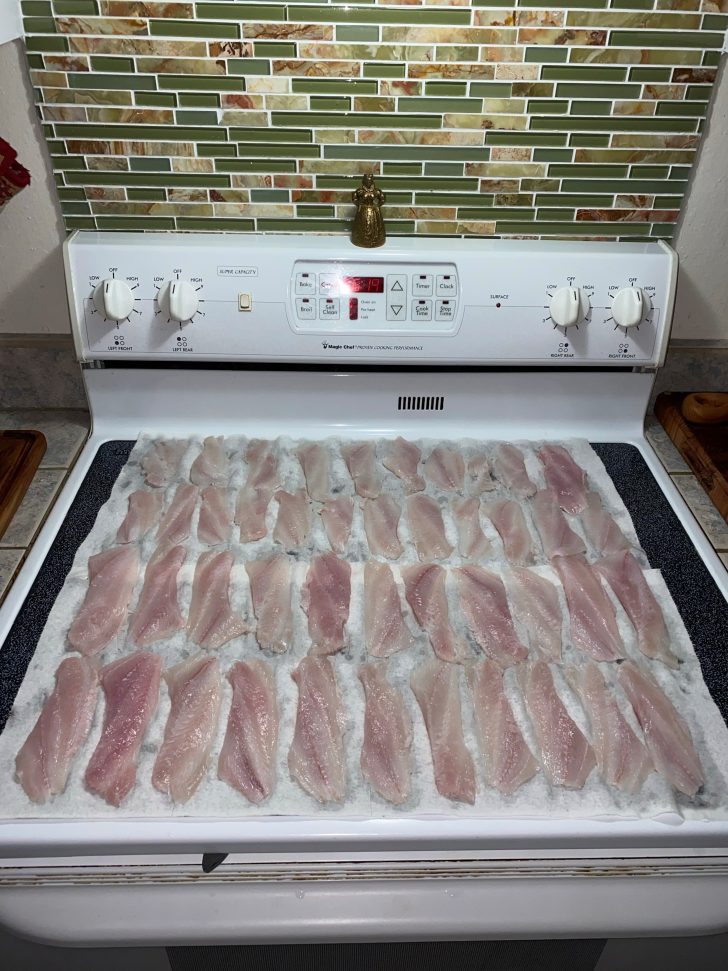
Fast forward from childhood to today, and grunts are still on the menu. Due to the many local county artificial reef programs, you can find grunts on these man-made structures in most bays and nearshore Gulf waters. Squid is still the bait of choice, and you will usually find them mixed in with sheepshead and mangrove snapper. Even if they’re not your target species, catching grunts on light to medium spin tackle is fun for everyone on the boat and guarantees a good meal.
White grunts are an unregulated species in Florida with no minimum size limit and no daily bag limit. The season is year-round, and legal gear includes hook-and-line, spear, and cast net. One local exception is in Biscayne National Park, where a minimum size of 8” applies, and that is part of a 10-fish aggregate bag limit. Note – if you read the FWC regulations carefully, there is what is known as a “default bag limit for unregulated species”. In this case, for grunts, the limit is 100 pounds regardless of the number of fish it takes to reach that total weight.
I highly recommend adding grunt fishing to your repertoire, especially when it comes to introducing kids and beginners to saltwater fishing. It’s fun, relatively easy, and they’re delicious. And maybe best of all, you don’t need an offshore boat or even a bay boat to get in on the action. A small, seaworthy skiff is all it takes to reach productive nearshore bottom. With a decent sonar, GPS spot-lock trolling motor, or traditional metal anchor, it’s fairly easy to find a nice patch of rock or artificial reef holding grunts.