


By: Caitlyn Gatrell
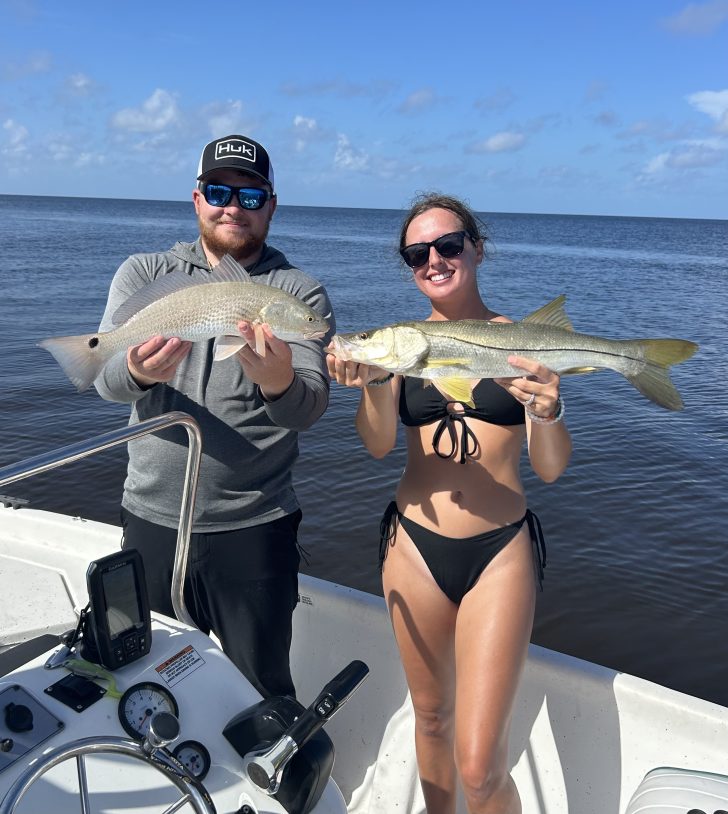 July is one of my absolute favorite months of the year to fish in Southwest Florida. Sure, the heat can be relentless, and the afternoon thunderstorms can pop up like clockwork. But, it’s truly some of our most exciting fishing opportunities during the heart of summer.
Our waters really become alive during this mid-year season. Wildlife like dolphins and birds are seen playing around nature’s playground. Beautiful sunrises and sunsets paint the sky with gorgeous hues, making some of the prettiest sceneries.
Tarpon season remains in full swing, where I’ve spent early mornings and later evenings watching these fish roll across the surfaces. While the major migration may have already pushed through, there are still plenty of tarpon around our beaches, passes, mangroves and deeper channels and cuts. If you’ve ever witnessed a silver king launch itself completely out of the water chasing bait, you know exactly why so many anglers look forward to this season.
July also marks the peak of snook spawning season in our area, and we have lots of opportunities to hook up to some big ones. Sometimes they’re stacked at our honey holes, can be sight casted, or they can pop out of nowhere even. Even when I’m targeting other species, it’s hard not to appreciate the sight of a large snook and want to try and catch them. I have still yet to enter the 40in club for snook and it’s one of my biggest fishing bucket list items!
Other smaller species are out and about during the summer, including the popular mangrove snapper that inhabit many habitats here in SWFL. July is a fun time to catch a few and harvest them, making a yummy summer dinner, especially as these fish have a continuous open harvest. Trout and redfish are also caught commonly during the summer here, providing more gamefish that can make a fishing trip even better.
Summer fishing in Southwest Florida comes with one major factor that every angler learns to respect–the weather. Afternoon thunderstorms are simply part of life this time of year, sometimes occurring daily. Matter of fact, as I write this, we’ve been in a period where it rained every afternoon the whole last week.
If you don’t mind the rain, it’s rewarding to fish directly after the storm, or even during one if it’s safe enough. A good rain can cool down the water, create moving currents, provide pressure changes that fire up fish, and concentrate bait around certain areas. But, if that’s not your cup of tea, early morning trips and being off the water before the afternoon are usually drier.
While July may test our tolerance for heat and humidity, it also offers some of the best fishing of the year. Between the rolling tarpon, spawning snook, active inshore life, and ever-changing weather patterns, there’s never a dull day on the water. I’m gearing up for my next trip now as we finish this article! Tight lines to all!