
Tips From A Pro
By Tyler Woolcott
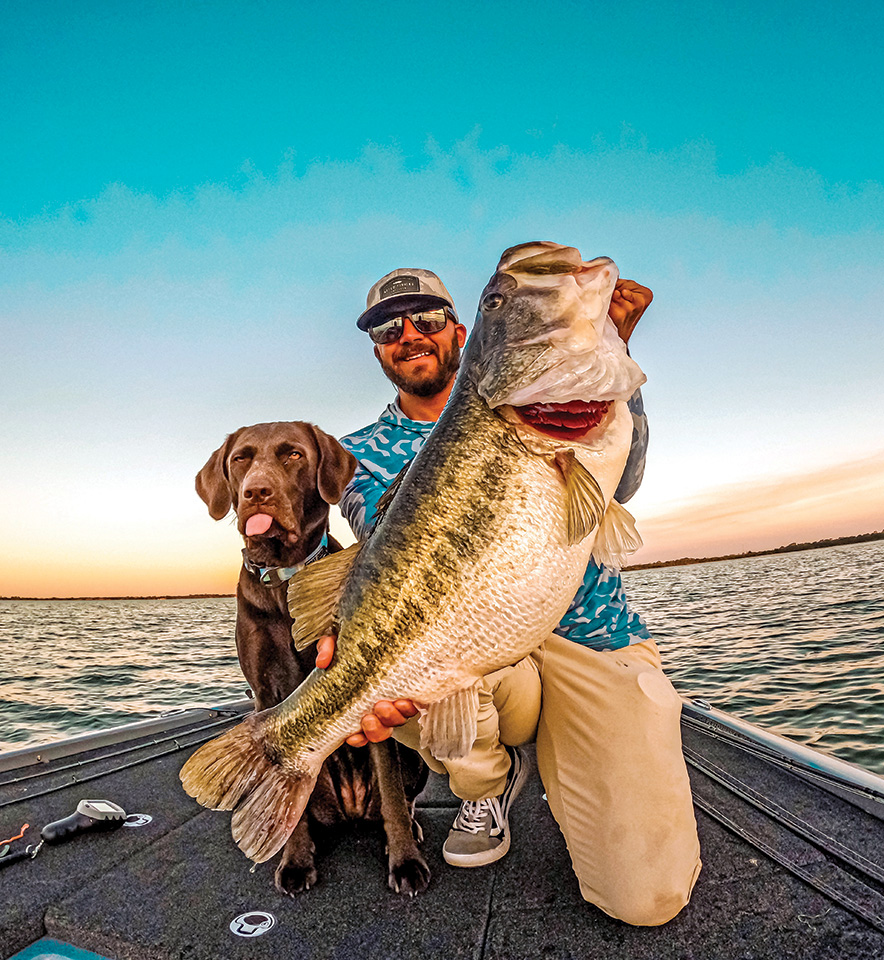
While there are many ways to target bass, one method consistently stands out—fishing with a big worm.
Worm fishing may not be the flashiest technique, but it allows you to present your bait from a distance and work it slowly—ideal for tempting big, cautious females that ignore faster presentations.
One of my go-to techniques is casting a Texas-rigged stick bait. It’s a common tactic, but many anglers waste time casting at dead water. I focus on high-percentage areas, such as isolated patches of grass or lily pads. Even when the fish aren’t visible, they often hold tight to this type of cover. Similar results can be achieved by targeting wood or rock. Make multiple slow retrieves through these areas for best results.
I prefer a larger 6” stick bait in dark colors like black and blue tip. For weights, 1/16 or 1/8 oz keeps the presentation subtle and natural. I recommend 17–20 lb fluorocarbon, which offers strength without sacrificing stealth—braid can be too intrusive here.
To cover more water and locate active fish, I switch to a big speed worm. While it’s a popular technique in Florida, where I predominantly fish, it works well across the country. The bait’s vibration drives bass crazy, making it an excellent search tool. Once I find fish with this method, I slow down and fine-tune my approach with other techniques.
For stained water, I like darker colors like junebug; for clearer water, I use green pumpkin with flake. Weight ranges from 1/8 to 1/4 oz depending on depth and wind. Fluorocarbon in the 15–17 lb range is ideal here too.
Another effective presentation is the wacky rig. It’s a more subtle approach and shines in pressured waters. Like with the Texas rig, I cast this bait weightless to isolated cover. I use lighter line and a spinning setup—typically 10–15 lb leader—adjusting based on cover density. In dirty water, I stick to dark colors; in clearer water, I go with more natural tones.
Flipping a worm is another technique I use, especially when there’s a lot of heavy cover. While not as stealthy, flipping allows you to place the bait precisely where other rigs can’t reach. I use large Senko-style baits, braided line, and heavier weights (3/8 to 3/4 oz) to penetrate thick vegetation. It’s perfect for pads, long banks, and heavy wood or grass. The key is to fish slowly and thoroughly, putting your bait where others haven’t.
Rod and reel setups vary slightly depending on the technique. For most casting and flipping styles, I like a longer rod—around 7’6”—with medium-heavy to heavy action. The 13 Fishing Omen Series has a few ideal models. I pair these with a high-speed baitcasting reel like the Concept A 7.5:1, which helps pull fish out of thick cover quickly.
For the wacky rig, I downsize to a 7’3” medium-heavy spinning rod. It offers enough backbone to move fish but also provides the sensitivity and flexibility needed when using lighter line. A spinning reel with a smooth drag is crucial. I recommend the 13 Fishing Axum, which offers the control and power necessary for finesse fishing around cover.
These worm fishing techniques consistently produce. Whether you’re casting to isolated cover, flipping into thick vegetation, or working a speed worm through open water, there’s a big bass out there waiting to bite. I’m excited to put these methods to work—and hope they help you land some giants too.
Tyler Woolcott is a professional tournament angler and guide. Check out his website at www.tylerwoolcottfishing.com.