
By: Captain Terry Fisher
 May is the month for opportunities galore when it comes to targeting fish. Moderate and consistent water temperatures should make for ideal fishing opportunities. Abundance of baitfish, big shrimps, crabs and mullet, squid and ladyfish will all be available for cast netting, or purchasing from the bait shops.
Big tarpon are cruising the beaches and the passes from Marco Island north to Boca Grande. This is the time for the Tarpon Migration from Central and South America through Southwest Florida and are virtually any bait in their path. Live or dead baits such as; pass crabs, blue crab, mullet, pichards and threadfins are all in the mix. The challenge is to ‘Match the Hatch’, meaning anglers must have what they are feeding on for success. These fish will feed off the seabed, bait suspended under a cork with a 6/0 Circle Hook or bigger. Heavy spinning gear is preferred for ease.
Snook will be plentiful inshore and cruising along the beaches. Many snook have moved to these locations from the winter river and creek locations. I find the most consistently and preferred baits for this species are pilchards, although other baits such as pinfish and ladyfish will work. Snook are very receptive to artificial presentations as well.
Redfish are here in good numbers in the Mangroves of Pine Island Sound, Matlacha Pass, Turtle and Bull Bays. I prefer to fish for them in these shallow areas on high incoming tides allowing myself access at least two (2) hours prior to the tides topping out. Live shrimps, blue crab, cut pinfish or ladyfish are great baits suspended under a popping cork or placed on the seabed with a jig head or other type of weight to hold the presentation in place close to the mangrove roots.
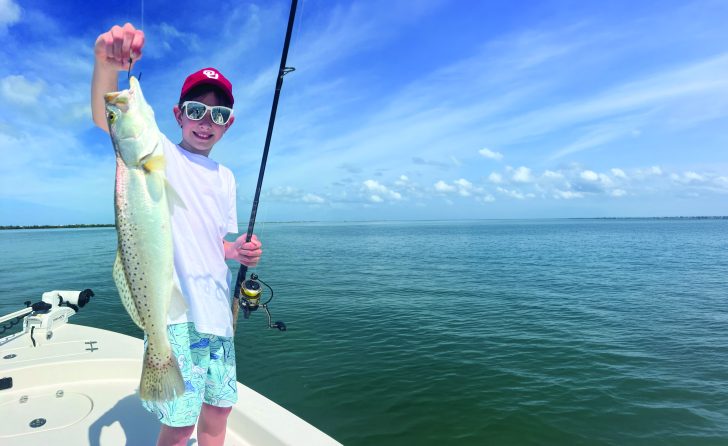
Trout are all around the grass flats in grassy waters from 2ft.-6ft. The larger seatrouts will be there until the water gets warmer in the coming summer months. I like to fish shrimp suspended under a popping cork. Live baits such as menhaden will also work as well as artificial soft plastics and top-water presentations. However, one will catch a lot more fish using live shrimps.
Spanish mackerel, ladyfish, small sharks and pompano will all join the above party while fishing for seatrout. Spanish mackerel will be easily targeted trolling silver spoons in the passes in seven to ten foot of water or by pitching white baits such as pilchards, on a long-shanked ‘J’ hook. Look for diving birds to locate best area for catching migrating spanish mackerel.
Offshore; for purposes of this article will refer to ‘State’ waters (up to 9 miles out from the ‘Outer’ islands of Sanibel, Captiva and Boca Grande). The depth will be around 45-50 foot. Best case catches will be lane and mangrove snappers, Grunts and small groupers. The larger groupers, vermillion, lane and mangrove snappers will be caught 30-40 miles out in 85-120ft. of water. To be safe one needs a vessel that can handle the longer runs. Use circle hooks for all reef species. Be sure to know the regulations for both State and Federal Waters for all species, as there are significant differences.
Yellowtail snappers will best be found off of distant wrecks. Small circle hooks and light leaders work best. Cut fish pieces and shrimps will do the job. Just free-line them with the current.
Don’t overlook the passes as mangrove snappers are there in about 35ft. of water. Use a weight large enough to keep your presentation strait up and down. Use a 2/0 Circle hook for these fish. shrimp will do just fine for bait selection although sardines and herring are great baits for the bigger mangroves.
Permit are also making their way to the reefs and wrecks. Crabs are my favorite bait for this species. I like to free-line them with the current. These are hard fighting fish so use medium heavy tackle.
Kingfish should be off the beaches out to 30ft. of water and around the reefs. Wire leader with hook and trailer hook will prevent cut offs. Cobia are here so keep a rod rigged with a crab or eel for a quick cast!