
 By Don Norton
Fishing can be both fun and challenging. Bass fishing, in and of itself, can easily become a full-time career. Just ask any of the .0005% of anglers who actually make it to the professional level and earn a decent living.
But what about the average guy or gal? What’s it like for them to fish a bass tournament?
Well, for starters, you’re going to need some basic equipment: fishing rods, reels, line, and lures. If you don’t already have the basics, this will set you back hundreds of dollars. (Even if you have enough stuff to get started, purchasing more “stuff” will become a financial addiction for the rest of your life).
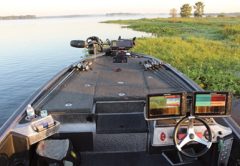
Then you’ll need a boat. And not just any boat. To be competitive, it should probably be a sleek and powerful bass boat. And, of course, it will need to be loaded with all the extras: power poles, depth finders, and forward-facing sonar. That can easily set you back $100,000.00 or more. Of course, you could start with a used rig, otherwise known as “somebody else’s problem.”
Now that you have everything you need to fish a tournament, all you have to do is “sign up”. Depending on the type of tournament (and there are many types of tournaments), you may need to become a member to participate. It’s usually $50.00 or less to become a member, and then you pay the entry fee. This can range from as little as $100 to the thousands of dollars, but most local and regional bass tournaments fall within the $75.00 to $200 range. (Oh, and don’t forget the Big Bass pot. That’s usually an additional fee.)
Obviously, the higher the entry fee, the higher the payout (always dependent on the number of participants, which translates into the number of competitors).
Now here comes the fun part.
Tournament day finally comes, and you’re so excited you can’t sleep the night before. Which is fine, since you need to get up by 3 am anyway. The bathroom challenge is the first thing you’ll need to address. Nobody wants to be out in the middle of the lake and realize they have to go to the bathroom. (And I’m not referring to Number One). If it’s not dealt with, it will come back to haunt you later in the day, I promise you.
Once on the road, you’re greeted with a long line of boats waiting to pick up their paperwork and launch their rigs. Sometimes this can run pretty smoothly, but just as often, there’s some new guy who’s never backed up a boat before, and with the added pressure of everyone yelling and cursing at him, he finally gets it into the water.
Then you get to sit in your boat and wait. This is one of the hardest things you’ll do all day. Waiting for take-off, fighting off mosquitoes, rain, wind, or a cold front that just came through can be nerve-racking as you wait for the sun to come up, or for the tournament director to call out the starting time.
Finally, you’re on the water. As you race off to your chosen first stop, you realize someone else beat you to it. The same thing happens when you go to your second spot. But eventually you find somewhere to fish, and the day gets started.
For the next 8-10 hours, regardless of the weather conditions and your aching body, you manage to catch a few fish, and you head in for the weigh-in. This is often a cluster $%!&! Just imagine, dozens of boats, all anxious to weigh in their fish and go home, and you’re right in the middle of it all.
Eventually, you weigh your fish, load up your boat, and once again, wait to see if you caught enough to at least pay for the privilege of fishing the tournament.
Check or no check, after 12 hours of sleep deprivation, you experience constipation, an aching back, shoulder, and wrist, and a sunburn because you forgot to apply sunscreen, a wildlife game and fish officer taps you on the shoulder and asks to see your fishing license.
For the first time today, real panic sets in. You forgot to buy one!