
 By Julie Graham
Winter slips quietly into East Tennessee. The crowds disappear, the marinas fall silent, and a thin mist hangs above the cold blue water. What feels like the off-season for most is actually the beginning of the most electrifying chapter for a certain kind of angler—those who know that winter is when the striped bass come alive.
Across the 9 Lakes of East Tennessee, the chill of the season signals something big. Snowmelt trickles down the ridges, winter rains swell the rivers, and the reservoirs begin their slow, steady rise. Below the surface, striped bass respond instinctively. They feed harder, move farther, and stage themselves for the coming spring spawn. For anglers who brave the cold, winter offers not just opportunity—it offers the chase.
A Fishery Built on Stewardship
The winter striper bite exists thanks to decades of careful management by the Tennessee Wildlife Resources Agency (TWRA) with support from the Tennessee Valley Authority (TVA). Many of the region’s reservoirs cannot support natural striper reproduction, so TWRA’s annual stocking program fuels these fisheries. Lakes like Norris, Cherokee, Douglas, Watts Bar, Melton Hill, Fort Loudoun, and Tellico are replenished year after year, creating one of the Southeast’s most exciting cold-season fisheries. This commitment to stocking means one thing for winter anglers: there will always be fish to find—and big ones at that.
Winter Behavior: When the Lakes Wake Up
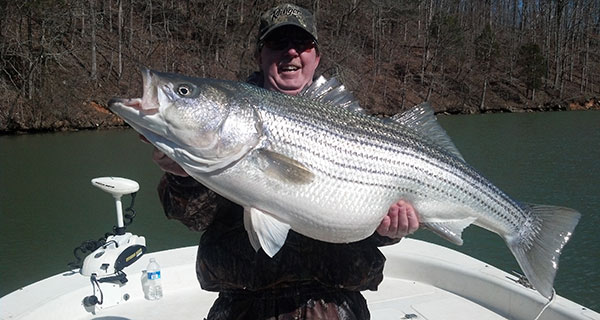 Stripers are surprisingly active in cold water. As temperatures drop, schools push toward the northern ends of the lakes, slipping into river arms where spring flow will eventually signal their spawning attempt. Winter turns them into wanderers, sometimes traveling miles in a single day. For anglers, that means adaptability is key.
“Trolling is king in winter,” seasoned guides say. It’s the one technique that can match the striper’s restless pace, allowing anglers to cover water and keep their lines in the path of migrating fish. Umbrella rigs, live bait, and planer boards become the tools of choice as boats trace wide arcs across empty coves and channels.
A Rare Treat: Winter Topwater
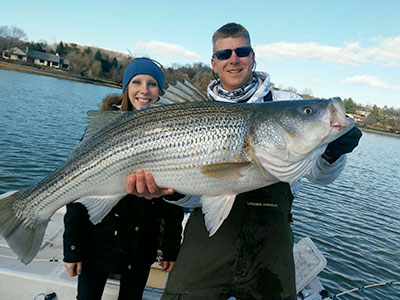
Most people think surface action is a spring or fall phenomenon, but winter offers its own subtle magic. On mild, still days when the wind lies low, baitfish rise—and sometimes, so do the stripers. The eruptions are sudden, explosive, and unforgettable. Topwater might be unpredictable this time of year, but any angler who’s seen a forty-inch fish crush a surface plug in January carries that memory for life.
The Solitude of the Season
Perhaps the greatest allure of winter fishing isn’t just the fish—it’s the quiet. From December through February, the 9 Lakes feel almost untouched. Launch ramps echo under frost. The usual hum of summer boats fades into nothingness. On a winter morning, it’s just you, the water, and the cold breath of the mountains. Winter anglers cherish this solitude. “Most folks won’t face the cold,” one longtime fisherman shares. “That’s fine. More lake for us.”
Spotlight: Melton Hill’s Winter Mystique
While Norris is famous for giants and Cherokee is known for hybrids, Melton Hill Lake is the sleeper that winter elevates to legend. Near the Bull Run Steam Plant, warm-water discharge gathers bait and, in turn, gathers stripers—some of them enormous. Anglers often run live skipjack or slow troll their way through the current seam, hoping for the sudden pull that signals a Melton Hill brute. It is a lake with rules that match its potential: a strict two-fish creel limit, with only one fish allowed over 42 inches. The reward is a fishery where trophy potential survives year after year.
The Winter Advantage
Winter striper fishing isn’t for the fair-weather fisherman. Your guides freeze, your fingers ache, and the wind can feel personal. But those who embrace the challenge discover a season rich with possibility. The fish are hungry. The lakes are empty. And every strike feels like a secret shared between you and the water.