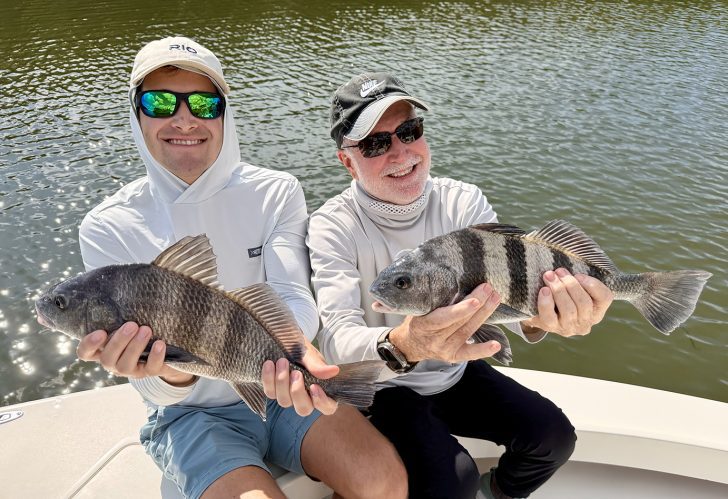

“Beating to a Different Drum”
During the past few years, fishing for black drum has become increasingly popular. Most anglers think of targeting black drum around the pilings of the Howard Frankland or Gandy bridges. Late spring to late fall are excellent times to catch 30 to 50-pound black drum in these areas by simply dropping half a crab to the bottom of the pilings. Heavy rods and conventional reels loaded with 30 to 50-pound test line, rigged with 50 to 60-pound leader and a 6/0 or 7/0 hook, seem to work best when horsing these bruisers to the surface.
However, in February, they’re at their peak spawning season, which lasts through March and winds down in April. At this time, black drum can also be found near deep channels and oyster beds, where they feed actively.
Anglers looking to beat a different drum should check out an area called the Clam Bar that’s just south of Pinellas Point. This long shoal runs northeast to southwest for about 800 yards just before you get to the Dick Misener Bridge. During their spawn, schools of spawning black drum congregate on the east side towards the Bay in about 10 to14 feet of water. It’s truly a sight to be seen. At times, there may be an acre or more of fish swimming along just under the surface. During a calm, sunny day, they really stand out because during the spawn, many of them turn a very bright orange. At first glance, they can be mistaken for redfish.
As these fish move into shallower water during the spawning season, sight fishing becomes a thrilling option. Anglers should use polarized sunglasses to spot the vibrant schools, allowing for precise boat placement to maximize casting and to increase their chances of success. Spawning black drum are so consumed with mating, you can drift right over them or use a trolling motor and drop a bait right under the boat. It can be just that easy!
As for bait, live shrimp will work, but a Berkley Gulp Shrimp in the New Penny color works even better. The best way to fish them is on a 3/8oz jig head while using the same rod and reel combo you would use for cobia or tarpon.
For those interested in increasing their chances, adjusting to changing conditions is crucial. Early mornings or late afternoons often yield the best results, as black drum tend to feed more actively during these times. Monitoring tidal movements can also help pinpoint where schools may congregate, so planning your trip around a strong incoming or outgoing tide can be advantageous.
When it comes to landing these powerful fish, patience and a steady hand are essential. Once hooked, black drum put up a dogged, sometimes lengthy fight, often making strong runs and using their broad bodies to resist being brought to the surface. It’s important to keep steady pressure on the fish and avoid tightening the drag too much, as their tough mouths can sometimes tear free if handled aggressively.
If you’re looking for something a little smaller this time of year, try targeting juvenile black drum. They can be found in many of the same areas where you would seek out sheepshead. Winter low tides force fish into creeks, channels, and canals. All that’s needed here is your standard light tackle combo and some live shrimp or fiddler crabs for bait.
Small black drum resemble sheepshead due to the vertical stripes they display. A keeper-sized black drum must be not less than 14” or more than 24”. The daily bag limit is five per person, and you may possess one over 24”, but I don’t recommend keeping the larger ones. I’ve never eaten black drum, but I’ve had a few clients keep the smaller ones to take home for dinner. Large black drum are known to have a lot of worms. That’s why I don’t recommend keeping any over 24”.
Afishionado, “Adventures in Fishing.”