
By: Capt. Andrew Bennett
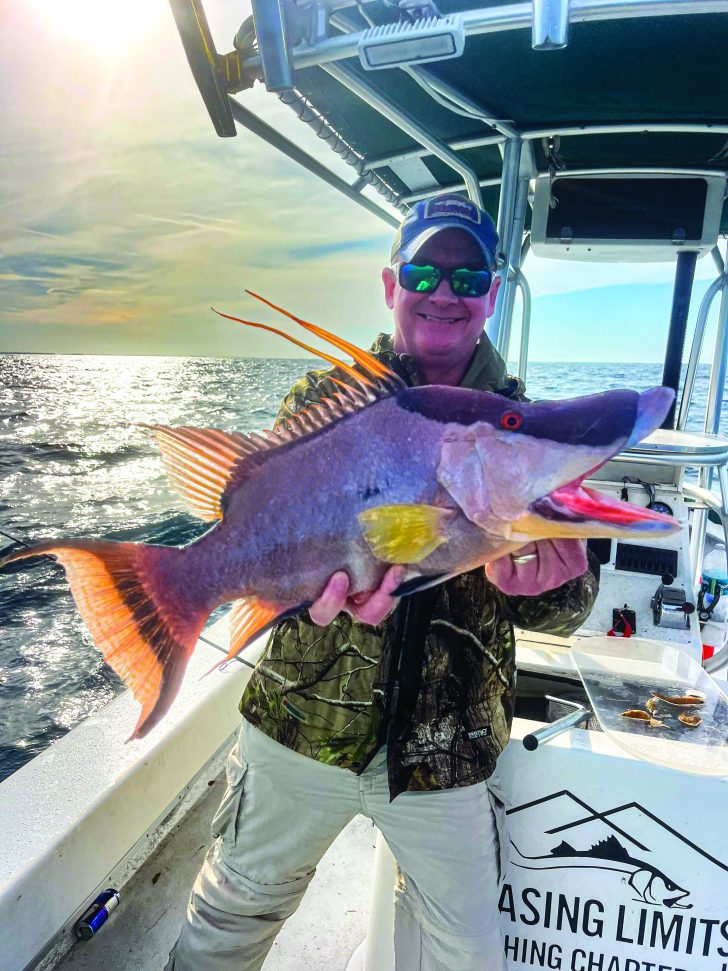 February is the shortest month of the year and is often the coldest month of the year. Not exactly perfect fishing weather in many people’s mind, but I enjoy February, and one of the reasons is Hogfish. Some people call them Hog snapper, but they are not a snapper, they belong to the Wrasse Family. They root around the bottom eating a lot of crustaceans, and in February I can usually put my clients on them pretty consistently.
Hogfish are really cool looking, with their disproportionately large mouth, and the way that they change colors before your very eyes, from pale to vivid colors and back again to pale. The first three spines of the dorsal fin are extended into long filaments giving the fish a rooster type of vibe. They fight well, and are weirdly cooperative for spearfishermen, as they tend to be unwary of swimmers. But the best trait of a hogfish is their taste, considered by many to be one of the best tasting fish that swims. The meat is a dense, white, flaky, sweet, and almost crablike. On a trip to the Keys a few years ago, we cooked nine different species of fish for our group of 12 people and did a taste test. Everybody picked hogfish as their favorite!
To catch hogfish, I usually head out into the Gulf a few miles until the water is about 40’ to 60’ deep. I have several spots that I have discovered by watching my bottom machine and noticing when it indicates hard bottom, or some type of structure such as rocks or a ledge. As if hogfish were not considerate enough, they also prefer the bait that is the easiest for most fishermen to secure, live shrimp. You don’t have to be up early and get soaked throwing a cast net in the pre-dawn before a hogfish trip, as their favorite seems to be regular live shrimp.
Use light leader material when fishing hogfish. You may get broken off more often than when using heavier leader, but you will get more bites. The purpose of a leader usually is to prevent the line from breaking either from abrasion on the fish or structure. Because of this purpose, usually the leader is thicker and stronger than the main line, I usually use 30# to 100# leader when snook fishing, depending on the size of the fish and the proximity to structure, but when fishing for snapper or hogfish, who tend to be line shy, it is important to use lighter, smaller leader in the 12#-20# range. There is a definite relationship between how light the leader is and how many strikes I expect to get.
We are blessed with a healthy amount of hogfish, call me if you want to book a trip, I would love to show you and your crew how to chase your limit of hogfish, I will even clean them for you when we get back to the dock!