

By: Capt. Andrew Bennett
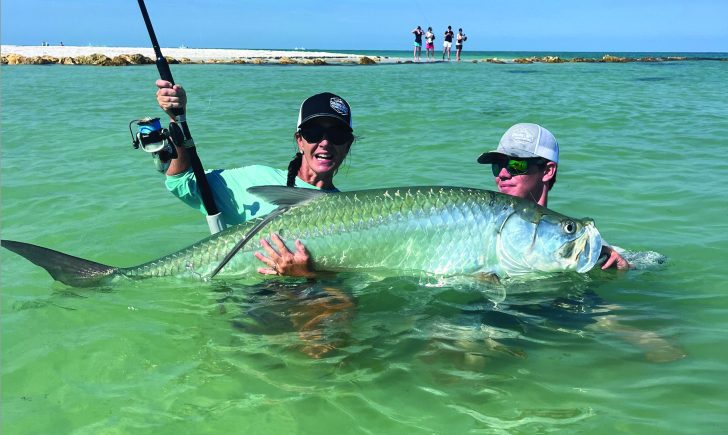 For most nearshore anglers in Southwest Florida the most challenging fish to catch is the Tarpon. It is the Mt. Everest, the super bowl, the pinnacle of achievement. The tarpon has long been referred to as the “Silver King” and for good reason; when hooked, their desperate and frantic efforts to get away produce a battle that is not easily forgotten. In many cases, a person’s first encounter with a tarpon sends them on a life long journey to learn more, travel more, and work harder in an attempt to experience that again. Paradoxically, it usually also has the short-term effect of the angler putting down the rod, exhausted and smiling while saying something like “That is it for me today!” In my experience, no other in shore fish produces such a sense of accomplishment when landed.
As a full-time, year-round charter captain, blessed to be located in one of the best tarpon fisheries in the country, the annual springtime tarpon migration feels like the highlight and what I prepare for all year. It is certainly my busiest time of year as tarpon aficionados and curious novice sportsman from all over the world come to our area for a chance to get to know the tarpon a little better for themselves. The phenomenon of large schools of tarpon gathering just off of the beach is a true natural wonder. I love being a part of the community of people who notice this amazing event and take the time to study and appreciate it.
Finding the tarpon can be difficult and is rewarding when they are located, but hooking and catching them takes another level of combined skill and luck. Tarpon have very hard, bony mouths that make it difficult for a hook to take hold. The use of a Circle hook instead of a J shaped hook gives the angler a better chance of the fish staying hooked even after the incredibly powerful runs and often times dozens of acrobatic jumps performed by the tarpon. Another useful trick to keeping the fish on, is keep the rod tip high when fighting the fish, but if the fish jumps, immediately point the rod tip down towards the water. This creates slack in the line just as the fish jumps and shakes its head, which can result in a broken line or the hook being thrown free if the line is still tight.
Tarpon are not good to eat, so to fish for them is purely a matter of sport. A license to keep a tarpon can be obtained, some reasons to keep a fish would be if you think that it is a record-breaking fish and would like to have that verified and documented, or if you want to have a taxidermist mount the fish to preserve the memory. However, most anglers are not concerned with records and most taxidermist prefer to make a fiberglass replica of the fish based on photos and measurements taken from fish that were released alive.
Call me and book a trip if you would like my help chasing your limit of tarpon this spring! Chasing Limits | @captandrew_bennett | 941-725-8441