

By Joey Coz, SC Department of Natural Resources
It is hard to believe that July is right around the corner, but I am excited to announce that July 1 marks the implementation of South Carolina’s new red drum laws. After years of scientific review and public input, the South Carolina Legislature recently passed legislation modifying red drum bag, boat, and size limits and introduced restrictions on the use of large offset circle hooks or J-hooks when fishing for gamefish species. These changes were triggered by a 2024 regional assessment of the Southern Atlantic red drum stock (South Carolina, Georgia, east coast Florida) that determined red drum were both overfished (not enough fish in the population) and that overfishing was occurring (more fish being removed than added back each year). A South Carolina-specific study came to a similar conclusion. The bill received overwhelming bipartisan support, passing the Senate by a vote of 39-1 and the House by a vote of 98-3 before being signed into law by Govrnor Henry McMaster.
The new regulations include:
- 1 red drum per person per day(previously 2)
- 2 red drum per boat per day (previously 6)
- 18–25-inch slot limit (previously 15–23 inches)
- Non-offset, non-stainless circle hooks required when fishing for gamefish with natural bait and hooks 4/0 and larger
Since the legislation was signed, I have received numerous questions regarding the rationale behind these
changes and how the new regulations will be applied. To help address some of the most common points of
confusion, I’ve provided answers to several frequentlyasked questions below.
Why were the bag limits reduced?
Red drum are managed by the Atlantic States Marine Fisheries Commission (ASMFC), of which South Carolina is a member state. As mentioned, the 2024 stock assessment found that red drum were overfished with overfishing occurring. Once that determination was made, South Carolina was legally required to change its fishery management plan, which includes the combination of bag, boat, and size limit designed to ensure a sustainable fishery for each state. To achieve the reduction in harvest needed for the fishery to recover, those changes to bag, boat, and size limits were necessary.
How does the two-fish vessel limit work? What if I fish more than one trip in a single day?
Regardless of the number of anglers onboard or the number of trips made during a single day, a vessel may retain no more than two red drum per day. This applies to both private recreational vessels and charter vessels.
For example, if a charter captain conducts two separate trips in a single day, only two red drum may be retained from that vessel during the entire day.
Why was the slot limit increased from 15–23 inches to 18–25 inches? Does this affect the breeding population?
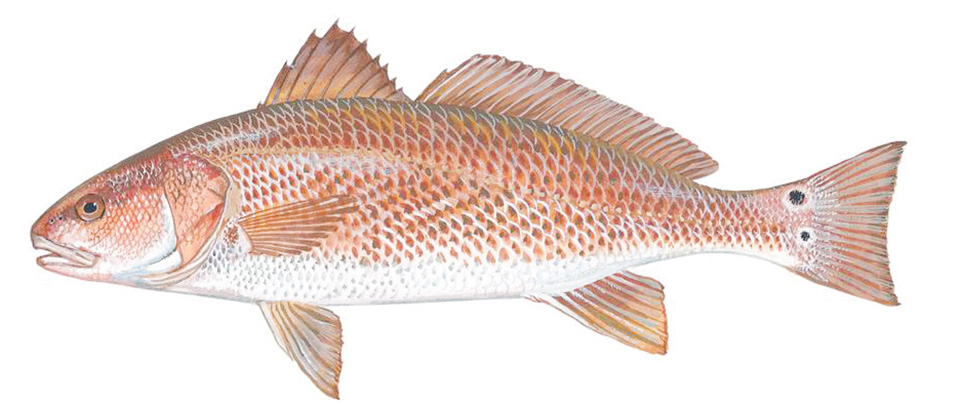
Red drum in South Carolina generally do not reach sexual maturity until they are approximately 30 inches and likely are not reliable spawners until well over that size. Fish within the new 18–25-inch slot have not yet entered the spawning population. A large portion of the harvest occurs on 15–17-inch fish during the fall when they are approximately one year old. Shifting that slot upward protects those “rat reds” and allows more of them to make it into the next year, which should help provide a better quality fishery. While anglers may now keep fewer fish, the slightly expanded slot provides some additional flexibility by allowing the retention of larger fish that remain below spawning size.
Can you please explain the new circle hook requirement?
This seems to be the focal point of many conversations I’ve had since the law was signed. The new hook requirement applies when fishing for gamefish species such as red drum, cobia, or tarpon with natural bait and hooks 4/0 or larger. In those situations, anglers must use a non-offset, non-stainless circle hook. Anglers using artificial lures or hooks smaller than 4/0 are exempt from the requirement. This is where much of the misunderstanding comes from—you are NOT REQUIRED to use large circle hooks when you fish for red drum. For example, if you’re fishing inshore with a float rig and a live shrimp, you can still use a small J-hook or offset circle, even if you’re targeting red drum. It just meansthat WHEN you’re fishing with big hooks (4/0 or larger), they need to benon-offset circles instead of offset circles or J-hooks.
The regulation was designed to reduce release mortality of large gamefish, particularly adult red drum, when 4/0 or larger hooks and natural bait are commonly used. Numerous studies have shown that non-offset circle hooks reduce deep-hooking and increase the survival of released fish. The non-stainless requirement also helps ensure that hooks left in a fish will degrade over time. As a bonus, non-offset circles also work really well at hooking fish and keeping them on the line.
How else can I help rebuild the population?
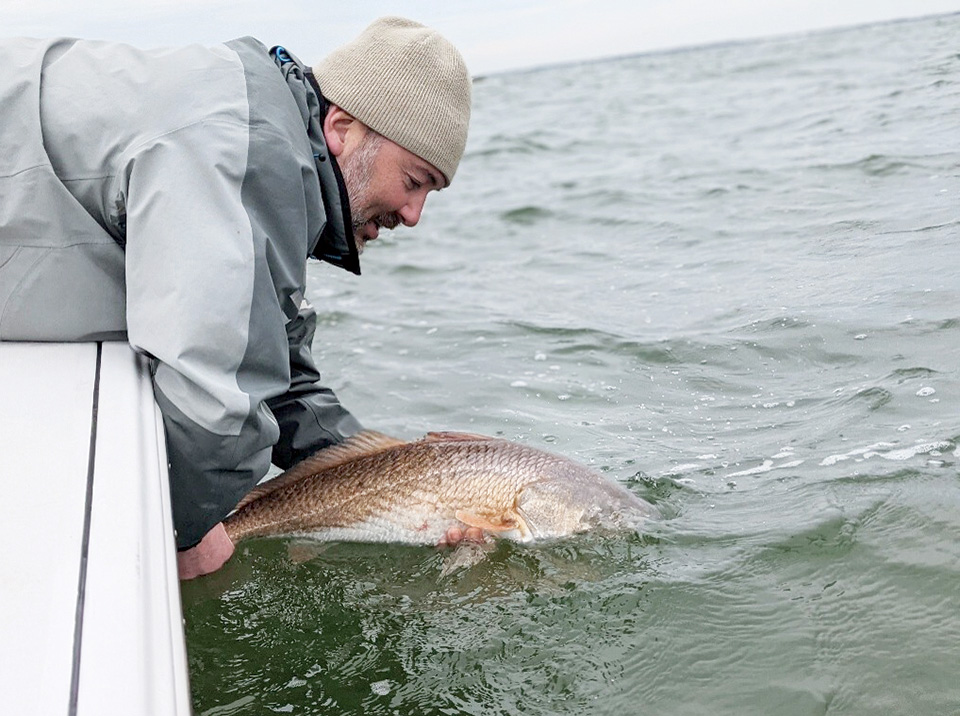
Regulations are only one part of conserving South Carolina’s red drum fishery. Anglers can also help by following proper fish handlingtechniques when they’re planning to release fish. Limiting air exposure, supporting fish horizontally, and using rubber-coated landing nets can all improve survival.
Anglers targeting large adult red drum should take additional care and should avoid them altogether during the critical August-September spawning period. At other times, minimizing fight times, avoiding unnecessary handling, and keeping fish in the water whenever possible can help ensure these important fish remain healthy and able to contribute to future generations of red drum.
Red drum have been the foundation of South Carolina’s inshore fishery for generations. These changes are intended to help rebuild the population and ensure that future generations of anglers have the opportunity to enjoy a better fishery than we do today.

Joey Coz
SC Department of Natural Resources
Marine Game Fish Tagging Program Coordinator
217 Ft. Johnson Rd., Charleston, SC 29412 • (843) 953-9588