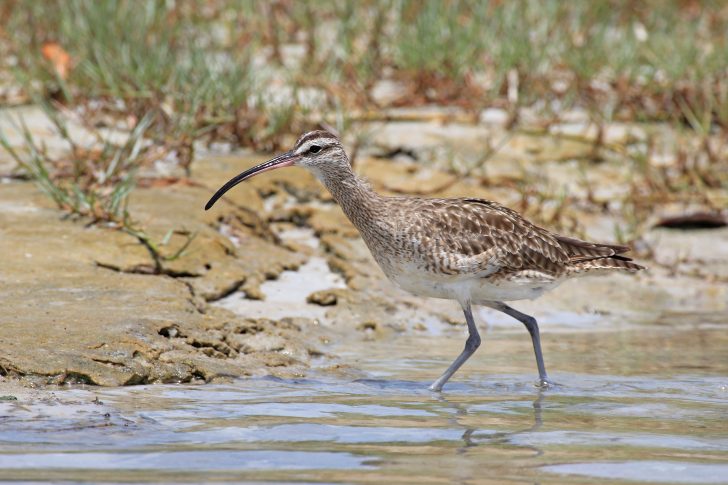

The Hudsonian Whimbrel is a large shorebird that breeds in the Arctic from Alaska to Northern Canada. Until recently, this species was commonly referred to as a Whimbrel. There was a push to give it an identifier to separate it from other Whimbrel species found around the world. Their name comes from an interpretation of the calls that the birds make.
Whimbrels probe the sand or mud looking for their prey, typically consisting of crustaceans, worms, berries, and insects. Here in Florida, they are typically seen only in the winter months, when their breeding grounds freeze and become too cold to support the food they need. The easiest way to identify a Whimbrel is by its characteristic long, slightly down-curved bill. Nineteenth-century hunting practices nearly wiped out all Hudsonian Whimbrels in North America, but their numbers have rebounded in most areas where they breed.
The typical habitat for whimbrels is muddy shorelines, ponds, and beaches. Some individuals are very shy, but others will let you approach cautiously for a quick photo opportunity. My favorite spot to search for them in the winter is Fort DeSoto County Park in Pinellas County. In the spring, they can turn up just about anywhere if a cold front moves through. I saw my very first one, my “lifer,” standing in the middle of a baseball field during a spring rainstorm! So, as we push through the heat of these summer months, keep it on your radar for this fall and winter and find one for yourself.