By CAM Staff
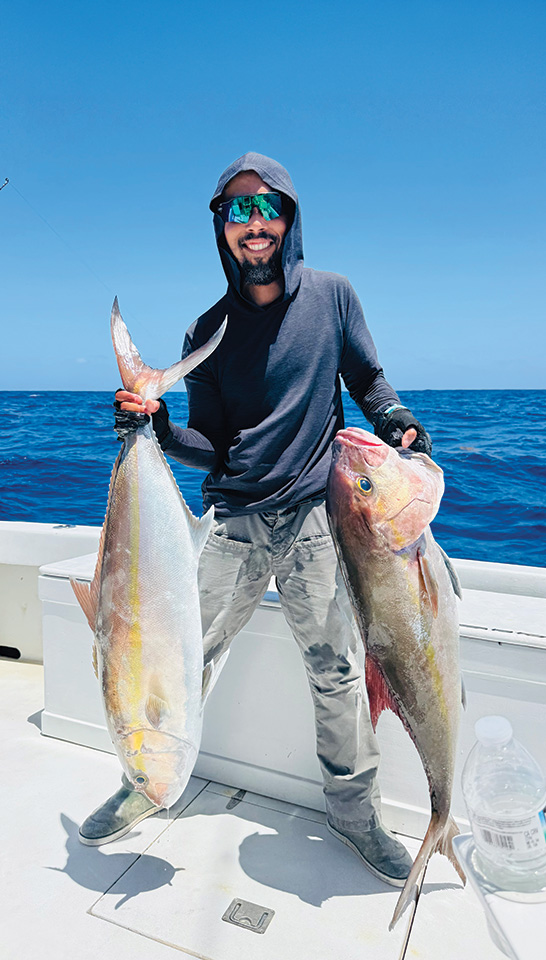
Fishing for greater amberjack—affectionately known as “reef donkeys” or “AJs”—is one of saltwater angling’s most grueling and rewarding challenges. These hard-fighting predators are famous for their sheer strength, blistering runs, and ability to test both angler and tackle to the absolute limit.
Greater amberjack are structure-oriented predators that primarily inhabit offshore waters. They congregate around deep wrecks, artificial reefs, oil rigs, and steep rocky ledges. Adult amberjacks can exceed 60 pounds, though common catches range from 20 to 40 pounds. Because they are competitive and aggressive, they often hunt in packs, making them highly receptive to fast-paced fishing tactics.
Due to the amberjack’s habit of diving straight into sharp structure when hooked, you cannot use light tackle. Anglers typically rely on heavy-action conventional or spinning gear. Use a heavy 6-foot (or shorter) rod paired with a high-capacity reel. The shorter length gives you better leverage to turn the fish’s head away from the reef. Spool up with a minimum of 50 to 80 lb. braided line, connected to a heavy 80- to 100-lb. monofilament or fluorocarbon leader.
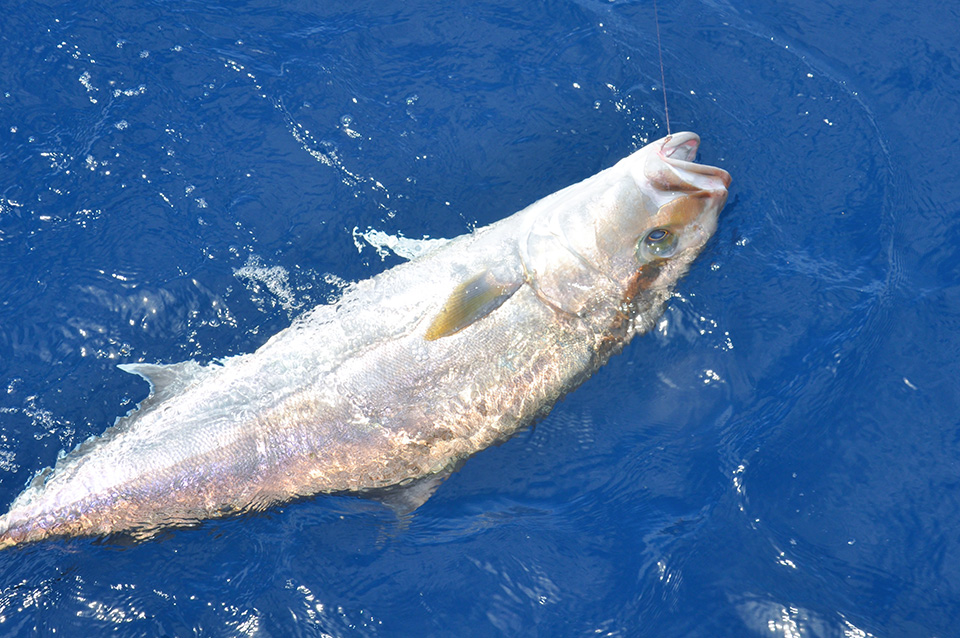
Whether you are drifting over the deep wrecks of the Gulf of Mexico or fishing off the Atlantic coast, the two most effective methods are live baiting and vertical jigging. Live bait is often the most productive method for targeting the largest amberjacks. Prized baits include blue runners, hardtails, pinfish and cigar minnows. Rig your bait using a heavy circle hook (7/0 to 10/0 depending on the bait size) and drop it down into the lower third of the water column just above the submerged structure. Pro anglers often clip the tail of a lively baitfish so it doesn’t swim away too quickly, making it an easy target. If you prefer an active fishing style, heavy metal jigs (4 to 10 ounces) are incredibly effective. Butterfly jigs and traditional diamond jigs mimic the frantic movement of injured baitfish. Drop the lure to the bottom and rapidly reel it upward using a jerking, pumping motion. Amberjacks react intensely to speed and competition, so a fast, erratic retrieve often triggers a violent reaction strike.
Hooking an amberjack is only half the battle; bringing it to the surface is the real test! When hooked, the “reef donkey” will immediately bolt straight down toward the safety of the wreck or reef. If they reach the structure, your line will be sliced on sharp metal or rocks. You must apply heavy drag and use a “lift and reel” technique, steadily pumping the rod and winding quickly to force the fish upward.
To protect greater amberjack from overfishing, they are strictly regulated. These rules depend entirely on whether you are fishing off the Gulf Coast or the Atlantic Coast. The Gulf population is heavily managed due to low stock numbers. For 2026, recreational harvest in the Gulf opens for 43 days, running from September 1 through October 14, 2026. Fish must be a minimum of 34” fork length (measured from the tip of the jaw to the center fork of the tail). Anglers are strictly limited to 1 fish per person, per day. Captain and crew on charter boats have a bag limit of zero. The Atlantic coast offers longer open windows but a different sizing scale. Harvest is open most of the year but features a mandatory spawning closure from April 1 through April 30.The minimum size drops to 28” fork length. The limit mirrors the Gulf at 1 fish per person, per day.
Before heading out, check your state’s licensing requirements and rules for specific reef-fishing gear to improve fish survival rates after release such as non-stainless steel circle hooks, dehooking device and a rigged, ready-to-use venting tool or descending device to safely handle fish experiencing barotrauma.