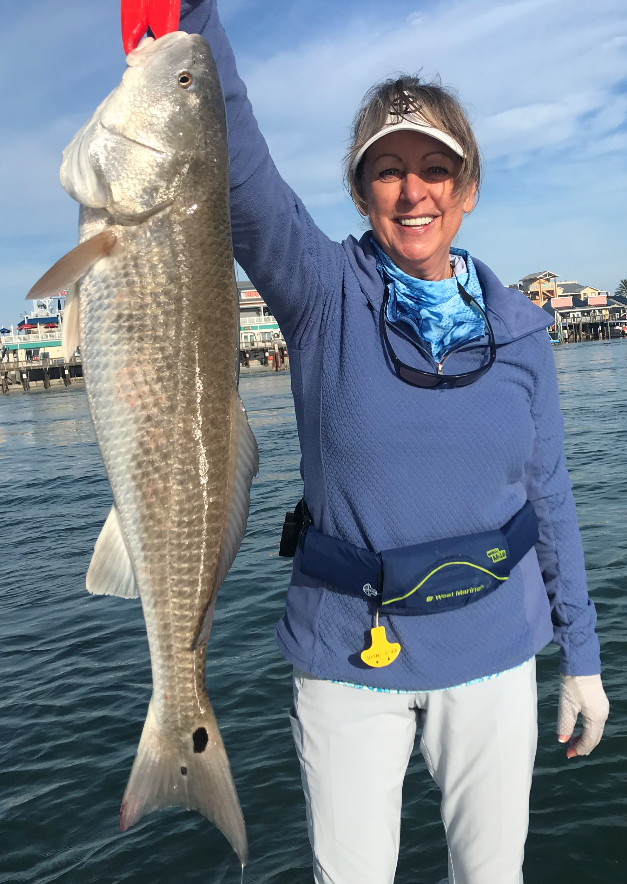

Finding Big Redfish in Cooler Water
September is my change-up month. I shift away from my usual mackerel, trout, and shark routine and turn my attention to big redfish. With a little luck, the weather begins to ease, the sun feels a bit less punishing, and the fishing becomes enjoyable again. It is also the time of year when I trade live bait for fresh-cut threadfin sardines.
This is not the time I spend much effort hunting redfish across the flats. Instead, I look for them around docks, bridges, and deep cuts along oyster beds. After a long, hot summer, redfish often slide into cooler, deeper water. Their anatomy tells part of the story: their eyes sit high on the head, while the mouth points downward, making them natural bottom feeders. That is one reason so many fish are missed on top-water plugs or live bait—just before the strike, the redfish can lose sight of the prey.
The first step is finding docks with moving water. I like the start of an outgoing tide around docks in the upper Tampa Bay area. Once I am within casting distance of the dock’s shaded side, I chum with small pieces of cut threadfin sardines to draw fish out and keep them feeding.
For tackle, I keep the rig simple. I use either a 1/0 J hook or a 2/0 circle hook, depending on the angler. For clients with less experience, I choose J hooks because they naturally tend to pull when setting the hook. For seasoned redfish anglers, I prefer circle hooks. My standard setup is a 30-inch section of 30-pound fluorocarbon leader tied to 15-pound braided line with a surgeon’s knot. Other knots will work, but the surgeon’s knot is simple, fast, and dependable. Because I am usually fishing 3 to 8 feet of water with some current, I add a 1/8- to 1/4-ounce split shot to keep the bait close to the bottom.
Of course, not every dock will hold fish, and some will consistently outproduce others. Time on the water is the only way to learn which ones are worth fishing. Around docks, the larger redfish usually stay near the deepest water or tight to nearby structure.
Winter can help you build that knowledge. Cold fronts and high pressure often bring extremely low tides, and those low, clear-water days are ideal for studying local docks. Look for rocks, old pilings, debris, and other structures that will hold fish when the water returns. I have found docks with furniture, rocks, and leftover construction debris beneath them, often from homes built years earlier. Make notes about what you find and where it sits, then return in spring and fall when the redfish move back in.
When September arrives, do not overlook the shade beneath the docks. The big reds are there, waiting for the right bait to drift by.