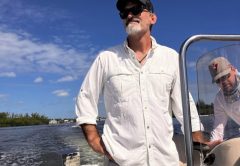
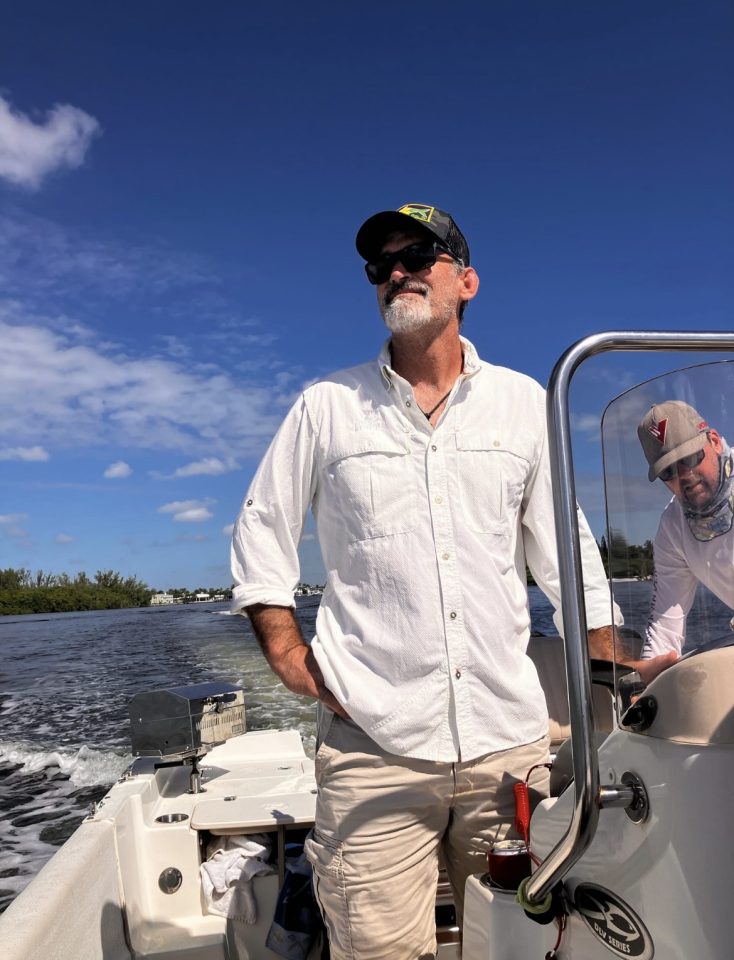
Unexpectedly, Brett passed away last month at just 58 years old. It is an immense loss, for both his family and all the people who’ve met him over the years. As a lifelong angler, and dedicated conservationist, Brett had a hand in many projects that he hoped would help preserve the health of fisheries, and fishing as a hobby long into the future.
Over the last decade, Brett’s biggest passion was seagrass restoration- he had a hand in over $10 million worth of restoration projects over that span. In his mind these habitats have often been overlooked in a great deal of restoration work. Seagrass provides excellent cover for many species of juvenile fish to hide from predators, while they grow big enough to fend for themselves. If you want an example of what happens when these seagrass goes away, look no further than the Indian River Lagoon. It was once the premier sea trout
fishery in all of the United States, but there hasn’t been a world record trout caught near the IRL in over three decades.
The menhaden reduction fishery was another issue that Brett engaged with pretty frequently. Now, this is a bigger problem up near the Chesapeake Bay Region and other Gulf states, but only because Florida doesn’t have enough menhaden to sustain any type of commercial fishery to begin with. As an essential baitfish, Florida biodiversity would flourish given a stable population of menhaden in our waters, so being aware of this fishery is important.
If you’ve had any exposure to Brett, it was likely either through his time as a writer for Florida Sportsman, or during one of the many presentations he gave to fishing clubs all around the state. Brett loved helping anglers improve their craft, even going so far as to write Snook (Sportsman’s Best), a great resource for any aspiring Snook fisherman out there.
I’ll leave you with a couple tips, straight from the man himself:
1). Learn about the biology of the fish you want to target. Everything from the eye position, mouth shape, and the hydrodynamics of its body can give you valuable clues as to how they hunt, and what they can easily detect.
2). Learn about the behavior of the bait that your artificial baits and lures are trying to mimic. For example, if you’re targeting redfish, and using a lure meant to look like a crab, know how crabs behave. In the wild, when being chased, crabs tend to tuck their limbs and hunker down instead of scuttling away. So, if a red chases your crab lure, it might be wise to let it sink, instead of continuing your retrieve.
3). When in doubt, orange it out. Brett always claimed that lures ranging from bone-colored to orange always seemed to get a snooks attention best. Take this with a grain of salt, but if you’re near the Treasure Coast it may be worth a try.
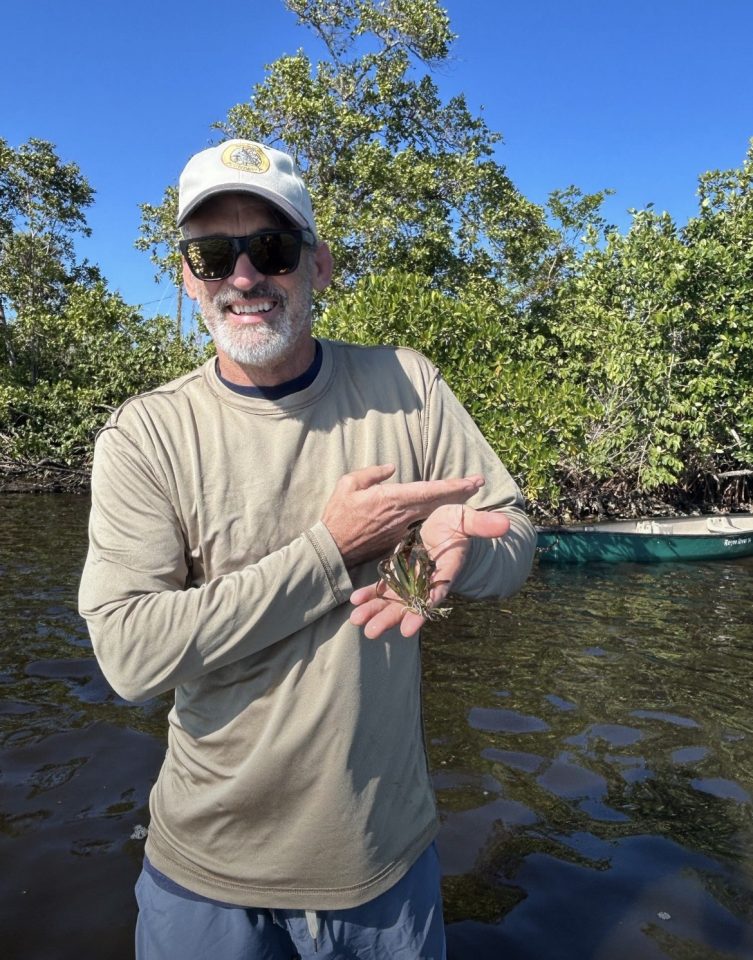
If you would like to donate to Brett’s wife, please scan the QR code below. Thank you for your suport.