

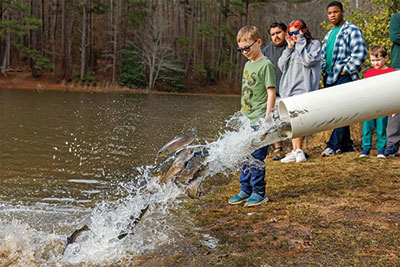
The mountain streams of Western North Carolina have always had a way of calling people home. Cold, clear water tumbling over rocks, the flash of a rainbow or brown trout, and the quiet patience of a well-placed cast—these are the experiences that draw hundreds of thousands of anglers to the region each year. After a difficult stretch for the state’s trout program, that invitation is open again.
Hurricane Helene in 2024 heavily damaged the Armstrong State Fish Hatchery and altered many mountain streams. The state’s largest facility, Bobby N. Setzer State Fish Hatchery, is undergoing a major multi-year renovation (expected to return to production around late 2027 or early 2028). An unusually hot, dry summer in 2026 then pushed water temperatures into the mid-to-high 70s at Armstrong—lethal for cold-water trout—and staff estimate the hatchery lost roughly 70 percent of the fish being raised for the fall season. As a result, the North Carolina Wildlife
Resources Commission delayed the usual October stocking of Delayed Harvest Trout Waters until November.
This is not a permanent closure. Officials have expressed confidence that enough fish remain at Armstrong for a November stocking, when cooler water will reduce stress on the trout and allow the survivors to grow a bit larger. Subsequent stockings will depend on an October inventory of the remaining fish. Setzer’s upgrades are intended to create a more resilient facility with better water efficiency, flood protection, and temperature control for the long term. Watershed restoration work is also underway upstream of Armstrong.
In the meantime, Delayed Harvest regulations are already in effect. From October 1, 2026, through June 5, 2027, these waters are catch-and-release only. Anglers may use only artificial lures with a single hook; no natural bait may be possessed. The waters are marked with the familiar diamond-shaped black-and-white signs. Some stocking locations and access points have changed because of lingering storm damage, so checking the latest maps and schedules on the NC Wildlife Resources Commission website (ncwildlife.gov/trout) is essential before you go.
The appeal remains. Delayed Harvest sections and wild trout waters still offer classic Appalachian fishing—pool-and-riffle sequences, rocky bottoms, and the chance at all three trout species. Popular destinations continue to include stretches of the Tuckasegee, Nantahala, Davidson, East Fork of the French Broad, North Fork Mills River, and many others across the mountain counties. Local fly shops, guides, and outfitters are open and ready to help visitors and residents alike. Trout fishing supports a substantial outdoor economy in Western North Carolina—historically valued at roughly $1.38 billion annually in economic impact, with nearly 370,000 anglers participating in recent years—so every trip helps local communities that are still rebuilding.
The Commission has asked for patience while it works to restore production and make hatcheries more resilient to future heat, drought, and storm events. That patience has been earned. The streams are recovering, the fish that remain are there, and November will bring fresh stockings to many Delayed Harvest waters.
If you’ve been waiting for a reason to return, this is it. Check the current stocking schedule and access information, pack light, respect the catch-and-release rules and private property, and give the mountain water a try. The trout—and the communities that depend on them—will be glad you came.
For the latest updates, visit ncwildlife.gov/trout or follow the Wildlife Resources Commission’s announcements. The mountains are ready.