
by Captain Terry Fisher
 Hopefully, September will begin to cool off from those excessive temperatures offering anglers relief from the humid mornings and ridiculous water temperatures of 88 degrees plus. This in itself will allow more pleasant days on the water catching fish. High tides, strong currents and reduction in water temperatures will work together to provide ultimate conditions for catching almost any species inshore.
Southwest Florida waters continue to offer anglers a lot of opportunities for redfish, snook and seatrouts in the shallow areas around the mangroves in the backcountry such as St. James, Oyster, McIntyre and Shell Creeks along the ‘Southern’ sections of Pine Island Sound and Matlacha Pass.
The middle section of Pine Island Sound on the inside of the outer Islands of Sanibel and Captiva include Blind and Redfish Passes. On the eastern side, look to fish Chino, Clam, Regia and Mason Islands. Middle’section of Matlacha Pass that produce on high water tides are Reckems Point, McCardie Island and the Mud Hole.
The upper section of Pine Island Sound will be good and accessible in areas such as the South Banks of North Captiva, Red Rocks (Redfish Pass), Foster Bay and the docks of N. Captiva all located on the inside of the outer islands of Captiva, North Captiva and Cayo Costa. Likewise, the upper section of Pine Island Sound on the east side toward Pine Island will include Demere, Panther, Jossyln Keys and for the most part, any of the other small mangrove islands in that area. The upper section of Matalacha Pass will include Big Dead Creek, Smokehouse Bay and Two Pines to round it off. Seatrouts will be in the grass flats of Pine Island Sound as well as in Matlacha Pass and on the northern end of Bokeelia.
Look for mangrove snapper around any of the spoil islands, docks. The larger mangrove snappers will likely be in the passes in about 34ft. of water. Drift in and out depending on the tide movement to located the fish. Use a deep drop ‘Knocker Rig’ and keep the line and bait in a vertical position throughout the drift for best results.
 September offers a lot of options as the weather cools and the fish begin moving around. Weather and winds permitting, I like to take clients offshore, within state waters, to fish for reef species as well as migratory species. Depending on how many on board, the levels of experience and a minimum of 6 hours charter time, I might even suggest three hours offshore, then move inshore to fish, depending on tides. This may be offshore in the morning and inshore midday to early afternoon or vice-versa. Offshore, consider live or dead pilchards, shrimps or squid on small circle hooks with just enough weight to get to the bottom of the seabed. Inshore use live pilchards, shrimps or artificial presentations. Live shrimp under popping corks with light spinning tackle is an easy and effective way for anglers of all ages to experience hooking and catching lots of inshore species.
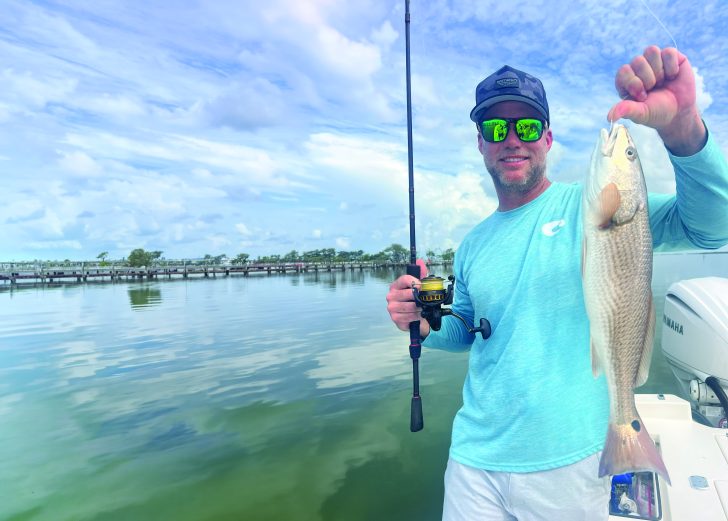
 My charters with less anglers on board, less than 4 people many have opportunities to fish the creek mouths, oyster bars, mangroves and dock structures when tide and wind conditions are right. I take these clients to catch redfish, snook and mangrove snappers. I use live pinfish, pilchards, big shrimps to entice the redfish and snook.
Mangrove snappers will eat any small piece of shrimp. The key to catching any of these species, or getting bites, is presenting the baits close up to and under the docks or mangroves. Free line the baits on small circle or bait hooks, on small weighted jig heads to hold the baits in place or under a small popping cork to suspend the presentation. They all work as do artificial. Another technique that works well is to use a small circle hook, with an egg sinker on the leader line, allowing it to slide ‘up and down’ in the current, to catch the bigger fish. This is called a ‘Knocker’ rig.
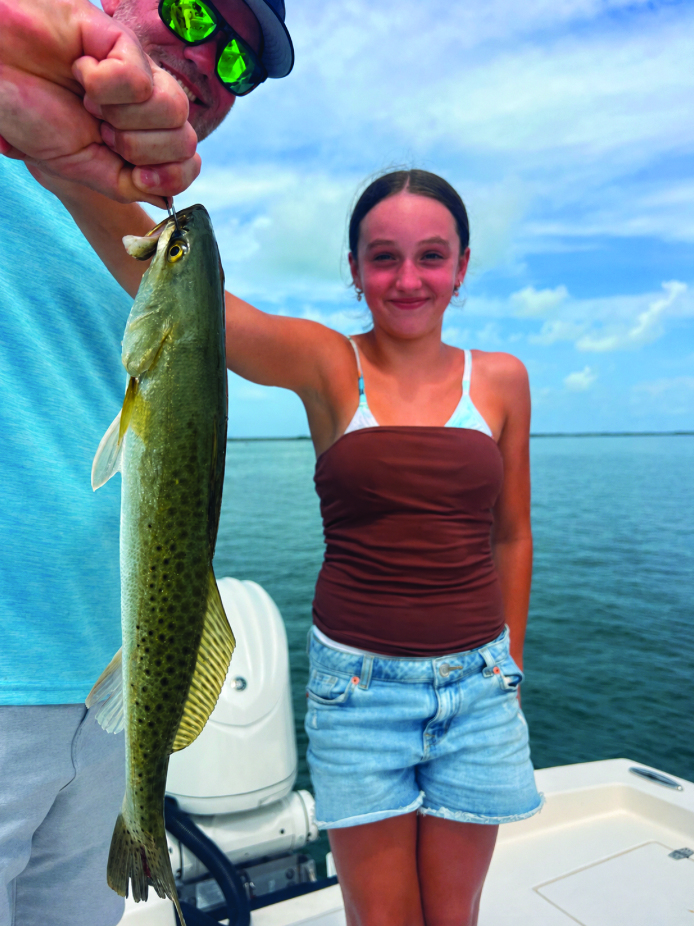
The inshore bite should be good during the month as the conditions will be improving from the heat and rain perspectives. Fish seatrout, jack crevalle, ladyfish, spanish mackerel and small shark on 5ft. grass flats. Expect to catch more than your share of catfish.
The close reef offshore bite, 30-50ft of water, should improve from the summer months as water temps cool. Try marked reefs off of Sanibel, N. Captiva and Cayo Costa Islands, otherwise, I suggest drifting to find areas with little to no pressure. To catch the bigger grouper, snappers and other species, one needs to fish 100-130 ft. of water or approximately forty miles offshore. When making a far offshore trip be certain that the vessel is seaworthy and the weather conditions are safe. Once you’re out there and the winds and storms come, it is scary and dangerous. If several days of winds have prevailed, always a good idea to let the seas settle for a couple of days before going.
This is Captain Terry Fisher of Fish Face Charters wishing everyone ‘tight’ lines. I am available as Captain for Hire on your vessel both inshore and offshore (by the hour) to instruct in navigation, safety, fishing techniques and locations to make your excursions successful. Call me at 239-357-6829 or email fishfacecharters@yahoo.com to schedule a trip on my vessel or yours. Check out my website at www.fishfacecharters.com.