

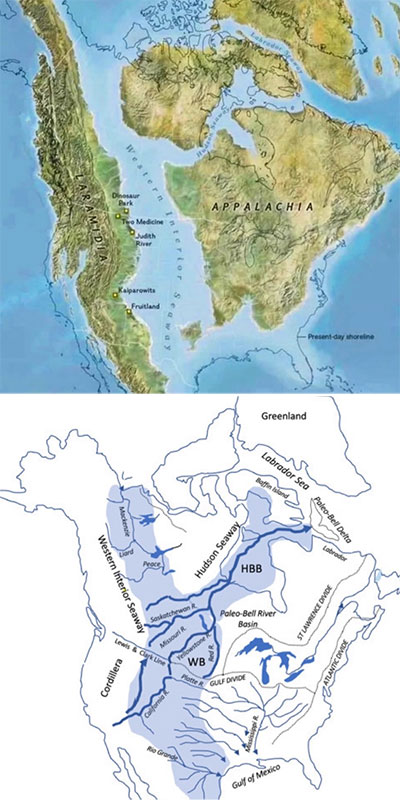
(From National Geographic and ScienceDirect)
By Tom Champeau, Pisgah Chapter of Trout Unlimited
One of the iconic symbols of Appalachian heritage, culture, and natural history is the Southern Appalachian Brook Trout (SABT – Salvelinus fontinalis), colloquially-known as “Specks.” Although considered the same species as Eastern Brook Trout throughout its range in the eastern U.S. and Canada, thousands of years of geographic isolation has caused genetic divergence resulting in populations in the Southern Appalachian Mountains to be genetically-distinct from populations in central and northern portions of their range.
For a long time, it was believed that the New River in Virginia was a demarcation of the “southern” and “northern” strains, however, recent genetic analyses reveal that brook trout genomes are very complex with a wide region of mixed southern and northern alleles (= various types of a particular gene). Geneticists group Eastern Brook Trout that exist along the Appalachian Mountains into three primary groups: Arcadian (most of New England); Mid-Atlantic (Pennsylvania, Maryland, West Virginia, and northern Virginia); and Southern Appalachian (southern Virginia, North Carolina, Tennessee, South Carolina, and Georgia). However, there is considerable overlap between these distinctions.
So how did brook trout get to where we find them today? What occurred that allowed a coldwater species to find a home in the Southern Appalachian Mountains? Various hypotheses attempt to answer these questions and what is described here is based on the work by Dr. Eric Hallerman, who recently retired from Virginia Tech, and author, John Hall (https://doi.org/10.1016/j.hisbio.2026.100038).
Tracing the geologic history along with current genetic analysis reveals a fascinating story that began millions of years ago. Brook trout are actually a charr (or char) that are members of the salmonid family of fishes that dates its lineage back about 50 million years in British Columbia and the Pacific Ocean. There are over 200 living species of salmonids including whitefishes, ciscoes, graylings, salmon, trout, and charrs. Brook trout, lake trout, Arctic charr, Dolly Varden, and bull trout are all charrs. Dolly Varden got their name from a Charles Dickens novel, Barnaby Ridge, where the Dolly character was known for dressing in vibrant colors.
Most charr species are found in higher latitudes of the Pacific. From 50 to 3 million years ago the Paleo-Bell River system was as large as the Amazon and drained the drying Western Interior Seaway to the Hudson Seaway and Labrador Sea facilitating a transcontinental flow towards the Atlantic. If you have ever visited the eastern regions of Arizona, Utah, Colorado, Wyoming, Montana, and the Dakotas, you were on the eroded ancient bed of the Western Interior Seaway.
Lake trout and brook trout diverged from a common ancestor about 10 million years ago. Continental uplift during the Miocene Epoch further raised the Appalachians and separated Canadian Shield lakes from the Mississippi watershed resulting in geological isolation that drove speciation of lake trout and brook trout. Members of this common ancestor became trapped in a large Miocene lake, adapted to a lentic environment, and evolved to become lake trout. Brook trout evolved in Canadian Shield rivers and while their ranges currently overlap, brook trout live in sympatry with lake trout in many lakes. Hybridization or natural reproduction of “splake” is extremely rare as the two species spawn at different times, places, and habitats. If you ever caught a splake, it was most likely a hybrid produced in a hatchery.
Atlantic salmon, Arctic charr, grayling, lake trout, and brook trout are the only salmonids that are native to eastern North America. Grayling were common in Michigan’s Great Lakes basin but went extinct by 1936 due to logging and overfishing. The introduction of rainbow and brown trout and steelhead in the late 1800’s to replace declining grayling was likely the final driver of their extinction.
Besides being a riverine fish, brook trout exhibit an adaptable life history in lakes – known as coasters in Lake Superior, and a sea-run phase called salters. This variable life history enabled brook trout to thrive for millions of years with salters expanding south to Mid-Atlantic rivers such as the Roanoke, James, Rappahannock and Potomac. Global cooling occurred about 5.3 – 2.6 million years ago that allowed brook trout to migrate south from higher latitudes including the Savanna River system which includes Southeastern streams east of the Eastern Continental Divide (although this assumption is currently undergoing genomic analysis).
Brook trout in the Paleo-Bell River may have moved south to upper Mississippi streams by a linkage formed during the Miocene uplift. During periods of extreme global cooling, salters may have trekked around Florida into the Gulf of Mexico and entered the Mississippi River, migrating upstream to invade the Tennessee Valley. Once in the Tennessee system, they populated the Ohio, Kanawha, and New River, and of course the Pigeon, French Broad, and other rivers we know so well. When brook trout initially expanded into Southeastern rivers is debatable, but likely occurred when the Atlantic Ocean cooled during the Late Pliocene (3.0 – 2.6 million years ago).
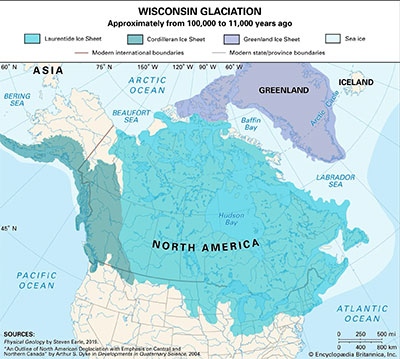
For the past 2 million years during the Pleistocene, a series of glaciation events advanced and retreated across North America. At times, most of eastern Canada and the northeastern U. S. were covered by a mile-thick layer of ice. Imagine at the peak of the last glacial advance that ended about 11,000 years ago when the ice sheet’s southern terminus extended to the lower Midwest. The Mississippi River may would have resembled an Alaskan River with cold water tinted blue from glacial till. Brook trout were probably abundant all the way to the Gulf of Mexico. While the southern Appalachians were not covered by ice, the mountains were likely locked in a frozen grip, with brook trout existing within a much larger area of lower elevations than they are found now.
As the climate warmed and glaciers retreated for the last time in the Pleistocene – 10,000 years ago, brook trout from three primary refugia: Acadian, Mid-Atlantic, and Mississippian re-populated their American range. Later on, the range of brook trout shrank as lower elevation waters became too warm to sustain them. With dozens of glacial advances and retreats over 2 million years that shifted brook trout populations around, it is not surprising that their genomics are so complex.
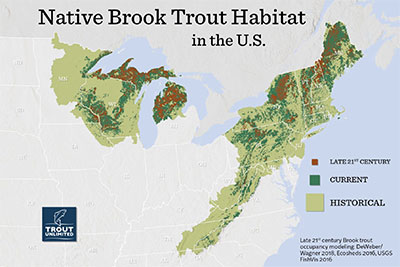
Over the past 300 years of human-caused watershed alterations, brook trout populations have become fragmented and isolated with very little migration between populations that allows gene flow which maintains high population genetic diversity. Nearby but isolated populations can experience rapid genetic divergence, by a process called genetic drift. So within a particular population, genetic diversity can be concerningly low, however, the genetic differences between populations can be high. It is this low genetic diversity within a population that has biologists concerned that isolated populations may not have the genetic “tools” necessary to adapt to changing environmental conditions.
As we are experiencing extremely rapid warming over the past 170 years, SABT are holding on in the coldwater streams of the southern Appalachians at elevations above 3,000 feet. They are a legacy of this amazing past shaped by geological forces and a changing climate. Besides an important sport fish, they are important to First Nation culture and mountain heritage. While their imperilment from watershed development, habitat loss, non-native trout competition, and climate change is well documented, how many other aquatic species may also be facing local extinctions? As an iconic, keystone species, SABT might be the “canary-in-the-coal mine” that represent threats to the globally-high level of biodiversity that WNC is known for. SABT have no where to go as air and water temperatures climb, and it is up to us to do what we can to protect watersheds and tributaries that provide thermal refugia, increase population genetic diversity, and expand their presence across their range. By actively mitigating these threats to their sustainability, we can help ensure that brook trout will continue to find a home in the Southern Appalachian Mountains.