

There are certain dates every Tampa Bay angler looks forward to, and September 1 is
one of them. Snook season is officially back open in Tampa Bay.
After spending the heat of summer chasing snook throughout Tampa Bay on a
catch-and-release basis, September gives anglers another reason to get excited. The
fish are still fired up from their summertime patterns, bait is abundant throughout the
bay, and as we move deeper into September, the first subtle changes toward fall can
create some incredible days on the water.
I’ve been fishing Tampa Bay for more than 30 years, and snook remain one of my
favorite fish to target. There is nothing quite like watching a big snook inhale a live
pilchard, feeling the rod load up and hearing the drag start screaming as that fish heads
straight toward the mangroves.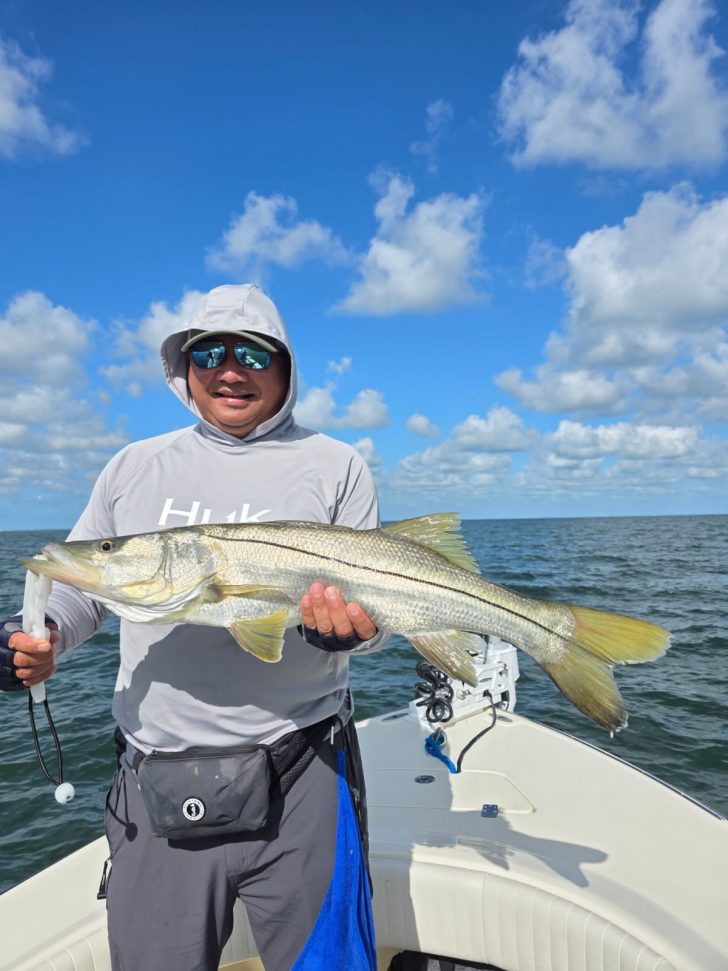
If you’ve been waiting to put a legal snook on the dinner table—or simply want to
experience one of Florida’s hardest-fighting inshore gamefish—September is a great
time to book a Tampa Bay fishing charter and get after them.
Tampa Bay Snook Season Opens September 1
For 2026, the Florida Fish and Wildlife Conservation Commission has confirmed that
recreational snook harvest in the Tampa Bay management region reopens
September 1 and remains open through November 30. Tampa Bay’s other open
season runs from March 1 through April 30.
The current Tampa Bay regulations allow one snook per person per day, and
harvested fish must measure at least 28 inches but no more than 33 inches total
length.
That’s a narrow slot, and for good reason. Snook are an incredibly valuable part of
Florida’s inshore fishery, and the larger breeding fish deserve special protection.
Always check the latest FWC regulations before heading out because regulations can
change.
Why September Can Be So Good for Tampa Bay Snook
September is still summer in Florida. Don’t expect a cold front on Labor Day to suddenly drop the water temperature 10 degrees.
But changes are beginning.
We’ve had months of extremely warm water, afternoon thunderstorms and heavy
rainfall. As September progresses, days slowly become shorter, and eventually we start
seeing slight changes in water temperature and bait movement.
More importantly, there is food everywhere.
Pilchards, threadfin herring, pinfish and other forage are scattered throughout Tampa
Bay. Find concentrated bait around good structure with moving water, and there’s a
good chance snook aren’t far away.
One of the biggest mistakes anglers make is looking for a secret snook spot instead of
looking for the conditions that make a spot productive.
I want bait, structure and moving water.
Give me those three things and I’ll spend some time there.
Where I Look for Snook in September
One of the great things about snook fishing in Tampa Bay is the variety of habitat
available.
Mangrove shorelines are probably what most anglers picture when they think about
Tampa Bay snook fishing, and for good reason. Mangroves offer shade, ambush points,
current breaks and protection. On higher stages of the tide, snook can push surprisingly
far underneath those branches.
Instead of randomly working an entire shoreline, I concentrate on differences.
Look for a mangrove point extending farther into the water. Look for a pocket or small creek. Find an undercut shoreline, deeper trough or oyster bar adjacent to the
mangroves.
Most importantly, pay attention to current.
A little point with water sweeping around it can be significantly better than 200 yards of
shoreline that looks almost identical.
Creek mouths and river mouths can also be extremely productive. Snook are ambush
predators. Put moving water next to a depth change and a steady supply of bait, and
you’ve created a natural feeding station.
Docks, seawalls, bridges and other structure shouldn’t be overlooked either. Some of
Tampa Bay’s biggest snook spend substantial amounts of time around man-made
structure.
Around Apollo Beach, Ruskin, the Little Manatee and Alafia areas, and throughout the
Southshore portion of Tampa Bay, we have a tremendous mixture of these habitats.
That’s one reason an inshore fishing trip with Salty Scales can produce such a variety of
fish in a single morning.
Live Pilchards: My Go-To Snook Bait
If you fish with me very often, you already know how much confidence I have in live
pilchards.
There’s a reason. They work.
During September, I try to match the size of the bait the fish are already feeding on.
Bigger isn’t automatically better. If the bay is loaded with smaller pilchards and snook
are keyed in on them, that’s what I’m going to offer.
The livelier the bait, the better.
When I’m approaching a productive mangrove shoreline or point, I’ll often use a few live
baits as chum. You’d be amazed at what suddenly appears.
A shoreline can look completely dead. Throw a handful of pilchards into the right area
and suddenly the water erupts.
That tells you several things immediately. You know fish are present, you can see where
they’re holding, and you can sometimes get otherwise reluctant fish competing with one
another.
Once that happens, get your bait in there.
The Snook Rod and Reel Combo I Use
You don’t need ridiculously heavy equipment to catch Tampa Bay snook, but your tackle
needs enough backbone to stop a good fish when you’re fishing around structure.
For most of my inshore snook fishing, I like a 7-foot to 7-foot-6-inch medium-heavy
spinning rod paired with a quality 3000- to 4000-size spinning reel.
I’m typically fishing 15- to 20-pound braided line with approximately 30- to 40-pound
fluorocarbon leader, adjusting the leader depending on water clarity, fish size and
structure.
When fish are out on an open flat and the water is exceptionally clear, I can lighten
things up.
When I’m throwing a pilchard underneath mangroves and know a 35-inch fish is going
to immediately try wrapping me around roots, I’m going the other direction.
The same applies around bridges and heavy structure.
Snook have extremely abrasive mouths and gill plates. That’s why your leader is so
important. Check it after every good fish. Losing the fish of the day because you didn’t
notice a damaged leader is a hard lesson.
How I Rig Live Bait for Snook
I prefer keeping things simple.
A live pilchard on a properly sized circle hook with fluorocarbon leader catches a lot of
fish.
The exact hook size depends on bait size, but something in the 2/0 to 4/0 range covers
many of my Tampa Bay applications. You want enough hook to handle the fish without
putting an oversized piece of hardware through a relatively small bait.
When current and conditions allow, I like to free-line the bait.
That natural presentation is difficult for a snook to turn down.
Cast beyond or alongside the area where you believe the fish are positioned and let the
pilchard naturally swim through the strike zone.
Watch your bait.
A nervous pilchard can tell you a lot.
When that bait suddenly starts racing across the surface or trying desperately to get
away from something, get ready.
There’s usually a reason.
Don’t Ignore Artificial Lures. Live bait is incredibly effective, but there are mornings when throwing artificials is one of
the most enjoyable ways to catch snook.
A soft-plastic paddle tail rigged on a jig head or weedless hook is one of the most
versatile options you can carry. Work it along mangrove edges, through potholes,
around oyster bars and across points.
Topwater fishing around first light can be even more exciting.
Few things in Tampa Bay fishing compare to watching a snook explode on a topwater
plug.
Fish topwaters around shallow flats, mangrove edges and points before the sun gets
high. Don’t get too excited when the fish blows up on the lure. Keep working it until you
actually feel the fish load the rod.
A jerkbait or suspending bait can also be deadly when snook are holding around slightly
deeper structure.
Tide Matters More Than the Clock
People frequently ask me, “What’s the best time to catch snook?”
Sunrise is fantastic, but I pay just as much attention to the tide.
Moving water creates feeding opportunities. An incoming tide can push bait and snook farther toward mangrove shorelines. As the
water rises, fish gain access to areas they couldn’t reach at low tide.
On an outgoing tide, I start paying closer attention to drains, creek mouths, cuts and
points where bait is being pulled from shallow water.
Think like the fish.
A snook doesn’t want to burn energy unnecessarily. It wants to position itself
somewhere that current delivers food.
Find those locations and your odds improve dramatically.
Getting Snook Out of the Mangroves
Hooking the fish is only half the battle.
When a good snook eats a bait close to mangroves, that fish knows exactly where it’s
going.
Straight into the trees.
You can’t treat a 30-inch snook next to mangrove roots like you’re fighting a trout over
an open grass flat.
Get pressure on the fish early and turn its head. Your drag still needs to function properly, but this isn’t always the situation for an
extremely light drag and a ten-minute fight. Sometimes you have seconds to change the
direction of that fish before the fight is over.
Once you get the fish into open water, you can relax slightly and let your equipment do
its job.
That’s the battle that makes snook fishing addictive.
Handle the Big Ones Carefully
Even during open season, most snook you catch won’t fall inside the legal harvest slot.
That’s perfectly fine.
Some of the best fish of your life will be oversized snook that need to go right back into
Tampa Bay.
Keep the fish supported, minimize its time out of the water and have your camera ready
before lifting it for a photograph.
Don’t spend several minutes looking for a phone while a fish sits on the deck.
Get your picture, revive the fish if necessary and watch her swim away.
Those big females are incredibly important to the future of this fishery.
FWC reports that Florida’s snook stocks currently exceed its management goal of 40%
spawning potential ratio on both the Gulf and Atlantic coasts, and the agency now
evaluates snook regionally using factors including abundance, habitat, harmful algal
blooms, fishing pressure and temperature.
September Is About More Than Snook
One reason I love September fishing in Tampa Bay is that snook don’t have to
cooperate for us to have an incredible day.
While we’re working mangrove shorelines, we’re often around redfish. Move onto grass
flats and you’ve got a shot at quality speckled trout. Fish deeper structure and the
mangrove snapper can be fired up.
Spanish mackerel also begin becoming increasingly interesting as bait congregates
around the bay. That’s Tampa Bay.
You can leave the dock targeting snook and end up having one of those days where
you’re catching five or six different species
Come Catch a Tampa Bay Snook With Me
I’ve spent decades learning this fishery, and there is still something special about
watching somebody catch their first good snook.
Maybe it’s a kid watching the drag scream for the first time. Maybe it’s an experienced
angler who traveled to Florida specifically to check snook off the bucket list.
Either way, that first run gets everybody’s attention.
September gives us another great opportunity to chase these fish throughout Tampa
Bay, and with snook season reopening, it’s an excellent time to get on the water.
If you’re visiting Tampa, St. Petersburg, Apollo Beach, Ruskin or the surrounding area
and want to experience Tampa Bay snook fishing, come spend a morning with us at
Salty Scales Fishing Charters.
Book a Tampa Bay fishing charter with Capt. Joshua Taylor. Bring some sunscreen, be ready for an early morning, and when that pilchard suddenly
gets nervous underneath the mangroves, hold on.
That next bite might be the snook you’ve been waiting for