


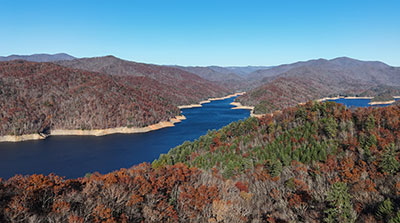
 By Visit Smokies
Designated in 2020, the Smoky Mountains Blueways Trail System quietly stitched together one of the most diverse and fish-rich water networks in the Eastern United States. For anglers just now hearing the name, the timing makes sense—the official designation is young, but the waters are ready. *
Developed through a collaborative effort led by Visit Smokies, in partnership with the Southwestern Commission, Duke Energy, the Blue Ridge National Heritage Area, and regional conservation and recreation partners, the Blueways were designed with intent: to unify access, safety, stewardship, and navigation across a landscape where water defines both culture and opportunity.
Where Rivers Build Fisheries
The backbone of the Smoky Mountains Blueways is a convergence of four iconic river systems:
• Little Tennessee River
• Nantahala River
• Oconaluftee River
• Tuckasegee River
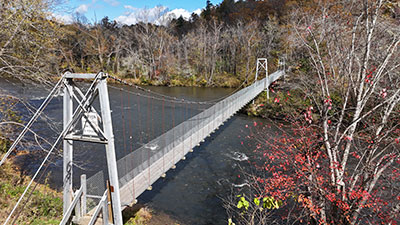 These rivers drain high-elevation headwaters, cold spring creeks, and deep forested watersheds before ultimately flowing into Fontana Lake, at the southern boundary of Great Smoky Mountains National Park.
Along the way, they connect a chain of deep, dam-controlled lakes—including Lake Glenville, Lake Santeetlah, Nantahala Lake, and Fontana Lake—creating a rare mix of freestone streams, tailwaters, river corridors, and stillwater fisheries within a single region.
Together, these watersheds span the Nantahala National Forest and two National Park units, forming the natural infrastructure that supports the largest and most visited outdoor recreation area in the Southeastern United States.
For anglers, this means options—real ones—across seasons, species, and techniques.
Built for Anglers Who Know the Difference
What sets the Smoky Mountains Blueways apart is not just access, but range.
Within the system you’ll find:
• Class A trout streams holding wild rainbow, brown, and native brook trout
• Freestone rivers ideal for tight-line, dry-dropper, and streamer work
• Tailwater-influenced flows shaped by dam releases and seasonal patterns
• Warmwater rivers and reservoirs supporting smallmouth, largemouth, white bass, walleye, and more
Common species across the system include rainbow trout, brown trout, brook trout, smallmouth bass, largemouth bass, white bass, walleye, catfish, sunfish, crappie, and rock bass—a diversity few regions in the East can match without long drives or multiple trips.
From technical pocket water to long drifts on broad rivers, from dawn hatches to glassy evening lake sessions, the Blueways reward anglers who pay attention.
 Mapping the Water
 Mapping the Water
Visit Smokies maintains access to the official Smoky Mountains Blueways maps, which provide detailed, angler-relevant information including:
• Float times and river mileage
• Class of water and difficulty ratings
• Boat launch amenities
• Access points and take-outs
Exact GPS coordinates
For anglers exploring new water seriously, these maps replace guesswork with precision.
Guided by Local Knowledge
On Smokies water, access is only half the equation. Timing, flow, and local understanding separate average days from exceptional ones. These outfitters know the Blueways system from headwaters to tailwaters:
Fish Tales Outfitters — Franklin, North Carolina
Technical trout and warmwater trips throughout the Little Tennessee River system, with guides dialed into seasonal hatches, flows, and structure.
Tuckaseegee Fly Shop — Sylva, Bryson City & Waynesville, North Carolina
A multi-location outfitter offering full-spectrum Smokies coverage—from tailwaters and freestones to Park-adjacent streams—backed by real-time river knowledge.
Fly Fishing the Smokies — Bryson City, North Carolina
Guided trout fishing on classic Smokies waters, specializing in wild fish, tight-line techniques, and access to National Park waters.
Rivers Edge Outfitters — Cherokee, North Carolina
Your guide in the trophy waters of Cherokee.
Shady Creek Expeditions — Clayton, Georgia
Expert-led fly fishing on Blue Ridge and Chattooga waters, pairing technical instruction with backcountry access.
Follow the Flow
The Smoky Mountains Blueways Trail System isn’t a single destination—it’s a connected fishery. One built on cold water, protected forests, managed flows, and generations of local knowledge.
For anglers willing to read water, track conditions, and move with the seasons, the Smokies offer something increasingly rare: room to roam, fish worth chasing, and a system that rewards skill.
The rivers are already here.
Now, the map finally is too.

Link: Smoky Mountain Blueways Overview – Visit Smokies
“Ready” reflects existing access, fisheries, infrastructure, and professional guiding services established prior to the 2020 Blueways designation. Access to National Park waters is subject to applicable permits and regulations. Guided services are recommended.