


 By Scott Norton
The fall has been so full of fun this year, if you guys have been participating. We are getting into a transition into the winter pattern. In higher elevations the water is in the mid to upper 40’s and there’s still some good fishing ahead of us. Be thinking about where bass are going to be and also the depth at which the majority will be. This is your time of the year, as an angler, if you choose to brave the elements. Fewer and fewer fishermen will actually go this time of year and these fish will not be as pressured.
If you were to show up and start fishing, where would you start? Since the winter pattern is close, I would start on those secondary points and pinch points. Start moving your way towards the main points. If you are in a transition, then they will be spread out all over, but if they are in the winter holes then you will run into schools of them. Once you find them, then you will find that there are two different groups. One group will be suspended going for balls of shad, and the second group is on the drop-offs feeding on crawfish or injured shad from feeding bass above them.
If you go after suspended bass, use baits like spinner baits, A-rigs, crank baits, swim baits, strolling shads and jerk baits are the most popular baits to use. If you go for bass on the bottom, use baits like football jigs, under spins, blade baits, lipless crank baits, ned rigs and drop shots. Keep these baits on deck and you got it covered. Target the bass you want then grab and go.
Some anglers in the past used to wait until the sun came out before getting on the water to fish, but I have had different results before the sun comes up. I believe that larger, smarter bass still use the darkened, shady water to ambush prey, especially in clear water. Younger, smaller bass will bite later when the sun hits the water. Look for balls of shad and you will find bass nearby. You will find some bass warming next to hard structure such as bridge pillars, rock piles, stumps and lay downs. These bass like an easy meal.
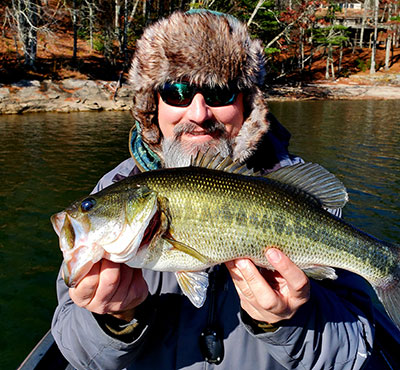
This is the time to be thinking ahead. Bring a change of dry cloths and make sure you wear good winter gear, so you are comfortable. Bring things like hand warmers, gloves, bibs, coats, glasses and warm hats. This is just as important as having the right baits with you. Always plan for that dreaded wind because it will cut through most types of clothing. Do not forget to know what the life of your batteries are in before you hit the water. You can always go have them load tested at any auto parts store. If one is bad, you’re in luck, you are where you need to be to get a new one. Nothing is worse than being dead on the water in the cold wind. Enjoy this time of year it can be spectacular.
Scott Norton is a Western North Carolina native. Born in Asheville, N.C., he is a long-time hunter, angler and weekend warrior.