

By Caitlyn Gatrell
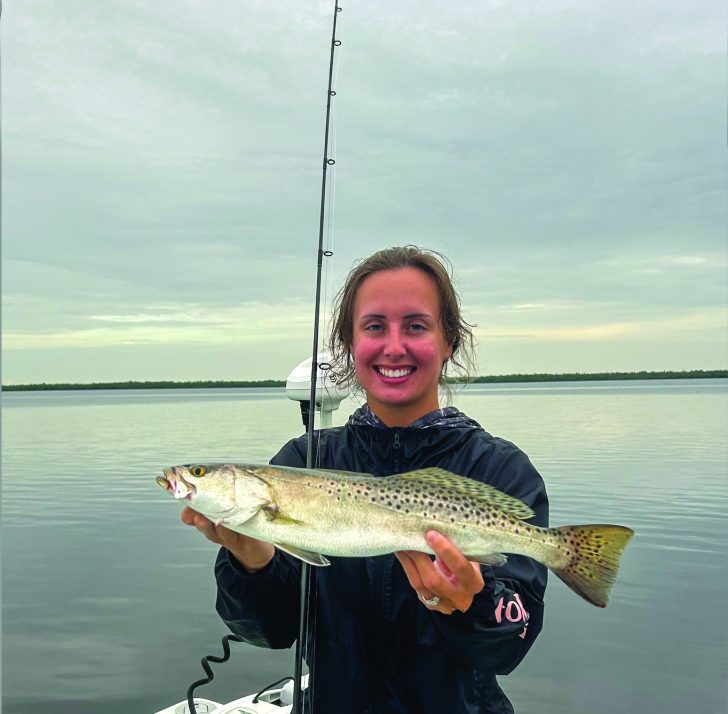 The air is a bit more refreshing, the breeze feels nice, and the temperatures are cooling, well somewhat in Southwest Florida! While we may not have a true fall season, there definitely is a shift in the weather, and that shift influences our fishing and marine life as well. In fact, fall is one of the peak seasons for fishing in Southwest Florida, especially in my prime area of the Ten Thousand Islands. Cooler water temps, active bait patterns, and comfortable conditions create one of the most anticipated transitions of the year.
Down here, redfish are amongst the biggest stars of the fall season. As they prepare for their annual spawning, you can find them moving across shallow flats, around mangrove shorelines, and near oyster bars frequently. Look for signs of moving baitfish schools, as well as wakes and tailing reds. Oftentimes they can be beneath the surface tucked up under mangroves without these signs too. Live shrimp and baitfish like mullet and whitebait are highly reliable bait choices, while soft plastics like Gulp Shrimp are also great.
Spotted seatrout are another fall favorite, making a heavier appearance this time of year. We often catch them on grass flats and around mangrove channels. Live or cut shrimp with a popping cork and lively whitebait are great for trout. They will strike on soft plastics as well, such as paddle tails.
And of course, can’t forget about gamefish like snook and tarpon. While they may be a bit more active in summer, they still are present and biting in the fall transition too. Mangroves, creek mouths, deep channels, and flats all are key zones for finding and hooking up to these species. Dawn and dusk hours when bait are in a frenzy are great times to target them. As well as incoming tides inshore, or nearshore points at outgoing tide.
With the cool dips, sheepshead and other structure-oriented species in the area are also out and about. You can even catch these when in land often, by fishing bridges, docks, and pilings, as well as finding them in the mangroves. Live shrimp, crabs, and small baitfish are good to use, and scraping barnacles into the water entices them further.
The overall key to taking advantage of Southwest Florida’s fall bite is to follow the bait and pay attention to moving water. All the above-mentioned spots can concentrate forage and bait and, in turn, the predators feeding on it. With cooler and calmer weather and a mixed variety of species available, fall is an excellent time to get out and see what’s biting. Tight lines to all this fall!