

By Brandon Hewlett
At first light, the water comes to life.
Shad flicker across shallow banks like scattered silver coins while predator fish explode through bait schools in violent bursts. Bass crash against riprap, stripers slash through current, and kayak anglers quietly slip into position before sunrise. For many fishermen, the shad spawn is the most exciting bite of the spring. Each year, threadfin and gizzard shad move shallow to reproduce when water temperatures climb into the upper 60s. The spawn usually lasts only a few weeks, and most of the activity happens during low-light conditions early in the morning. During that brief window, predator fish become aggressive and predictable, feeding heavily on concentrated baitfish along rocky banks, seawalls, grass lines, and docks. Few anglers are better suited for the action than those fishing from kayaks.
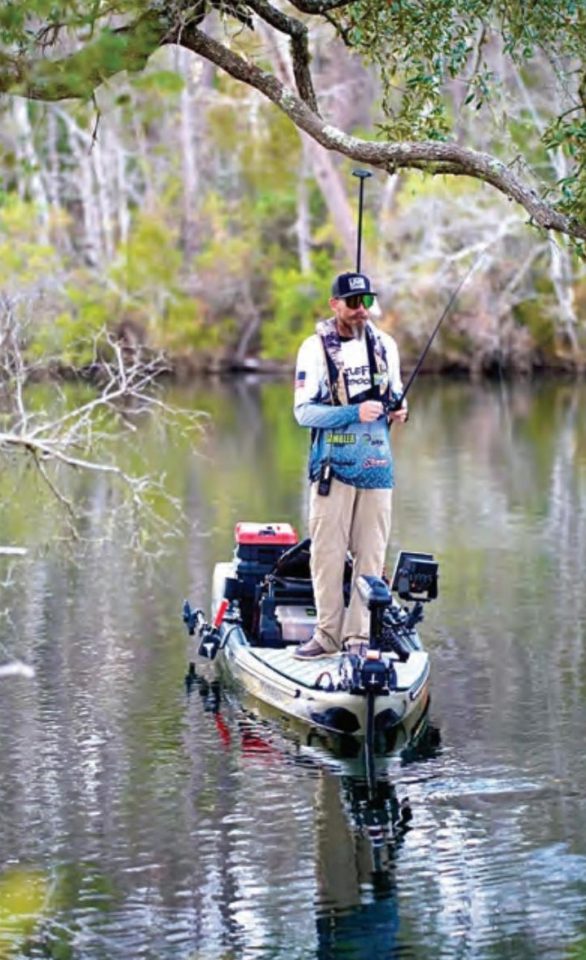
Unlike larger bass boats, kayaks allow fishermen to move quietly through shallow water without spooking feeding fish. Their smaller size makes it easier to reach protected coves, narrow creeks, and shoreline cover where spawning shad gather in large numbers. The low profile also changes the experience entirely. Success during the spawn often comes down to timing. Most anglers launch before daylight because the best feeding activity usually happens during the first hour after sunrise. Once the sun gets high, the visible action often disappears quickly.
Finding spawning shad requires attention to detail. Riprap banks near bridges and causeways are classic spawning areas because shad attach their eggs to hard surfaces. Grass edges, dock pilings, and current breaks can also attract baitfish. The signs may seem subtle at first, small flickers near the shoreline or nervous water against the bank, but feeding fish are rarely far away. Lure selection during the spawn is simple compared to other seasonal patterns. White remains the dominant color because it closely imitates shad. Spinnerbaits, soft-plastic swimbaits, vibrating jigs, and topwater lures all produce strikes when worked parallel to shoreline cover. Topwater bites are especially memorable from a kayak. Explosive strikes beside the boat often leave anglers soaked and scrambling.
Preparation matters. Because the feeding window is short, experienced kayak fishermen simplify their gear and rig rods before launching. Efficiency can make the difference between capitalizing on the frenzy and missing it entirely. Safety is equally important. Many anglers launch in darkness, making navigation lights and life jackets essential. Spring water temperatures can still be dangerously cold, and busy boat traffic near popular fisheries adds another layer of risk.
Even so, dedicated kayak anglers return every spring for the same reason: few fishing experiences match the intensity of the shad spawn. For a short time each year, rivers and reservoirs erupt with life at sunrise. And for anglers willing to paddle quietly into the morning mist, the reward is unforgettable: fast fishing, explosive strikes, and a front-row seat to one of nature’s most exciting feeding frenzies.