

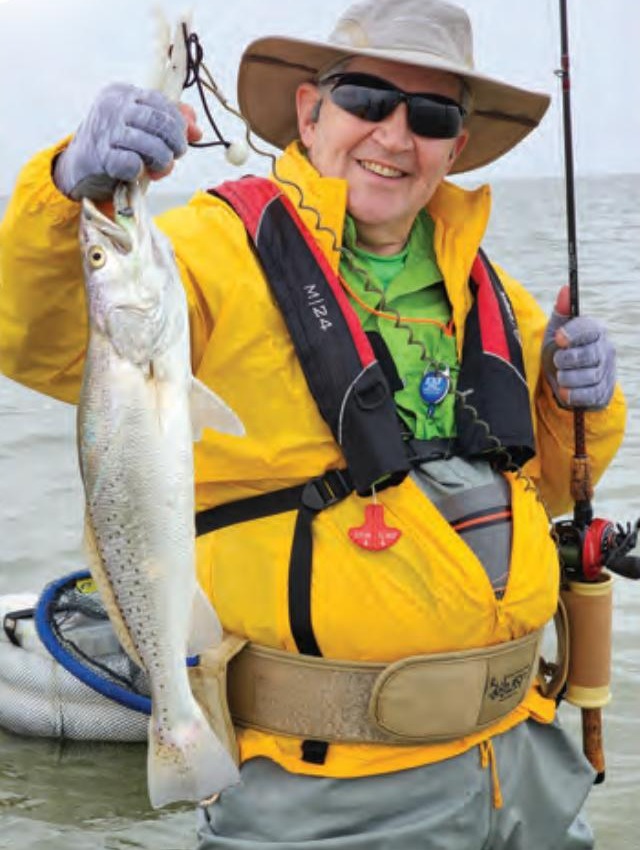
If March is the warm-up, April is go time. Longer days, greener water, and steady warming trends flip the inshore switch from “transition” to “feed.” The bait is thicker, the tides feel stronger, and the fish are no longer just staging, they’re hunting. April is when things start getting fun in a hurry. The key word this month is movement. By April, speckled trout are pushing onto reefs, sandbars, and grass edges with more consistency. Redfish are cruising shorelines, flooded grass, and marsh drains with purpose. Flounder settle into ambush points along drop-offs and current seams. Water temperature swings aren’t as drastic as early spring, but bait movement tied to tides becomes critical. Instead of asking where the warmest water is, start asking: Where is the cleanest moving water? Where is bait being pushed? Where is current creating ambush points? Points, drains, and wind-blown shorelines shine in April. If water is moving and bait is present, predators won’t be far away.
Unlike the slower mid-afternoon bites of late winter, April often rewards early risers. That first light window can be electric, especially on calm mornings with bait dimpling the surface. This is when topwaters re-enter the rotation in a serious way. There’s nothing subtle about an April blowup. But don’t force it. If fish are swiping and missing, switch to a soft plastic or suspending bait and clean up the followers.
April fish are more aggressive, but they’re still opportunistic. Paddle tails, shrimp imitations, and swimbaits all shine, especially when worked with a confident, steady retrieve. Water clarity should dictate your approach. In cleaner water natural colors and subtle action are key. In stained water, vibration and contrast matter more. If fish are chasing, cover water. If they’re following but not committing, slow down and add pauses. Let the fish tell you what they want.
April breezes can stack bait against shorelines and points. Wind creates feeding lanes. Instead of hiding from it, position yourself to use it. Drift with it. Fish into it. Work the edges it creates. Wind plus tide plus bait equals opportunity.
Next trip, challenge yourself by starting on a wind-blown shoreline and working it thoroughly. Then move to a protected drain and compare activity. Pay attention. Which has more bait? Which has more strikes? Fishing in April is less about luck and more about reading conditions in real time.
April feels alive. The marsh hums. Birds dive. Mullet scatter. The sun carries warmth instead of warning. It’s the month where confidence returns, patterns stabilize, and fish feed longer and harder. Somewhere between the first cast and the last drift, you’ll remember why spring inshore fishing is hard to beat. The water’s warming and the fish are moving. Are you taking a kid fishing?