
By Haley Stephens, Sea Spirit Fishing
For generations, the red snapper has defined Florida’s Atlantic coast: now, a new chapter in management could redefine its future.
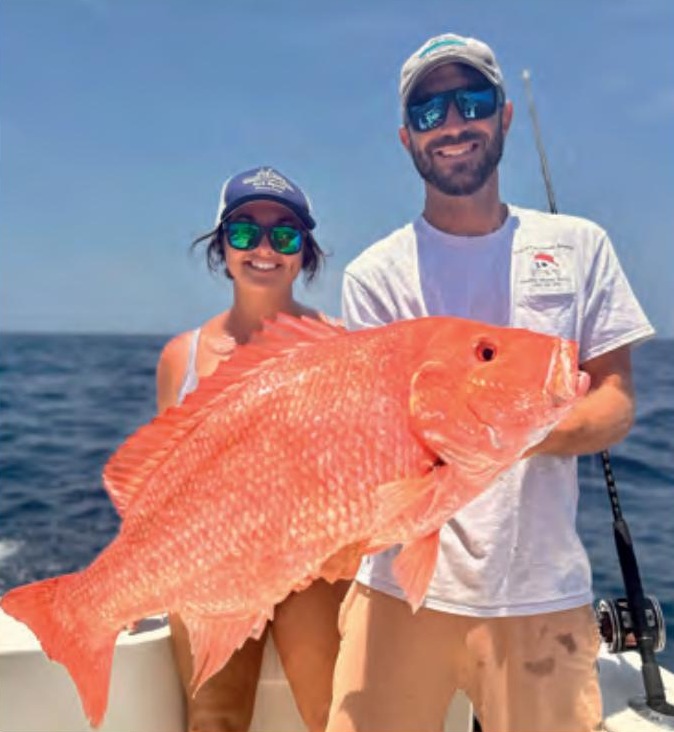
Since 1977, generations of legendary captains have watched the sun rise over Ponce Inlet from the deck of the Sea Spirit. Every morning brings a familiar rhythm, the hum of engines, the salt in the air, and a boat full of hopeful anglers: families, kids, first-timers, and old salts who’ve been fishing longer than I’ve been alive.
For so many of us who make our living, or our memories, on these waters, red snapper isn’t just a fish. It’s part of our story, our livelihood, and the cornerstone of fishery management controversy since 2010.
So when Governor Ron DeSantis announced on November 11 that Florida intends to assume state management of the Atlantic red snapper fishery in federal waters, many of us felt an emotional wave of relief, and renewed hope that the tides might finally be turning in our favor.
Momentum at Every Level
This state initiative didn’t happen overnight. Results of SEDAR 73 Update Stock Assessment indicated that red snapper were no longer considered overfished. At the South Atlantic Fishery Management Council’s September 2025 meeting, members from all four South Atlantic states voted to pursue a state-management framework for red snapper, following a Presidential Executive Order encouraging regional flexibility in federal fisheries.
For the first time in years, there’s alignment between state and federal leadership, an acknowledgment that the system we’ve been operating under simply hasn’t worked. The Council’s action opened the door, and Florida’s leadership stepped through it.
Exempted Fishing Permit: Testing State Management
All four South Atlantic states have now submitted Exempted Fishing Permit (EFP) applications to test the transition to state management. These pilot programs outline state-based methods for improving recreational and for-hire harvest data while maintaining essential conservation safeguards.
Unlike the limited, lottery-based Florida Atlantic Red Snapper EFP currently underway, the new multi-state permits would include open-access seasons for all private recreational anglers (with valid saltwater licenses) and federally permitted for-hire charter boats.
Florida’s proposal features a 39-day season, divided into two segments: May 22 to June 30 and October 2-4, 9-11, and 16-18. Other South Atlantic states, with smaller angler populations, have proposed even longer seasons, some exceeding sixty days. The EFPs have been submitted to the U.S. Secretary of Commerce Howard Lutnick for approval, and Governor DeSantis has expressed confidence they’ll be warmly received.
“These EFPs act as a test drive for future state management, providing the science, data, and accountability tools needed to move away from one-size-fits-all federal rules and toward locally informed decisions.”
Florida’s Proven Path Forward
Florida’s success in the Gulf of America offers a clear blueprint. When the state gained management authority for Gulf red snapper, seasons expanded, compliance improved, and the fishery thrived.
The FWC Marine Fisheries team has proven they can handle the science, monitoring, and outreach required for success. Managing Atlantic red snapper isn’t a copy-and-paste job: it demands local knowledge and flexibility. And for once, it feels like someone finally understands what we’ve been saying for years: access and conservation can go hand in hand.
Challenges We’ve Endured
Anyone who’s been offshore here knows the frustration of the past decade and a half. We’ve watched red snapper populations flourish while federal data models barely budged.
Still, our fishing community never gave up. We showed up to workshops and hearings, joined advisory panels, volunteered for cooperative research, and taught Best Fishing Practices every chance we got. We stayed committed to doing things right: scientifically, responsibly, and sustainably.
Now, those efforts are paying off. The EFP and the state-management proposal show that the voices of fishermen are finally being heard.
Looking Ahead
This announcement isn’t a finish line, it’s a new starting point. Success will depend on collaboration between FWC, the South Atlantic states, stakeholders, and scientists to ensure the system remains sustainable for the long haul.
But for the first time in years, it truly feels like we’re steering in the right direction. From my wheelhouse, I can already picture what this means for our coast: more smiling faces on deck, more families making memories, and more small businesses thriving through a predictable, meaningful season.
That’s what this is all about: not politics, not paperwork, but people. Families, livelihoods, and the next generation of anglers who deserve the chance to experience the magic of catching a red snapper off Florida’s Atlantic coast.
If we get this right, if we stay collaborative, data-driven, and conservation-minded, this could be the turning tide our fishery has needed for years.