
By Capt. Michael Savedow, Edgewater River Guide
November can start early winter fishing patterns. If we have chilly weather, the seasonal transition will begin. Subtropical coastal migrating species will start moving south to spend the winter, including Tarpon, Jack Crevalle, Ladyfish, Pompano, and Spanish Mackerel. The mullet run follows the same southbound route: how soon and how low the water temperatures drop will determine the timing. Resident fish such as Redfish, Snook, Seatrout, and Snapper remain in our waters through the winter. Cold-water species will begin to move in, including Sheepshead, Black Drum, and Bluefish. Mosquito Lagoon water levels can remain high after a flooded autumn. In the lagoon and backcountry, shorelines can still be productive with high water, as well as shallow grass and flooded marshes. Expect more sight fishing opportunities if the water is clear, and more blind casting of soft plastics or soaking cut/live finger mullet or mud minnows in cloudy water.
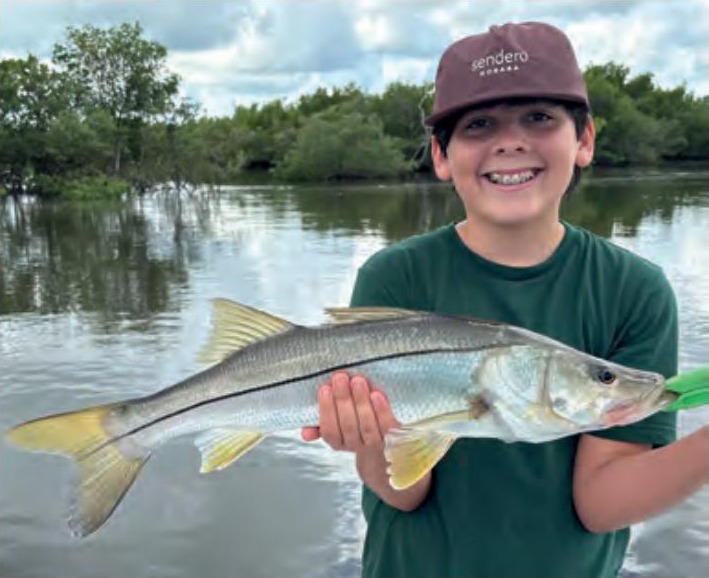
Early mornings are great for throwing topwater lures over shallow edges and submerged drop-offs. After the sun is up, switch to subsurface presentations: soft plastics with 1/8 or 1/16 oz jig heads for deeper water, or weedless jerkbaits in the shallows. In the backwaters, free-lined live shrimp or finger mullet are always reliable baits. Hard plastics like MirrOdines and twitch baits also work well. For Pompano in the surf, look for clean water and fish the sloughs between sandbars. Sand fleas, cut clam, fishbites, and peeled shrimp are some of the best bait choices. Some Pompano also find their way into the backwaters. Snook season is still open, with a 28″ to 32″ slot size limit and one fish per person per day. A Snook permit is required on your fishing license to keep one. To target bigger fish, use larger baits such as mullet, pinfish, or select shrimp, free-lined for surface action or with a small weight for deeper spots. For artificials, use larger swimming lures for surface action and jigs or bucktails for deeper areas. Productive locations include the Ponce Inlet jetties and channel, bridge pilings, docks, Spruce Creek, Tomoka areas, and Haulover Canal. Nighttime, early morning before sunrise, and moving water during tidal changes are typically best.
November also continues the bull Redfish spawn, with Ponce Inlet being the center of attention. They can also be found along the Intracoastal Waterway, around the NSB bridges, and Haulover Canal. Anchor or drift and soak half or whole Blue Crabs, live Pinfish, or Mullet. Before the chill sets in, Snook, Tarpon, big Jacks, and Sharks can also be in the inlet alongside the big Reds. Some years, the first cold spell can come this month. If it arrives fast and hard, lagoon fish can get a little shocky after a year of warm water as they adjust to the first cold water of the season. The nearshore ocean can be very good this month for southward-migrating schools of Spanish Mackerel and Bluefish, from near the beach out to about a mile offshore. Watch for surface activity such as whitewater strikes and diving birds: these fish will be feeding on small baitfish, so “match the hatch” with small, long-casting shiny spoons, Gotcha plugs, or flies. Redfish remain catch-and-release only south of the New Smyrna SR-44 bridge, and Flounder season is closed through November.