
By Blake Abbey, Kayak King Charters
Kayak fishing in the Intracoastal waterways can be incredible but also a bit intimidating when trying to find spots that hold fish year-round. Bridges and docks are among the most reliable areas. When launching your kayak, look for a bridge not far from your local inlet. Most bridges get a few hours of solid current on incoming and outgoing tides and usually hold bait fish.
This time of year, my target is always snook. They stick close to pilings and fenders, waiting for shrimp or bait fish to drift by. Snook are ambush predators, so presentation is key. One of my favorite lures for fishing fenders is an old-school Bill Lewis Rat-L-Trap. My grandfather and uncles used them decades ago around the Halifax River. Besides a red and white bucktail jig or silver spoon, a lipless crankbait is my most universal bridge lure. I love the Rat-L-Trap for its versatility and ability to cover water. It’s an excellent search bait that catches multiple species.
When setting up on a bridge, I position my kayak stern to the current, casting slightly ahead of my target so the current sweeps the lure in. Snook often school up, so I repeat the same cast, letting my lure fall like a leaf: sometimes they hit it on the fall. That sudden thump is the best bite. I focus on the last two hours of incoming or outgoing tide, what my friends and I call a “trickle tide,” for the best action. One big advantage of kayak fishing is the ability to drift close to fenders and bounce lures through the strike zone. If you’re not getting snagged occasionally, you’re not close enough. I get bites between fenders or right next to concrete lips where pulling fish out seems impossible, but it pays off.
Another great tactic is trolling. Trolling a lipless crankbait is super effective on a kayak. The vibrations call up fish, even during tough bite windows. Under low bridges, you can hear the rattle echo, and when a snook hits, it’s electrifying. If you see mullet schools, troll right through them: often, it triggers a frenzy. Florida has five species of snook that will school during the fall mullet run in Central Florida.
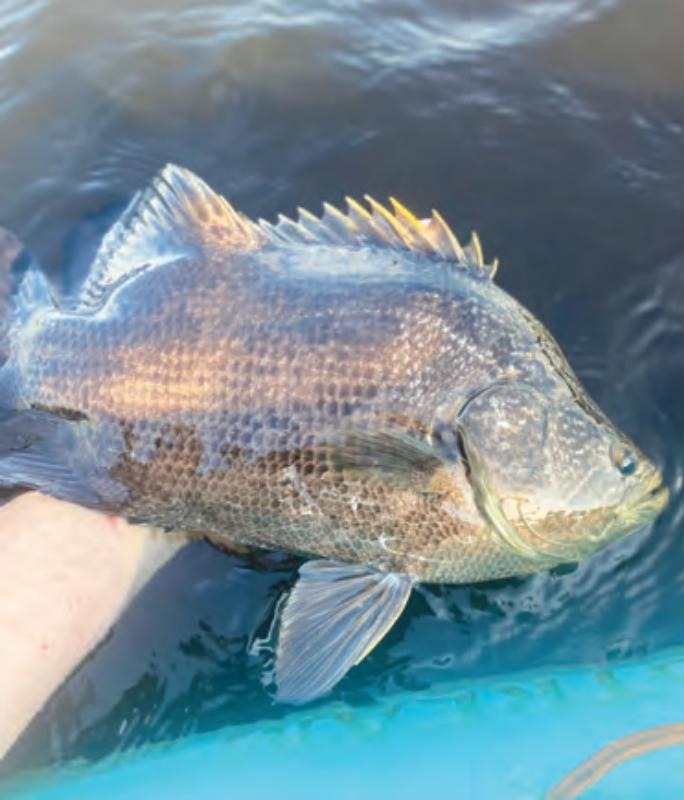
The Tomoka River feeds into the Halifax River, and several bridges are nearby. High Bridge Road is a gem, showcasing untouched Old Florida. There are tons of great kayak launch spots right off the road. Also, keep an eye out for crab trap buoys, ideal for spotting tripletail. With a kayak’s stealth, you can get close and sight cast with a 1/8 oz Voodoo Shrimp or 3-inch paddle tail. In December and January, Sheepshead stack up on nearly every bridge in the river. If you’re interested in a guided trip, give me a call.