

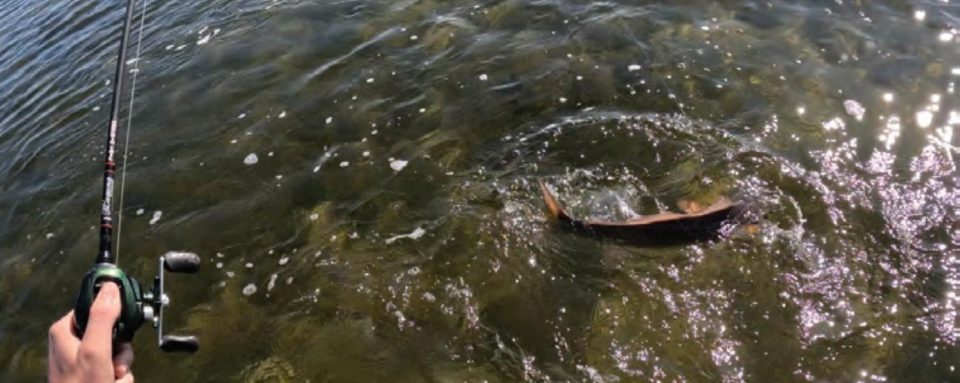
Spring fishing brings its own set of challenges and opportunities. As water temperatures rise, targeting inshore species like trout, flounder, and reds requires adapting to their changing behavior. Early spring often means downsizing lures. As fish feed on tiny baitfish and shrimp, small lures mimic these natural prey more effectively. Large trout and reds may already have full stomachs, expelling small bait when caught, signaling the need for a smaller offering to match the size of the food they’re consuming.
With the warming water, fish become more aggressive, and it’s time to speed up your retrieval techniques. After a slower winter, anglers should bring out faster-action rods and smaller versions of topwater and twitch baits. While spring can bring calm days, cool fronts and high-pressure systems still affect fish behavior. When this happens, adjusting to the conditions, rather than just relying on the calendar, is key. Opting for colors like white or silver for hard baits can pay off during this time.
However, spring also brings stiff winds and crowds. In South Texas, gusts can reach up to 30 knots, making conditions challenging, especially for kayakers. It’s crucial to check the forecast and plan for these challenging winds. Additionally, spring break brings an influx of boaters and kayakers, many of whom may be rusty from the off-season. Defensive driving and boating have become essential, and leaving early is recommended to avoid congestion at ramps and on the roads.
Conditions are still variable when targeting fish in March. The water can remain chilly despite warmer air temperatures. Cold fronts affect fish behavior, making them seek deeper water with more stable temperatures. While some fish may move closer to flats as the day warms, they rarely stray far from deep water. Focus on areas near the outer edges of guts that lead from deeper water to flats, adjusting as the day progresses.
During high-pressure conditions, downsizing lures remains reliable, especially as young forage species become abundant. Natural or translucent colors work well; slowing the retrieval to keep lures closer to the bottom can increase success. When this approach doesn’t yield results, switching tactics can help. Using noisy lures, such as rattling crankbaits or loud topwaters, can provoke a reaction bite when fish are less willing to chase actively. Experimenting with these extremes can help you find the right approach in high-pressure situations: quiet, slow presentations versus noisy, aggressive ones.
Spring fishing requires patience, adaptability, and a keen eye for weather and water conditions. Whether you’re dealing with shifting fish patterns or navigating spring break crowds, it’s a great time to get out on the water, and maybe bring a kid along for the adventure.