

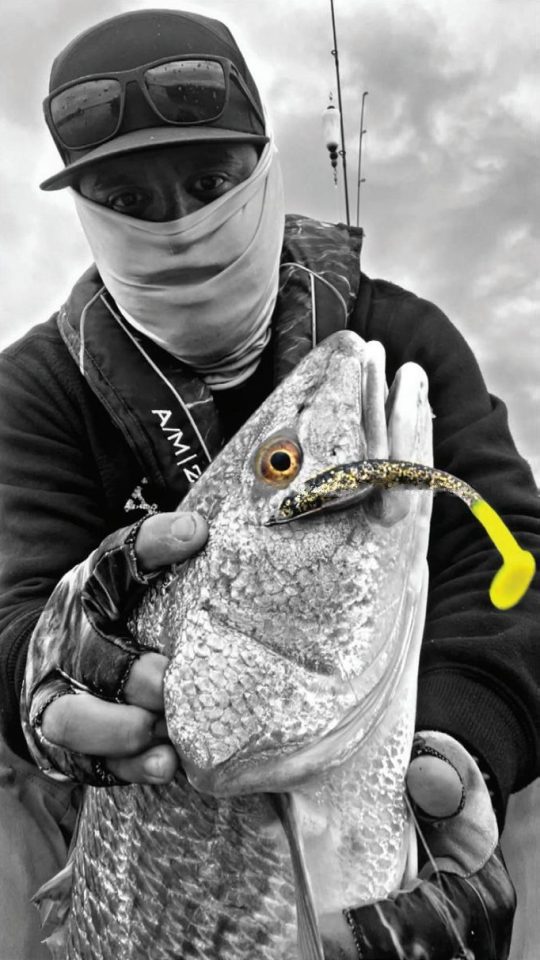
The weather is warming, and the winter-challenged fishermen are pulling their boats out of storage. This undoubtedly will lead to more traffic on the water. With the added traffic and high southern winds, this is a perfect time for me to avoid both by swapping the kayak for the boat for a few weeks and going deep into the marsh.
Spring’s rising tides will flood new water over the once-dry marsh, encouraging more fish to explore the new terrain in a quest for a good meal. Little do they know, I will be waiting there with my trustworthy rattling paddle tail.
Redfish will be my primary target since I spent the winter targeting trophy trout. As always, bait will be the key to a successful outing. Since the size of the bait will be small, I like to have two characteristics in my lure. They are small, roughly 3″, and have a clear sparkling color. This helps produce in most situations because the bait is tiny, maybe smaller than my lure. That is why I like the transparent reflective colors; they disguise the lure’s size, making it appear smaller.
I like to work irregular shorelines since they have more areas for the bait to hide. I also feel it slows the reds down. When they have a straight shore, they tend to cover more water rather than hang around, allowing you more opportunities.
If the water is off-color, I like to add a popping cork rather than changing color. Known for their effectiveness when using live shrimp, popping corks also improve the performance of soft plastics. Depending on the situation and preference, these can be used on a jig head, weedless weighted hook, or with just a hook. When choosing a popping cork, I like a deep cup, which is hard to find on most corks in today’s market, but there are a few. Most manufacturers went away from the actual reason for the name, popping. The original, and a few out there today, still have the deep concave top, which produces the slurping sound and splash mimicking a fish feeding on the surface. I find that sound is what attracts the fish more than a clack. I’ll dedicate an entire article to cork fishing and the many ways to use them soon.
While targeting reds, use a stout hook on your jig head. A hook you can flex with your finger is better suited for trout than reds. This is not where you want to skimp on quality. Not only do the hooks need to stand up to the hookset into the thick skin of a red, but they also need to hold up to the torque of removing the hook from their jaw. I see many hooks get destroyed at this point.
Thank you for reading my words and don’t forget to take a kid fishing! The time is right.