

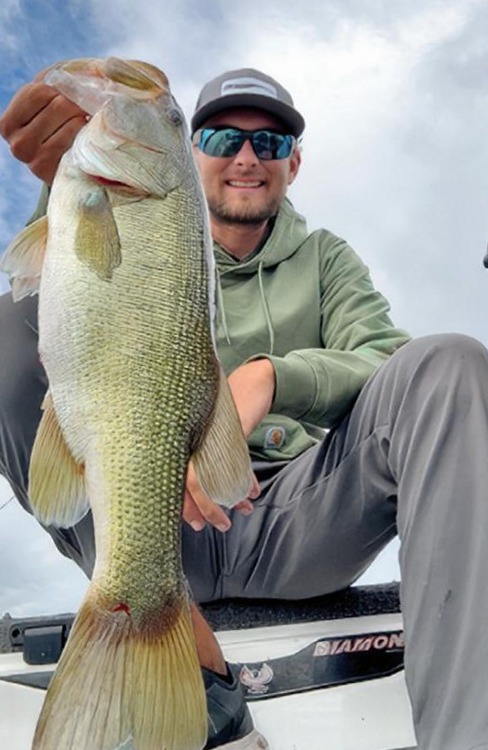
By Joey Bloom, Copper State Tackle Tournament Pro
There’s nothing quite like the first real cold front of fall in the Southeast. One week you’re wearing a short-sleeve shirt and chasing schooling fish under bluebird skies, and the next, you’re bundled up, watching your breath in the morning fog, wondering where those fish disappeared to. When the water temps take that first noticeable drop, usually sliding from the mid-70s into the 60s, it marks a big turning point in fall fishing. The bass feel it too, and their behavior changes almost overnight.
After a strong cold front, the first thing I notice is how much tighter fish get to cover. Those aggressive, roaming schools that were chasing bait across shallow flats will suddenly scatter. The sudden high pressure that follows a front can make fish sulk and suspend, and the feeding windows get short. It’s not that they stop feeding entirely: they just reposition and get more selective.
For me, this is when slowing down and thinking about the why behind each cast becomes crucial. Bass are still following the bait, usually shad, but their movements tighten up. I’ll start by checking shallow areas near deep water access, like secondary points, creek channel bends, or riprap banks near the mouths of pockets. These are transition zones where bass can adjust depth easily as the temperature and pressure fluctuate.
Baits That Shine After the Front
When those water temps dip, I turn to confidence baits that match the conditions and the mood of the fish. A lipless crankbait is one of my first picks: it gives off a rattle and tight wobble that’s perfect for cooler water. I’ll run something like “Bill Lewis” 1/2 oz trap in a natural shad colors along shell bars, grass patches, or around isolated wood. The key is to fish it methodically: make contact with cover and pop it often.
If the lipless bite feels off, I downshift into finesse mode. A 1/2-ounce jig with a Bait Cave Customs Cave Cricket Craw trailer is deadly around docks, brush, or isolated laydowns. I’ll pitch it on lighter line and really soak each piece of cover. The colder the water gets, the longer I’ll let that bait sit.
Another underrated player this time of year is a suspending Rapala jerkbait. When bass suspend after a front, that slow, twitch-pause-twitch cadence can trigger bites from fish that otherwise wouldn’t move far. On high-pressure bluebird days, I might make a cast, let the bait sit ten seconds, and only then give it a twitch. It’s all about patience and timing.
Patterns to Check
The best post-front patterns often come down to consistency. Look for areas with a stable food source: places where baitfish stack up despite changing conditions. In reservoirs across the Southeast, that might mean a windblown main-lake point one day and a calm pocket the next. Keep an eye on your electronics, follow the bait, and don’t be afraid to adjust your depth until you see life.
Cold fronts separate the patient from the impatient. It’s a time to slow down, fish smart, and make every cast count. The bass might be moody, but they’re still there, and with the right mindset and a few Copper State Tackle baits on your line, you can turn those tough post-front days into opportunities.
Pro Tip: When in doubt, start with a lipless crankbait to cover water and locate active fish. Once you find them, pick up a jig or shakey head with a Bait Cave Customs Thick Stick worm to milk the area for those extra bites. You can grab both at Copper State Tackle, the gear I trust when every ounce matters.
Follow all of Joey Bloom’s fishing and fun on Instagram, Facebook, and YouTube at Joey Bloom Fishing.