

 By: Capt. Joel Brandenburg
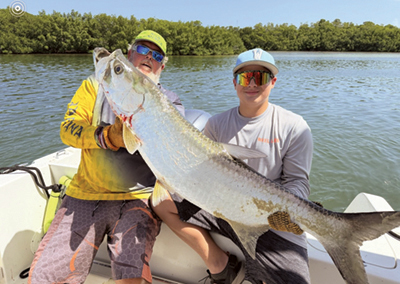
Tarpon, also known as the silver king is one of the most sought-after game fish in the world. No other fish fights like a tarpon. A tarpon is an angry fish who will hit your bait with a lot of velocity, its aggression is unparalleled and leap into the air with an acrobatic jumps. It’s a very hearty fish that doesn’t wear down easily.
Tarpon are a sought-after trophy fish not only because of the way they fight, but because they can be difficult to fool into biting the bait, when they do bite your bait because of their prehistoric armored mouths it can be hard to hook up the tarpon. Once you hook up, you have to remember to bow to the king when he jumps. Many times, the fight comes down to who’s going to wear out first the tarpon or the angler. They are also hard to land. Nowadays on the big migratory tarpon, we just keep them in the water beside the boat. Take the hook out of their mouth, have the angler lean over the side of the boat and take a picture of the tarpon in the water. On smaller domestic tarpon, we will take them out of the water for a picture and then quickly revive them. We mostly target tarpon at the bridges.
At the 7-mile Bridge, the best bait to use his live mullet. At Bahia Honda Bridge, the best bait to use is live pass crabs. At Long Bridge, anglers have the most success with cut bait, which is very controversial because local anglers aren’t thrilled about catching tarpon on cut bait with chum because it ruins the live bait bite and makes it a little bit less sporty.
We also guide anglers fly fishing in the flats for tarpon which is probably one of, if not the most challenging and most rewarding ways to fish for tarpon. Site casting on the crystal-clear flats for tarpon with a fly is challenging because you have to sneak in on them to get into casting range. The flying fisherman has to be good enough to lead the tarpon with the fly like a quarterback, leads a receiver with a football. Once the fly fisherman makes a well enough cast then they have to make a good enough presentation on the retrieve to fool the tarpon enough to hit the fly while stripping. Then once you hook up on a tarpon with a fly rod, you have to give it a lot of give-and-take like a good marriage. It’s not unusual whether your fly fishing or using a spinning rod and reel to go one for five, or one for 10 on tarpon. This is why landing a tarpon is such a memorable and sought-after experience.
We release all of the tarpon we catch. They are not good to eat and are a bloody bony fish. Marathon is positioned between Key Largo and Key West and is known for its beautiful flats in the Gulf of America with a lot of trenches and ledges located under bridges that connect the Atlantic and the Gulf of America. We have a consistent flow with our tide currents that rip through cuts in channels making our tarpon habitat ideal for large migratory tarpon that typically come in between April and September and our domestic tarpon that are typically smaller, but live here year-round.
The tarpon bite is very tide and weather dependent. The best time to target tarpon, if the tide and whether are good is late afternoon an hour or two before dark. It’s important to get with your guide and target them at the right time in place which can mean the difference between a boring trip where you just drowned bait waiting for a tarpon to bite or an epic trip with a bunch of hook ups in a short time.
For a tarpon charter with Ana Banana fishing company with Capt. Joel Brandenburg, call or text us at 813–267–4401 Cell or 305–395–4212 office or visit us in person at ponchos fuel dock located at 1280 Oceanview Ave. Marathon Florida Keys.
— To book a charter with Captain Joel Brandenburg of Ana Banana fishing Company call 813–267–4401 cell or 305–395–4212 office or visit www.marathonkeyfishingcharters@ gmail.com or come visit with us in person at poncho’s fuel dock located at 1280 Ocean View Ave. Marathon Florida Keys.