
By Capt. Michael Savedow, Edgewater River Guide
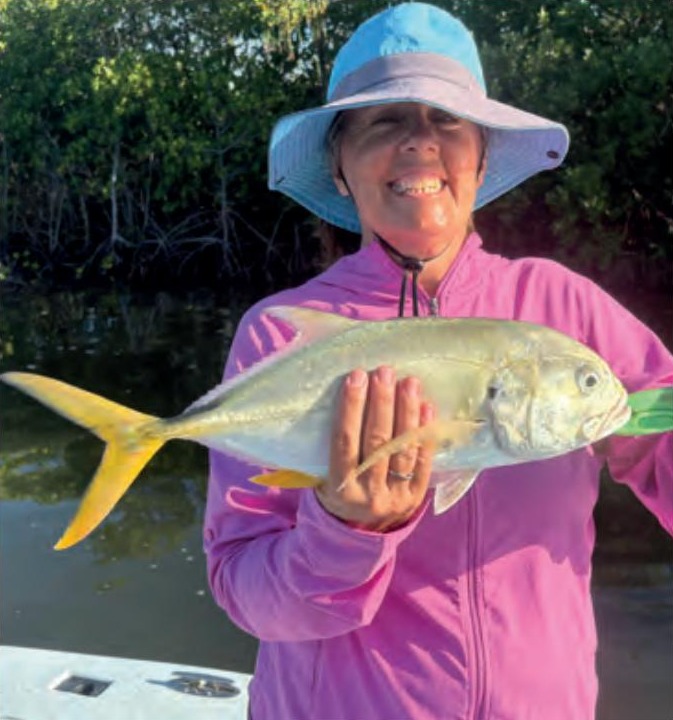
February often brings a continuation of winter patterns, though an early spring can begin to emerge if the first several weeks of the year have been mild. If we do have an early spring, expect the early return of coastal migratory fish, including schooling Jack Crevalle, Bluefish, Ladyfish, Pompano, Spanish Mackerel and the over size jumbo Black Drum. Lagoon Redfish can be found on shallow water flats, sloughs, creeks, and drop off edges. The larger reds are deeper into the ICW channel, New Smyrna bridges, Ponce Inlet and Haulover Canal. Shallow reds are a sight fishing target in winter, search slow and quiet as our skinny water schools are notoriously spooky.
You will want to use select size shrimp, small live finger mullet, mud minnows, and crab parts are the best natural baits. Small soft plastics, Gulp baits, and shrimp or crab patterns on fly can be good artificial choices. Seatrout can be found in both shallow and deeper water, with many of the larger fish holding on the flats. Freelined finger mullet are the most popular live bait for soaking, though big specks tend to be skittish in shallow water. Sight fishing often requires spotting fish from a distance and making long, accurate casts. Mullet, select shrimp, and larger soft plastics can all produce bites.
We should all consider the release of larger Seatrout which are the most valuable breeder females. School size trout are usually deeper on drop offs, holes, and channels. Snook season reopens February 1, with a slot limit of 28 to 32 inches and a 1 fish per person restriction, requiring a snook permit on your fishing license. Linesiders are ambush feeders, so live bait, artificial lures, and flies can all be effective. They’re commonly found near man-made structures like jetties, bridges, and docks, as well as natural areas in backwaters and lagoons with downed mangroves, branches, drop-offs, and points. Sheepshead are always a winter/spring fish, they will eat fiddler crabs, small live or peeled frozen shrimp, pieces of clam, oyster or any crab. They have a small hard mouth so use a sharp hook of #2 to 1/0 range, as little hardware and weight as possible to make your rig stealthy in the clear winter water.
Fish sheepshead’s favorite hangouts, bridges, dock pilings, rock piles, inlet jetties, and oyster bars. You can chum them in with crushed oysters or barnacles scraped off pilings. Bluefish are open water fish found in the river, backcountry, inlet, and surf. They are not picky, minnows, shrimp, flies, top water lures, and flashy small lures are all good choices. You can find them near spots holding bait fish schools, jetties, bridges, and back water points with current ambush spots.