

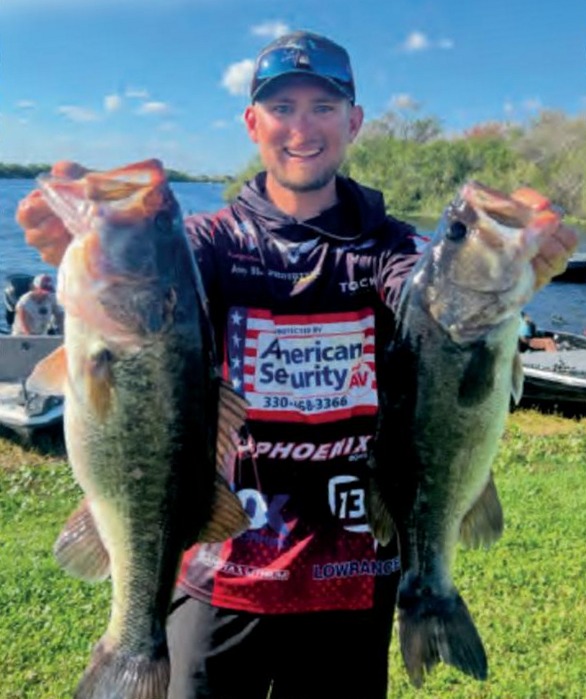
By Joey Bloom, NPFL Professional Angler
The first cool mornings of fall always bring a little excitement for me. When I back the boat down the ramp and see mist rising off the water, I know the season is changing and the bass are about to do the same. Down here in the Southeast, the fall transition is one of the most unpredictable, but also one of the most rewarding, times of the year.
The key is bait. As soon as water temps slide from the 90s into the mid-70s, shad begin their migration out of the main lake and into the creeks or shallow shorelines. They’re chasing plankton, and the bass are never far behind. If you can find the bait, you’ll find the fish. I don’t even bother making a cast until I see shad flickering on the surface or lighting up my electronics.
My mornings usually start with topwater or a shad-colored swim jig. A walking bait is one of my favorites to throw across the mouth of a pocket, and it can trigger some of the most violent strikes of the season. I’ll never forget a morning last October when a seven-pounder came out of two feet of water and nearly ripped the rod out of my hand. That’s fall bass fishing: when they decide to eat, they don’t play around.
As the sun gets higher, I shift gears. Shallow wood, laydowns, docks and grass edges become prime ambush points, and that’s when I reach for a squarebill crankbait. I like squarebills because they’ve got just the right wobble and durability to grind through cover. The trick is to make contact: bump that crankbait off a stump, dock, or tick it through grass. Those deflections are what trigger bites. Covering water quickly is important because bass are constantly on the move, shadowing those bait schools.
But not every fish in the lake makes the same move at the same time. Some of the bigger, older bass stay out deeper longer. For those, I keep a Carolina rig handy, and I’ve had great success pairing it with Bait Cave Customs hand-poured soft plastics. That slow drag across a secondary point can tempt those stubborn deep fish that won’t chase a moving bait.
Weather plays a huge role, too. A cold front will slow everything down, and that’s when I switch to finesse: something like a Bait Cave Customs, Cave Club finesse worm on a shaky head, worked methodically. On the flip side, a cloudy, stable day can set off a feeding frenzy, and that’s the time to throw reaction baits and keep covering water. Fall fishing here is a constant adjustment game, and you have to be willing to change with the conditions.
At the end of the day, the fall transition is like putting a puzzle together. The pieces change daily, sometimes hourly, but once you figure out where the bait is, how the bass are relating, and what they’ll react to, the action can be phenomenal. It’s the season where I cover the most water, throw the widest variety of baits, and stay the most flexible.
For me, that’s what makes fall in the Southeast so special. It’s unpredictable, challenging, and full of opportunity. And when everything lines up, it’s some of the best bass fishing of the entire year. With the right mindset, and the right tackle, you can make this season one to remember.
Follow all of Joey Bloom’s fishing and fun on Instagram, Facebook, and YouTube at Joey Bloom Fishing.