

By Alex Baumann
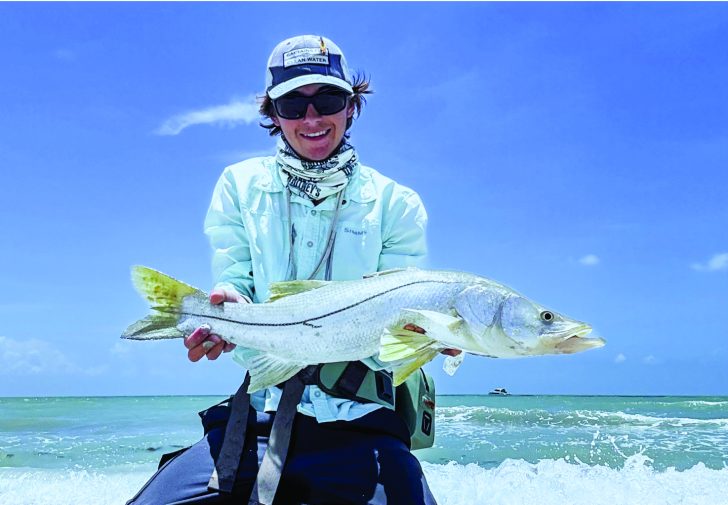 April turns the beaches of Sanibel Island into prime staging grounds for spawning snook. As bait schools gather along the Gulf shoreline and water temperatures climb, fish slide out of the back bays and set up in the surf. For fly anglers, success this month depends less on luck and more on reading water, understanding tides and making a few smart adjustments.
At first glance Sanibel’s beaches can look plain, but subtle structure matters. Focus on troughs that run parallel to shore, small points that push into the Gulf, cuts in the sandbar and spots where wave energy changes. If waves break unevenly or form a clear seam, there’s usually a depression or current edge beneath the surface. Snook use these troughs as travel lanes and feeding stations. They’ll pin bait against the inside edge of a bar or sit just off a cut where water funnels through. Don’t be afraid to take a whole day just to identify these spots. Walk with
Tide movement determines where snook hold. On a strong incoming tide fish often cruise tight to the beach in less than two feet of water pushing bait into the wash. As the tide peaks and begins to fall they slide into the first trough or stage near cuts where the outgoing current sweeps forage out to sea. Rather than blind casting long stretches plan your session around moving water. Pick the best ambush points and time your approach to match the strongest part of the tide.
Floating lines can work but an intermediate line is usually the better choice in April’s surf. Even in calm conditions wave action puts too much bow in a floating line and pulls your fly in an unnatural way. A clear intermediate keeps the connection direct, cuts through chop and lets your fly track closer to the bottom which is right in the snook’s feeding window. This is especially helpful when fish sit in fort mthe trough instead of the skinny wash. I personally like Royal Wulff’s clear intermediate. Holding depth and tension improves control and hookup rates.
April can bring everything from clear water to wind-stirred color. In clean water go natural and sparse. White, tan and translucent baitfish patterns with light flash match glass minnows and small pilchards. Downsizing often helps when fish get picky. In dirtier water add contrast and profile. Black and orange is my go to, purple or a darker back can make a big difference. Contrast is key to giving snook something to track when visibility drops.
Empty beaches at first light offer quiet water and aggressive fish. Take advantage of that window to cover structure slowly and methodically. But don’t ignore the value of a higher sun. A low tide in the middle of the day can offer some amazing sight fishing. As the light climbs, visibility into the trough gets better and the surf can turn into a bomber sight-fishing arena.
On Sanibel Island in April, beach snook reward anglers who slow down read the water and adapt. Structure, tides, line choice and light all work together in the surf. When you line them up the payoff is incredible: a flash of silver, a hard strip set and pure chaos in the wash. If you are interested in Fly Fishing, contact me and I’ll show you my techniques!