
By Joshua Perez
As we transition out of the winter season, it’s time to get kayaks dialed in and ready for the spring spawn. Josh Perez is an avid kayak fisherman and content creator, and in this article, he explains how he tricked out his kayak and shares his love of the kayak fishing community.
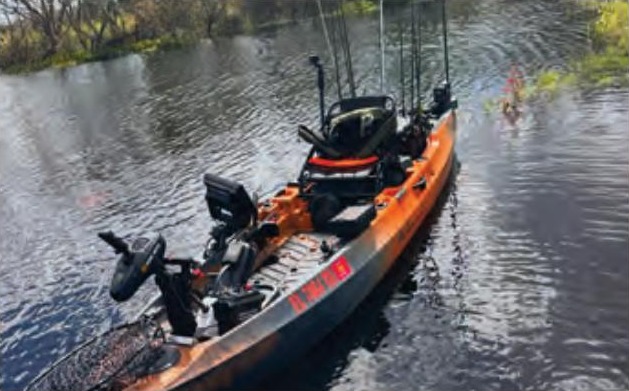
As I push off the shore with my trusty Old Town Autopilot 136, I’m reminded of the countless hours of fishing joy it has brought me. In fact, this is my second Autopilot 136, a testament to the exceptional craftsmanship and performance it embodies. There’s a reason I fell in love with this kayak, and it’s something that countless anglers can relate to.
Kayak fishing is an incredible way to experience the thrill of reeling in a catch, whether you’re out on the water alone or exploring new fishing spots with friends. The versatility of a kayak allows you to access areas that traditional boats often can’t reach, providing an unparalleled level of fishing immersion. For many, the freedom to explore and discover new hidden fishing gems is a major draw to the sport.
One of the standout features of a kayak is its ability to mimic the experience of a bass boat, minus the hefty price tag and maintenance headaches. The Old Town Autopilot 136, for example, comes equipped with features like a built-in motor pod and pedal-assist system that make navigating through tight spaces a breeze. However, the true magic lies in the customization potential: it’s not uncommon for kayak owners like myself to outfit their vessel with an extensive array of accessories to tailor it to their unique preferences.
From LED lights, graphs, to power pole anchors and rod holders, the world of kayak fishing accessories is vast and exciting. Many owners like to add personal touches such as cup holders, storage crates, and even built-in coolers. The possibilities are endless, allowing each kayak to reflect its owner’s personality and style.
To enhance my Old Town Autopilot 136 for a more competitive fishing experience, I made several accessory upgrades. While the kayak’s built-in rod holders were useful, I found that I needed additional storage for my gear as I honed my skills on the water. To address this, I upgraded to a YakAttack fishing crate, which now boasts an impressive ten rod holders, allowing me to keep my rods organized and easily accessible.
Furthermore, recognizing the importance of documenting my fishing adventures, I installed cameras to capture every moment. By mounting my GoPros on the kayak, I’ve been able to chronicle my journey, providing both a visual record of my progress and a way to share my experiences with fellow anglers. These upgrades have not only increased my efficiency on the water but have also transformed my fishing outings into memorable adventures worth revisiting.
From a financial perspective, kayak fishing is remarkably affordable, especially when compared to the costs associated with boat ownership. Without the need for costly engine maintenance, storage, and insurance premiums, kayak fishing allows anglers to stay afloat without breaking the bank. Moreover, storing a kayak is a far more manageable affair: simply dry it off, hang it in a garage or shed, and you’re good to go.
Perhaps one of the most striking aspects of the kayak fishing community is its tight-knit nature. Anglers often gather at local launch points, swapping tales and tips, and forming lasting bonds over their shared passion for the sport. This camaraderie fosters a sense of belonging, making kayak fishing all the more enjoyable.
Lastly, there’s an intangible quality to kayak fishing that’s hard to put into words: an unshakeable connection to the natural world. Paddling through calm waters, I feel an unbroken sense of unity with the elements. It’s not uncommon to find myself in areas so remote that boats have never ventured, and it’s in these hidden corners that I find solace in the peaceful rhythm of nature.
As I settle into my kayak, ready to tackle the day’s fishing adventure, I’m reminded of the boundless joy that kayak fishing has to offer. The Autopilot 136 may be just a vessel, but for me, it represents a way of life, one that combines adventure, community, and a deep appreciation for the natural world.