

By Brandon Hewlett
When winter loosens its grip and spring begins to settle in, anticipation builds for bass and anglers alike. As water temperatures climb into the high 50s and low 60s, fish push shallow and settle along the banks to spawn. That seasonal movement sets the stage for one of the most exhilarating moments in fishing. Few thrills compare to quietly approaching the shoreline and locking eyes on a bass guarding its bed.
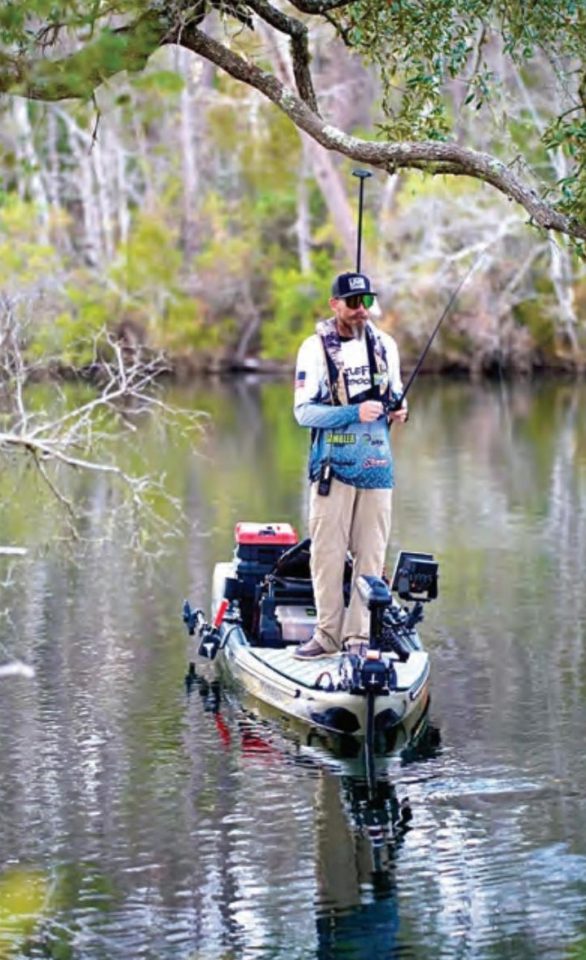
It becomes a test of patience and strategy, a true game of cat and mouse that plays perfectly to the strengths of a stealthy fishing kayak. I built my Native Titan 13.5 with a custom casting deck, quiet motor, and Power Pole Micro to gain elevation for spotting fish, slip in silently, and anchor without disturbance. While the kayak provides an advantage, success still comes down to preparation. For sight fishing, a few essentials make all the difference. Quality polarized sunglasses are at the top of the list. I prefer an amber lens with a green mirror to cut glare and maximize visibility in changing light. Positioning is just as critical. I keep the sun at my back and stay far enough away to avoid casting a shadow toward the fish.
The Power Pole Micro lets me hold position quickly and quietly, but the real battle begins with the first flip. My setup includes a custom Garage Rods 7’6″ flipping stick, a Shimano SLX in an 8.2 to 1 gear ratio, and 17-pound P-Line fluorocarbon. The key for stealth in shallow water and part of what helped me earn a 12th-place finish at the Newport Bassmaster Kayak Series presented by Native Watercraft. Lure choice is endless, from bubblegum stick baits to tiny white craws, drop shots to jigs. I usually begin with a Gambler Fat Ace in Christmas blue tail and adjust as needed. Don’t get discouraged if the bite doesn’t come immediately.
Sometimes it takes several changes to trigger a reaction. Once you engage the fish, technique varies from angler to angler. Some prefer to hop the bait while others subtly shake it, but my go to method is tapping the butt of the rod with my off hand. That slight tap sends controlled vibrations down the rod and line, allowing the bait to quiver naturally in place without pulling it off the bed. From there, everything builds toward the hookset, the final move in this cat and mouse game. A bass may lift the bait and drop it, or it may grab it and take off. Patience is critical. Wait until you feel the fish swim off the bed, then drive the hook home with confidence.
I hope these tips help you make the most of the spawning season and put you in position when the next big bass locks onto a bed.