
By Jessie Diaz
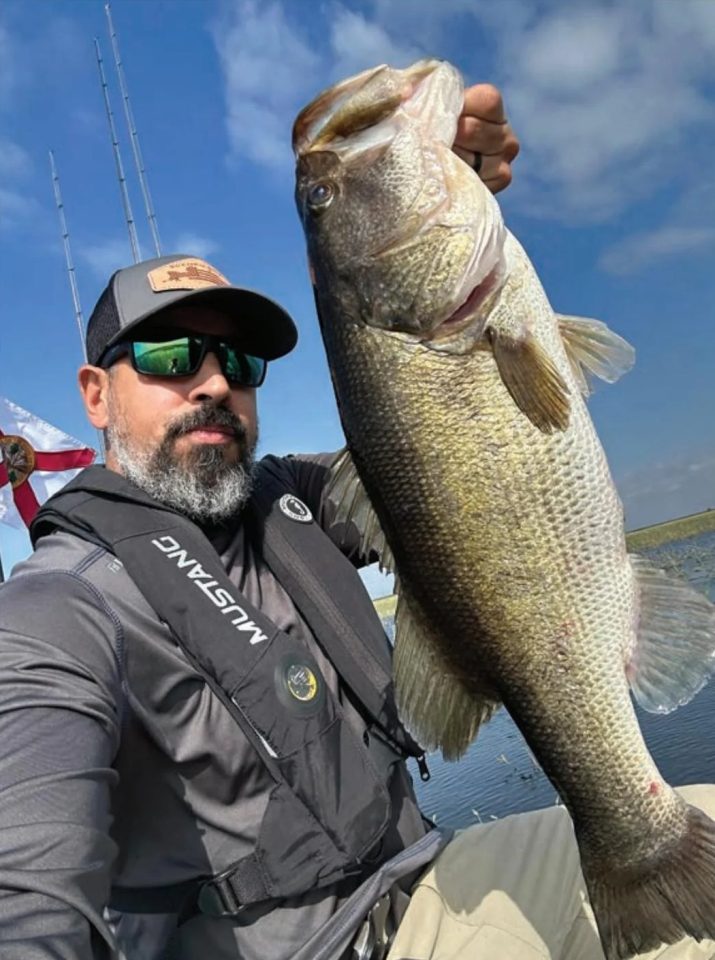
October in Florida may not bring the dramatic fall weather experienced elsewhere in the country, but subtle seasonal changes can have a major effect on largemouth bass. Shorter days, gradually cooling water temperatures, and the first hints of approaching cold fronts begin pulling bass away from some of their summer tendencies. For a kayak angler, October is an excellent month to cover water, locate active fish, and take advantage of bass increasingly willing to chase moving baits. One of my primary objectives during October is locating healthy vegetation and areas holding baitfish. Hydrilla, Kissimmee grass, lily pads, reeds, and other aquatic vegetation provide both ambush points and access to forage. From a kayak, I can quietly work into areas that are difficult for larger boats to reach. I particularly like places where different types of vegetation intersect or where submerged grass creates an outside edge adjacent to deeper water. Bluegill, shad, shiners, and other forage concentrating around these areas can quickly turn an ordinary stretch of grass into a productive feeding zone.
Early in the morning, I like to keep the kayak moving and fish aggressively. A walking topwater such as a Zara Spook style bait is an excellent search bait over submerged vegetation and along open water grass edges. I typically fish it on a Scenko Stix 6’11” medium, extra fast casting rod with 40 pound braid. Braid provides excellent casting distance and allows me to work the bait crisply while maintaining the strength needed around vegetation. A steady “walk-the-dog” retrieve is my starting point, but I’ll slow down and add longer pauses if fish are following without committing. Another October staple is a vibrating jig. I prefer a 3/8 or 1/2 ounce model depending on depth and vegetation density, paired with a Gambler Lures Komodo trailer. I generally fish it on a Scenko Stix 7’4″ to 7’6″ medium-heavy, moderate-fast rod with anywhere from 16 to 20 pound fluorocarbon. Rather than simply retrieving it through open water, I want the bait making contact with vegetation. When it begins loading with grass, a quick snap of the rod can rip it free and trigger a reaction strike. A kayak’s low profile also makes it easy to position parallel to grass lines, allowing me to keep the bait in the strike zone longer.
As the sun gets higher, I begin targeting vegetation more deliberately. A Texas-rigged Zoom magnum speed worm is one of my most versatile presentations. I normally rig it with a 5/0 straight shank hook and anywhere between 1/8 to 1/4 ounce tungsten weight. 17 to 20 pound fluorocarbon provides sensitivity and abrasion resistance while still allowing the bait to move naturally. I can swim the worm over submerged grass, drop it into holes, or work it slowly along edges without changing setups. When bass bury deeper into cover, I’ll position my kayak within pitching distance and pick the area apart. A compact creature bait or craw behind a 3/8 to 3/4 ounce tungsten weight allows me to efficiently dissect reeds, hyacinth edges, Kissimmee grass, and isolated vegetation. In heavy cover, I prefer a Scenko Stix 7’8″ heavy, fast flipping rod, high-speed reel, and 65 pound braid. Because a kayak can be pulled toward a hooked fish, getting the bass moving immediately and maintaining pressure is especially important around thick vegetation.
October kayak fishing in Florida is ultimately about mobility and adaptability. A kayak provides the stealth and shallow-water access to capitalize on changing conditions, but the angler still has to pay attention to baitfish, vegetation, wind, and weather. Start aggressively, cover water, and then slow down once the fish reveal where they are. October’s subtle transition can produce some of the most enjoyable and productive kayak bass fishing of the year.