


By: Alex Baumann
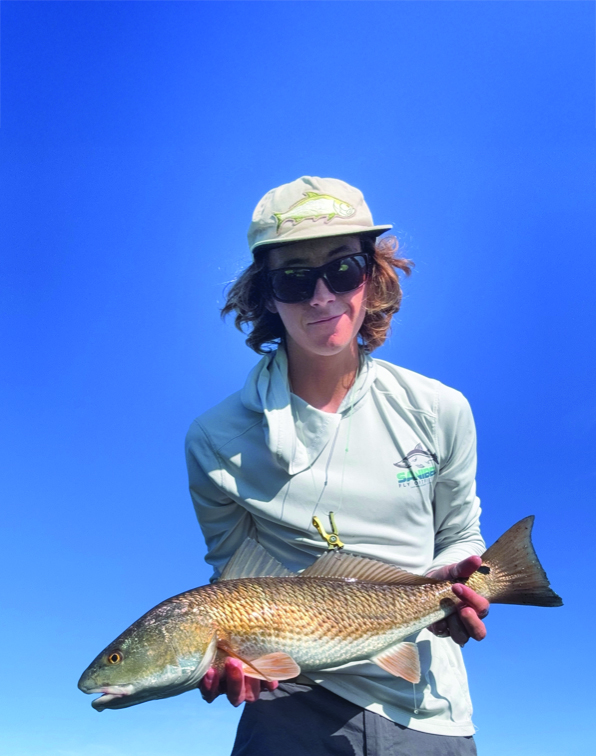 January on Sanibel Island is about as good as it gets for fly anglers who love technical skinny water sight fishing. Winter’s low sun and those steady northeast blows help pull the tides even lower than the charts call for, draining the grass flats and leaving sand bars high and dry across Pine Island Sound and the backcountry. For anyone chasing redfish, it honestly feels like the whole system tilts in your favor. You get clear water, concentrated fish, and plenty of shots if you are patient enough to slow down and really hunt.
The entire game this month and winter in general revolves around the bottom of the tide. As the water slips off the flats, reds slide off the grass beds and gather around potholes, slight depressions, and the little troughs that form next to exposed bars. When there is just a sheet of water left, you will start seeing backs, tails, and push wakes as they feed on baitfish, small crabs, and shrimp.
Stealth becomes everything in this ultra-shallow water. With winter clarity, the fish see and feel every mistake. Moving extra slow and using the wind to hide your approach makes a huge difference. Keep an eye out for birds wading on flats as redfish tend to be close behind feeding on the goodies they stir up. An eight weight with a floating line and a 9-foot 16-pound tapered leader with 2-3 feet of 20-pound shock tippet, dropping to 16-pound if need be. Around ten to twelve feet in total.
Fly choice does not need to be complicated. Small, subtle, and lightly weighted wins this month. Tan or olive EP minnows, micro crab patterns, shrimp imitations, or little craft fur baitfish in sizes two through six all match what they are feeding on. I personally like throwing bead chain shrimp patterns. The biggest mistake this time of year is too much weight. When the water is low, a heavy fly will plow bottom or blow fish out instantly. If you really need a touch more weight for a deeper edge or pothole, let it sink for longer opposed to adding more weight.
Presentation is the whole deal. Reds in low water rarely tolerate anything landing right on top of them, except if they are tailing in the grass. Lead the fish a few feet, more if they are moving, and let the fly settle naturally. Then give it tiny ticks of the line, just enough to look like a shrimp trying to scoot off or a crab digging down. When a fish flares and pins the fly, strip until you are tight. A trout set will cost you.
Some of the best sessions on these extra low tides come from wading instead of polling. A skiff, even a paddle board or kayak, pushing through inches of water usually bumps fish before you ever see them, but stepping out lets you move precisely, stalk singles, and drop a fly exactly where it needs to go. Look for waving tails, aggressive pushes, or that bronze flash on white sand.