

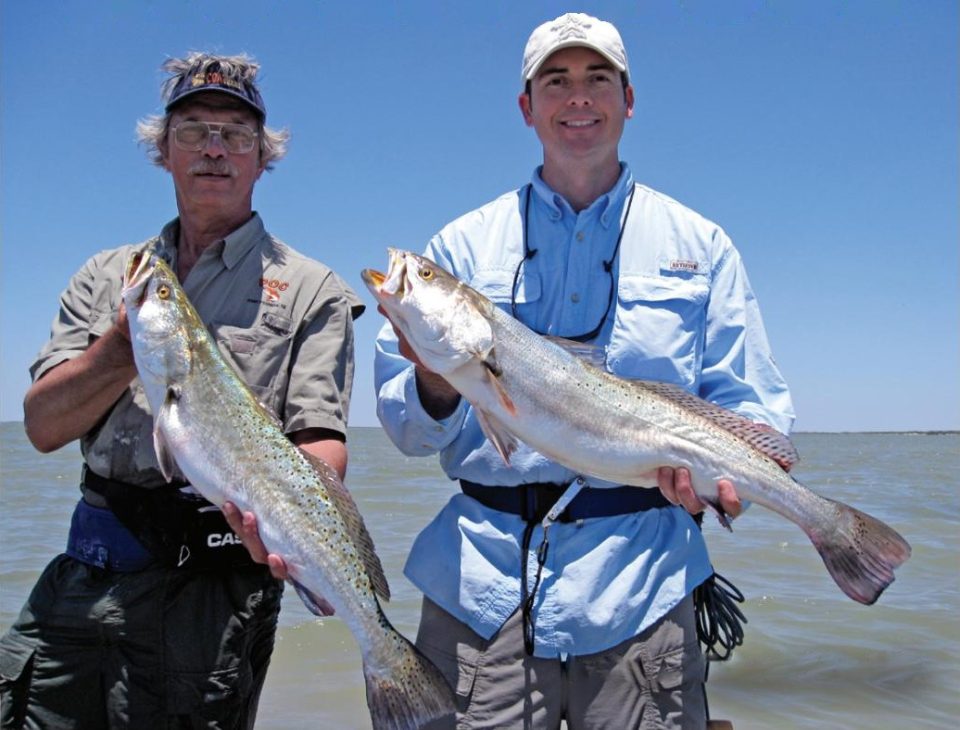
If you’re a dedicated trout angler like me, you’re probably eyeing the opportunity to land a personal best speckled trout before the spring spawn. While most Texas anglers focus on big trout from mid-December to early April, May offers a prime window for trophy fish, especially with the full moon on May 12 this year. The warmer weather also makes fishing more enjoyable, creating a perfect environment for those seeking action-packed outings.
May sees many anglers shifting focus and putting away their waders. However, big speckled trout are still holding onto their eggs, making this an excellent opportunity to catch one before they spawn. The pleasant temperatures in May allow us to use more aggressive lures and speed up our presentations, a welcome change from the slow, careful approach required in winter. For those who enjoy a faster pace, May is the time to go.
One of my favorite techniques for targeting trophy trout in May is using topwater lures. The explosive strikes on the surface are thrilling, and the warmer waters make fish more eager to strike. But topwater isn’t the only option: slow-sinking and suspending lures also perform well. As a paddle-tail enthusiast, I recommend experimenting with 3″, 4″, and 5″ sizes and adapting to the fish preference. At this time of year, trout are aggressive, so adding rattling sounds to your lures can make a difference.
In terms of location, I prefer fishing grass flats in water that is knee- to waist-deep. Flats with small creek drains or depressions are incredibly productive, as these features tend to concentrate fish. Shallow grass areas are ideal, and potholes can increase your chances of finding a big trout. These areas offer an excellent opportunity to catch a hefty fish before the season transitions.
However, fishing in May can be challenging due to the abundance of small baitfish in the water, like tiny glass minnows. Trout are often gorging on these minuscule meals, making it difficult to grab their attention with larger lures. The key is downsizing your lures to match the size of the baitfish. I’ve found that using the smallest lure you can cast effectively is the best approach when you see an abundance of small baitfish. Both hard and soft lures are effective, and colors like white and silver tend to mimic the forage closely.
When fishing around bait balls, I recommend positioning your lure on the edge or beneath the school. This strategy attracts fish to a single target, rather than competing with a large mass of baitfish. Slow-sinking lures are ideal, as they give the appearance of wounded prey, which trout find irresistible.
Tandem rigs are another excellent option for spring fishing. By rigging two smaller lures, you can cast farther while still maintaining the proper lure size. A combination of small silver spoons and white bucktails works well when fishing around glass minnows. A small floater diver with a spoon trailer also adds an extra level of action.
In the spring, downsizing your lure presentation can make a significant difference in your success, potentially leading to the big trout you’ve been waiting for.