

By Tim Barefoot
The month of April is when the real change comes around. For a number of reasons, April can be a game changer. Just for starters, we have made it out of the month of March and the “Gales of March.” The temperatures will rise, the daylight hours will be longer, and the urge to spawn will get stronger for a lot of species.
The pelagics will be on the march up the coast headed north, and I have taken a much different approach to fishing in general, but especially for the pelagics. Sure, we may troll for a short period in the morning to mark some bait and/or productive bottom holding fish like African pompano, big snapper and grouper, but trolling will quickly stop and drifting and/or flying the kite will begin as the sun rises in the sky. As the title of the article suggests, we have either stopped on the way out or will start to work with the Sabiki right away.
This is the key: when you have the live bait, you get the bites. Don’t hesitate to bring bait from the dock like pinfish, menhaden, etc. to use as light-line kite bait or bottom bait. Sometimes it’s just easier to pull up beside the bait barge and exchange some green for sardines, cigar minnows, goggle eyes, etc., so you can just get on with getting to where you’re going and start fishing right off the bat.
When you find a good mark of bait, and hopefully bottom structure, the stage is set. Put the kite floats, tackle or freelines out and start sending the jigs to the mid or lower water column, and even to the bottom. Of course, I like a natural looking squid jig you can cast to breaking fish that’s heavy enough to fish in the mid to lower water column or a few hundred feet deep when needed on the bottom. The entire time you were harvesting fish on the jig pay attention to the free line or float baits and keep some chum going if possible. This is a great way to bring the fish to you. They will definitely come to the chum.
As always, I would pay attention to the amount of noise you make. Don’t let cooler lids slam down or hard objects hit the deck; this will send a soundwave hundreds of yards away from the boat telling the fish something isn’t right. If you’re drifting quietly with a chum slick out and beautiful live baits, you have a recipe for success!
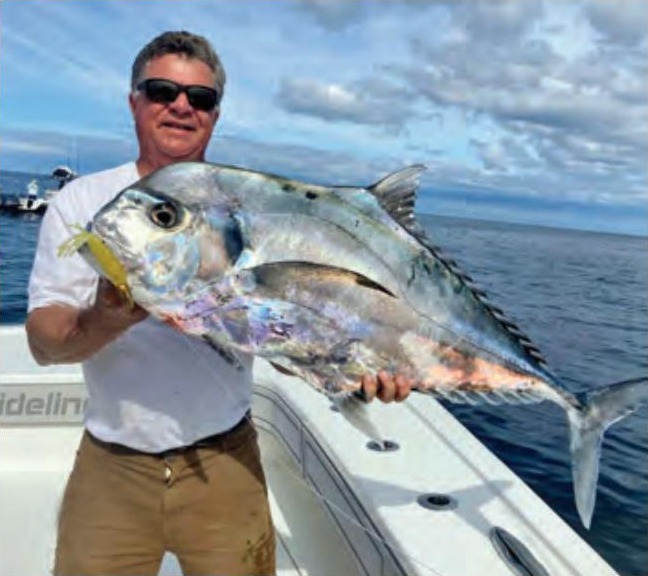
This is a great time of year to catch that African pompano of a lifetime in 150- to 250-foot range as they are ready to break up into smaller schools for spawning. Again, I like a squid-type jig because it is the primary food source for the African pompano. It is the bulk of their diet according to the experts. And it’s not just African pompano; everything out there, without exception, eats a squid. This is a great way to catch big snappers as well. Pull up to where the marks are, make a drift and repeat as often as needed. A trolling motor upfront can slow the drift nicely, keeping your boat forward in the wind with the kite bait or float, and baits behind the boat very manageable.
And be sure to keep an eye on the recorder to know where to keep the jig in front of fish.
For more info on the squid jig and drifting, check out Tim Barefoot’s YouTube channel and website, barefootcatsandtackle.com.