

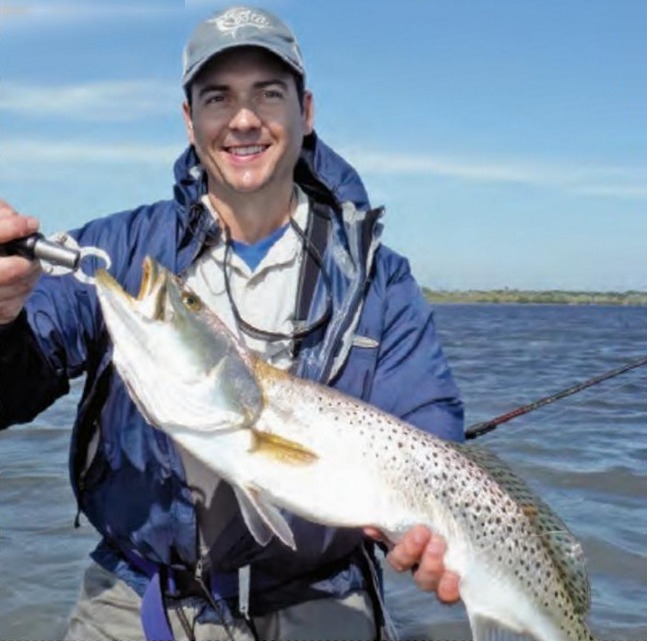
The flat was silent. No birds. No bait popping. Only the crunch of frost under my boots and the faint ripple of tide against the shoreline. Every sensible voice in my head said the fish wouldn’t feed. Then the line jumped, just once, and everything changed.
For those who chase speckled trout of larger proportions, one truth becomes painfully clear: big winter trout do not give themselves up easily. Cold water slows their metabolism, feeding windows shrink, and mistakes multiply. Most anglers default to the winter mantra: slow everything down. It’s solid advice… but it isn’t the whole story.
Winter trophy trout live in a world of conserving energy. They don’t want to chase far, but they will react violently to the right movement at the right moment. That’s where two tools come together: erratic presentation and precise timing.
Let’s start with timing.
Like many anglers, I once dismissed solunar tables as folklore. As a kid, I’d scan the fish symbols on the calendar before every trip. More fish meant higher hopes. Fewer fish meant lower expectations. Over time, I saw no real correlation and abandoned the idea. But as I matured into a better saltwater angler, and began truly hunting trophy trout, I returned to solunar tables, this time paired with tides and conditions. The difference was undeniable.
These tables aren’t magic. They won’t put fish where they don’t exist. But if you are on fish, they often reveal when those fish are most willing to feed. Many anglers assume the “major” bite is always better than the “minor.” Not true. The difference is duration, not intensity. The major typically lasts about two hours, the minor closer to ninety minutes. Either can be explosive.
One rule I never break: don’t relocate during a feeding window. On a recent trip, I was grinding through a slow morning and nearly moved on. I checked the time: ten minutes before the bite. I stayed. What followed was an aggressive feed that turned a dead stretch into a trophy-class opportunity. Big trout don’t feed often. When they do, you’d better be ready.
That brings us to presentation.
In winter, I rely on suspending and slow-sinking lures with erratic, nervous action. When I say “slow,” I mean forward movement, not motion. With a soft, whippy rod, I shake the lure in place with almost no forward travel, then let it pause. Shake. Pause. Repeat. This technique works best with braided line, which transmits every movement without stretch.
Winter trout may be cold, but when timing and motion align, they don’t just bite… they attack. The strike comes without warning. No tap. No thump. Just sudden, heavy weight and the slow, head-shaking surge of a true gator. In that moment, frozen fingers, long quiet hours, and doubt all vanish. There is only tension in the line and the knowledge that patience, timing, and the right dance delivered the fish you came for.
And that’s why we brave the winter.