
By Capt. Tyler Woolcott, Florida Big Fish Adventures
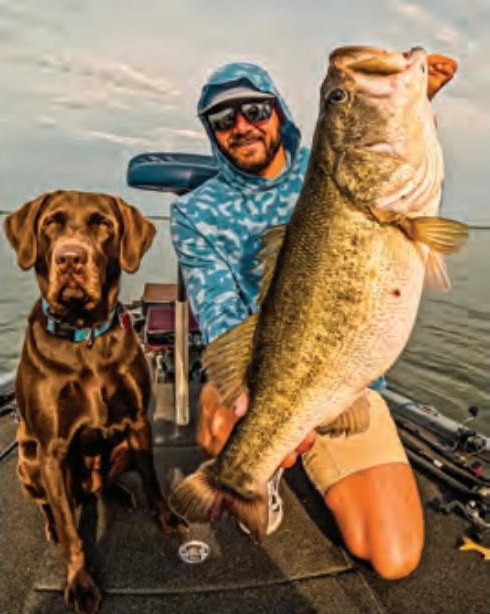
When you first drop your boat in the water, oftentimes it can be extremely overwhelming on where to fish and what to throw. One bait I have found in particular seems to catch bass at every lake I go to. This bait is a bladed jig, better known as a chatterbait. The bladed jig is an extremely versatile bait, meaning you can throw it around so many different types of cover and fish it at many varying depths. It allows you to cover a vast amount of water and locate bass that would usually take days to find with other baits.
As you approach a new lake or even one you have been to a thousand times, it’s always a good idea to throw a confidence bait that you know will get bites. The chatter-bait is mine. I’ve found that no matter the cover, grass, trees, docks, riprap, etc., it gets bit. With the blade on the front vibrating so erratically, it allows this bait to come through cover extremely well and creates a reaction strike no other bait can.
Let’s talk about matching the chatterbait to the bait forage. By matching the color of the bladed jig to the forage in the lake, a bass can’t resist it as a nice snack when you reel it through their home. Depending on the time of year and what kind of bait the bass are feeding on where you are fishing, there is a color made to match the hatch. If shad is the prevalent forage, I like to stick to a white or a baitfish color like a pearl and silver with a silver colored blade. If it’s bluegill, you can get by with a green pumpkin or anything with some yellow and orange mixed in with a darker blade color. Sometimes water color can play a factor in color choice as well. If the water is very dirty, you will have to use a color that will stick out so that they can see it pass by. Something like a white and chartreuse with a white blade (for baitfish imitation) or even a bright orange with a black blade (for crawfish imitation) can do the trick.
Sizes and weights of your bladed jig are extremely important. With sizes ranging from 1/4 oz. all the way to 1.25 oz., the depth you are fishing will decide what you tie on. I typically start with a 3/8 oz. or a 1/2 oz. which will allow you to cover water depths from 1 to 10 feet depending on your retrieve. If I find some deeper cover that I want to get down to and fish, I will go a little heavier to a 3/4 oz.
Buying a bladed jig and tying it directly on your rod usually isn’t too effective without putting a trailer on the back of it. I like to try and match the color of the trailer to the color of the skirt on your chatterbait of choice to get the most natural look for the fish. The type of trailer can be a bit more complicated. I use either a swimbait style trailer with a boot tail or a flapping style trailer like a craw pattern. The boot tail stands out when fish are very aggressive and aren’t scared of the more aggressive action the boot tail causes behind the bait. The flappy trailer is better for highly-pressured fish that want a little more of a subtle approach who might not like the amount of action a swimbait trailer has.
A chatterbait is a very dominant bait all across the country and I rely on this bait at all times of the year to help me put fish in the boat. Next time you hit the lake, give the chatter-bait a try and cover some water!
BLADED JIG GEAR: When throwing a bladed jig it’s important to have the correct gear. I use a 13 Fishing Myth Rod 7’5 MH-mod paired with a 13 Fishing Concept A 7.5:1 reel. I spool this up with 17 lb. Sufix Advance Fluorocarbon line making this the perfect combo for the job.
Tyler Woolcott is a professional tournament angler and guide.