

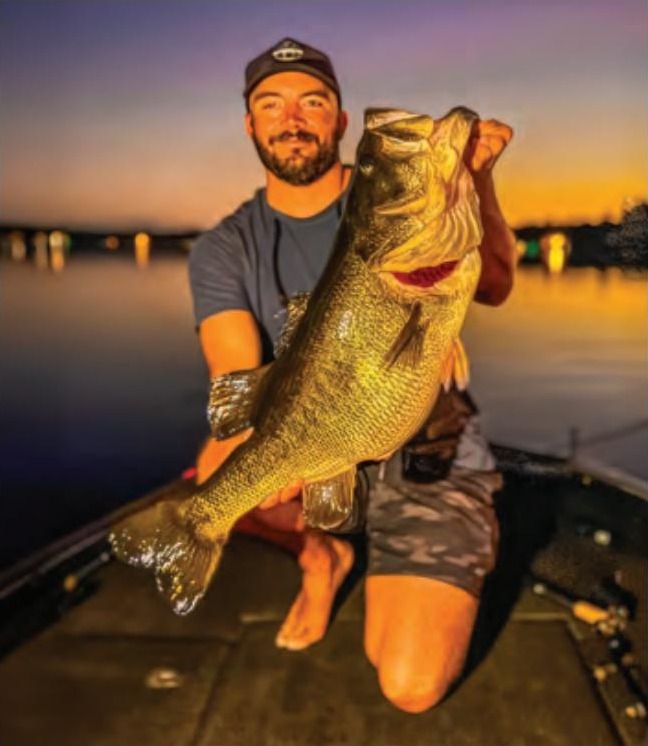
By Capt. Tyler Woolcott, Florida Big Fish Adventures
From February through April, bass flood the shallows to spawn, creating an exciting opportunity for anglers to catch monster fish. While various techniques can be effective, fishing with a big worm consistently tempts big, wary females. This method has proven successful nationwide, not just in the South.
Fishing a worm may not be the most thrilling technique, but it allows for a slow, precise presentation, ideal for enticing cautious bass. The key is patience and targeting high-percentage areas where these fish are likely holding.
One effective technique is casting a Texas-rigged stick bait. Many anglers waste time on unproductive water, but focusing on isolated cover maximizes success: small patches of grass, pads, wood, or rock structures. A 6″ worm in darker colors like black-and-blue works well, paired with a 1/16 oz or 1/8 oz weight for a natural presentation. Given the thick cover, 17-20 lb fluorocarbon is ideal for strength and stealth.
Another productive method is retrieving a big speed worm. This subtle, vibrating motion excites bass and helps locate fish before slowing down for precision tactics. In stained water, darker shades like June bug work best, while green pumpkin with flake is ideal for clear water. A 1/8 oz to 1/4 oz weight with 15-17 lb fluorocarbon balances presentation and control.
The wacky rig is highly effective in shallow water, particularly for pressured bass. This weightless presentation targets isolated cover, making it a deadly finesse option. A 10-15 lb fluorocarbon leader on a spinning setup provides the necessary balance of stealth and strength. As with other worm techniques, darker colors suit stained water, while natural tones excel in clear conditions.
Flipping a worm is less stealthy but allows precise bait placement in thick cover, such as pad fields, wood, or dense grass. This method is excellent for working through cover quickly while thoroughly breaking down key sections. Using large Senko-style baits and braided line ensures maximum strength. Weight selection varies from 3/8 oz to 3/4 oz, depending on cover density. Slowing down and targeting overlooked spots can set you apart from other anglers.
Rod and reel choices remain fairly consistent across these techniques. For casting and flipping, a 7’6″ medium-heavy to heavy action rod, such as the 13 Fishing Omen Series, paired with a high-speed baitcasting reel like the Concept A 7.5:1, ensures control and power. For wacky rigs, a 7’3″ medium-heavy spinning rod with a quality reel like the 13 Fishing Axum provides sensitivity and strength.
These big worm techniques have helped me land giants during the spawn, and I hope they do the same for you. Whether fishing Florida’s grass beds or rocky northern structures, these methods are time-tested and effective. Get out there this spring and hook into some monster bass!
Tyler Woolcott is a professional tournament angler and guide.