

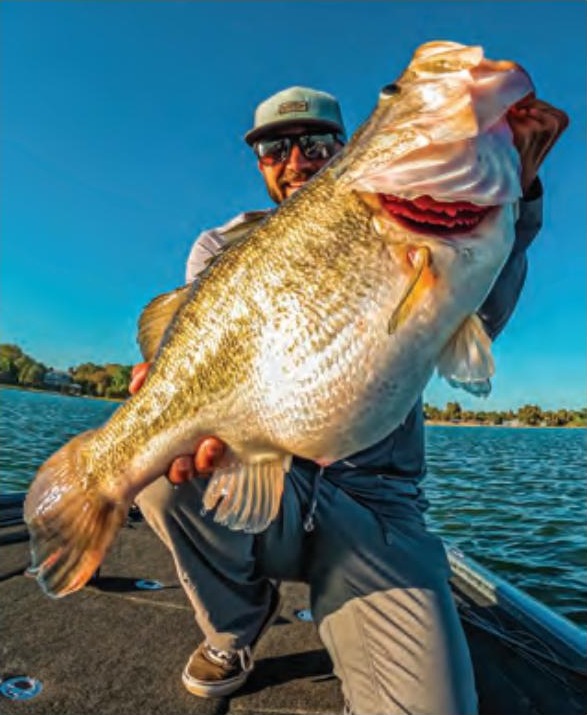
By Capt. Tyler Woolcott, Florida Big Fish Adventures
Most of the time the saying is true, bigger bait equals a bigger fish! Although elephants eat peanuts, a big bait profile is something fish can’t resist no matter if you are fishing the open ocean or the Great Lakes. I have spent a lot of time over the last few years throwing baits bigger than my old “comfort zone” sizes for bass and it is pretty special what gets curious to come look or bite them.
There are many different types of swimbaits out on the market, but I’ll break them down into two for this article to keep it simple. You have the hard, gliding-style treble hook swimbaits, or you have soft body swimbaits that is more of a steady slow reel and most of the time more weedless. They both have an awesome time and place to get thrown and will both attract some very big fish.
Depending on where you are in the country and the size of the forage in your lake, a normal meal for a bass is usually much bigger than you think. A 6- to 8-inch bluegill is something a two or three pound bass would have no issues at all with swallowing and eating it whole. A 10+ pounder, on the other hand, could eat bait fish such as gizzard shad up to 14 inches, which I have personally seen. Trying to exactly duplicate the larger bait fish that are in your lake in a natural presentation is the absolute best way to draw attention from fish to your artificial lure.
Most of the time when I am throwing a gliding-style hard swimbait, my first choice is always going to be a shad imitation. A majority of the places I fish are full of shad and this seems to be a favorite food source for bass when available to them. Another major large food source for big bass that a lot of people forget about are crappie. I have personally witnessed some absolute giant bass in multiple lakes that feed primarily on crappie.
When throwing soft swimbaits my go-to imitation is typically a bluegill. Usually when I’m throwing a soft swimbait I’m wanting to either creep it through grass or along the bottom, which calls for a more weedless rig. Both places bluegill typically live and the bass that feed on them aren’t usually too far away. There are many different brands of swimbaits out there, hard and soft. When first starting out I would stick to some of the affordable baits that have good reviews by users and are proven to work until you build up your confidence, then start working your way up to bigger and more customized things.
When throwing bigger lures like swimbaits you typically want bigger equipment to throw them. 13 Fishing makes an awesome, very affordable 8-foot rod in their Defy series that can handle most swimbaits I throw. Pair this up with a 300 sized reel like the 13 Fishing Concept A3 and some 20-25 lb. Sufix Advanced Fluorocarbon and you are ready to go battle with some big fish!
It’s hard to fit all the info needed to explain this technique in this article, but I hope it sparks your interest to get out there and throw a big bait. The best way to learn is to get on the water and give it a try for yourself! I tried it once and now it is one of the coolest and most fun ways I target big bass all year long.
Don’t be afraid to reach out via my website or social media platforms with any questions you may have!
Good luck out there and tight lines!
Tyler Woolcott is a professional tournament angler and guide.