

By Tim Barefoot
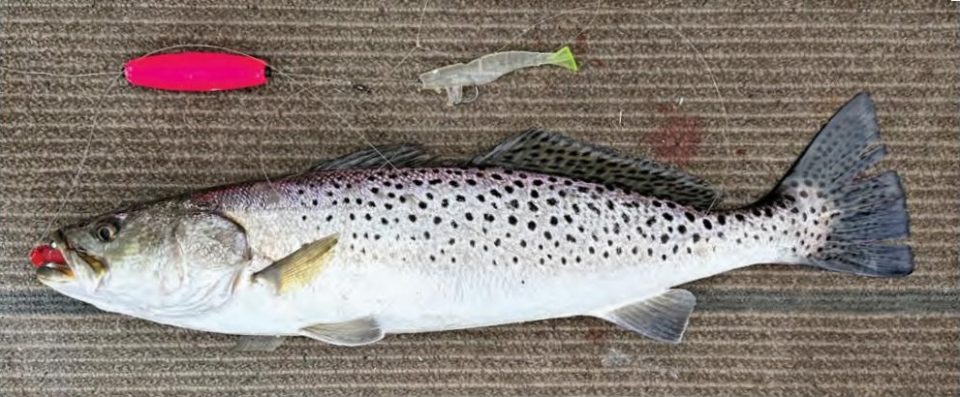
You know the fish live around structure, and if you’re gonna catch ’em, you have to fish for them where they live! They will not come to where you want to catch them, you have to go to where they live. I have quite a few places I like to fish over shell beds and down the edge of rip rap that constantly have fish on during one tide or the other, but the problem is, the bottom stays “hungry” for jigs and you need to fish close to the bottom (in my humble opinion) to get the most bites. It’s been my experience that this is the place the “sliding cork” shines brightest! A co-worker from Louisiana showed me this in the 80’s and it stuck like glue due to the rough bottom I like to fish. In the beginning, we were fishing (white) Butterbean and No Alibi bucktails under the cork, but we didn’t have the ultra realistic soft plastics like we do now back then. Those same bucktails will still catch ’em, but I just don’t have the confidence factor in a bucktail now like I have in the shrimp/jig combo. EVERYTHING eats the shrimp!!! Even picky fish will eat the shrimp. Don’t hesitate to fish a double tackle of these shrimp. This gets the bite sometimes when all else fails.
I really upped my game many years ago when I brought out the Barefoot Jig that sits perfectly horizontal under the (sliding or popping) cork, or without a cork. The jig is balanced when you tie a loop knot in the eye of the hook, and because of that, it fishes the DOA Shrimp (I like to fish) very realistically. A shrimp does not swim in the current bow heavy or stern heavy… it swims perfectly horizontal.
The sliding cork accomplishes several things:
1) It fishes the shrimp at the exact speed the tide is running.
2) It keeps the shrimp in the “strike zone” longer. For example, it will effortlessly fish a wall and/or dock pilings in a way you couldn’t possibly fish it without the cork.
3) It keeps the jig suspended barely over the bottom at an adjustable depth.
4) It allows the younger or less experienced angler to avoid being constantly hung up. This allows dad or mom to fish longer and re-rig less. It’s really simple, when you see the float go under, SET THE HOOK! Some species (especially flounder) will eat the shrimp coming upwards. This relieves the pressure off the cork and it will lay over for a second or so… SET THE HOOK!
Rod selection can make a difference, as I do NOT like a rod with 9 or 10 micro guides for fishing the sliding cork for a couple reasons. The smaller guides can affect the “bobber stop” keeper, and it can reduce the distance you can cast. I prefer a rod with less and larger guides. This has much less drag on the line allowing for longer cast and less maintenance on the keeper. I’m positive this will become a part of your arsenal if it’s not already. Give it a shot and see for yourself how effective it can make your presentation and how effective your younger anglers are at this.
For more from Tim Barefoot, visit barefootcatsandtackle.com and check out his YouTube channel.