

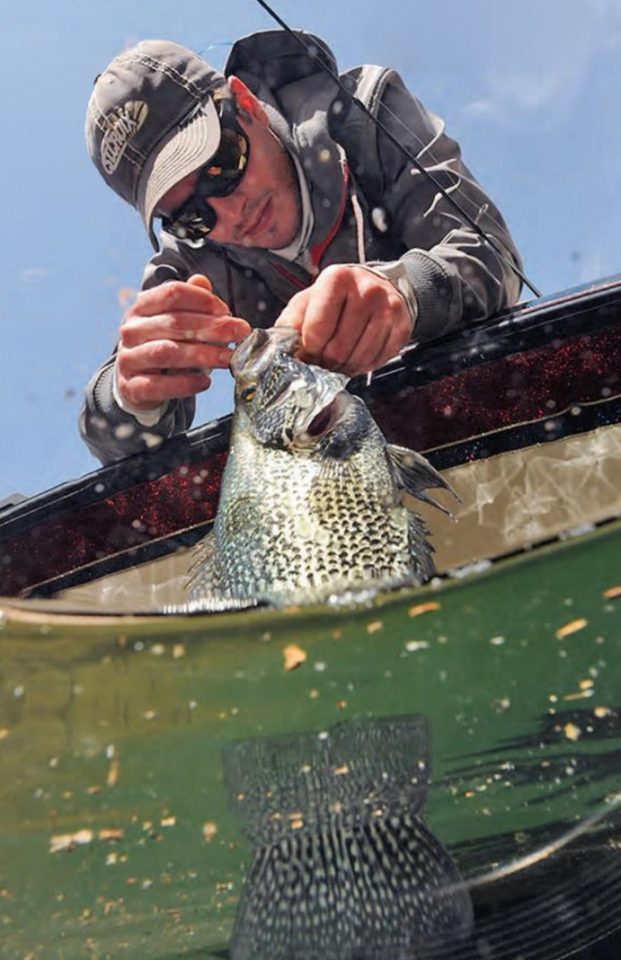
Whether for sport or for the table, panfish, especially slab crappies and hand-sized bull bluegills, are a favorite target among anglers. And when the air cools and leaves start to fall, panfish fishing heats up. Autumn can be one of the best times to catch these fish, but it comes with a unique set of challenges. Changing vegetation, dropping water temperatures, lake turnover, and baitfish migrations can make finding panfish feel like solving a seasonal puzzle.
Fortunately, by learning to read these fall cues you’ll consistently find success on the water.
As lake temperatures cool and turnover occurs, baitfish begin shifting toward shallower cover where they can find safety and warmth. This movement sets off a chain reaction. Panfish follow the food, often stacking up around cover like submerged wood or rocky structure. These areas become prime real estate for fall fishing.
Weather plays a major role, too. On cold, blustery fall days, panfish often slide deeper, becoming more predictable and easier to find with electronics. Deep basin areas in 20 to 25 feet of water can light up with schools of crappies, and sometimes bluegills, suspended and ready to bite. These deeper fish are often aggressive, making for a rewarding but ethically sensitive bite. When fishing at those depths, barotrauma becomes a real issue. Released fish often don’t survive, even if they swim off, so it’s important to harvest what you catch, regardless of size.
On the flip side, when the weather is mild and the sun is out, panfish can be found shallower, relating to weedlines, cribs, and brush piles. Healthy, vertical weeds are a magnet for fall panfish and can hold fish all the way into first ice. In fact, some of the best fall bluegill bites happen in just five to eight feet of water, especially in lakes where dense, green weedbeds persist.
Lake size also influences fall behavior. On smaller lakes, 200 acres or less, dropping water temps and decaying weeds tend to concentrate fish even more. As long as green weeds remain, panfish will hold tight to them. But as those weeds die off, the fish begin to push toward deeper structure or out into the basins in preparation for winter.
Crappies in particular become more predictable in the fall, often schooling up tighter and acting more aggressively than during other seasons. They’re easier to pattern as they transition from summer haunts to winter basins, often stopping along the way at deep weedlines or submerged timber. In lakes with ample wood or crib structure, these can be hotspots that hold large schools well into late fall.
Bluegills, while more opportunistic and scattered, still relate strongly to weed edges and shallow cover when the conditions are right. Their adaptability means they can be caught both shallow and deep, but they may take more searching to find than their crappie counterparts.
Despite the variables, the recipe for fall panfish success remains relatively consistent: follow the forage, find healthy weeds or cover, and adjust based on the weather. Whether you’re chasing aggressive schools of crappies in deep water or hunting bluegills in shallow weed patches, fall offers a window of opportunity that savvy anglers won’t want to miss.