

By Thatch Maguire, Editor at Large
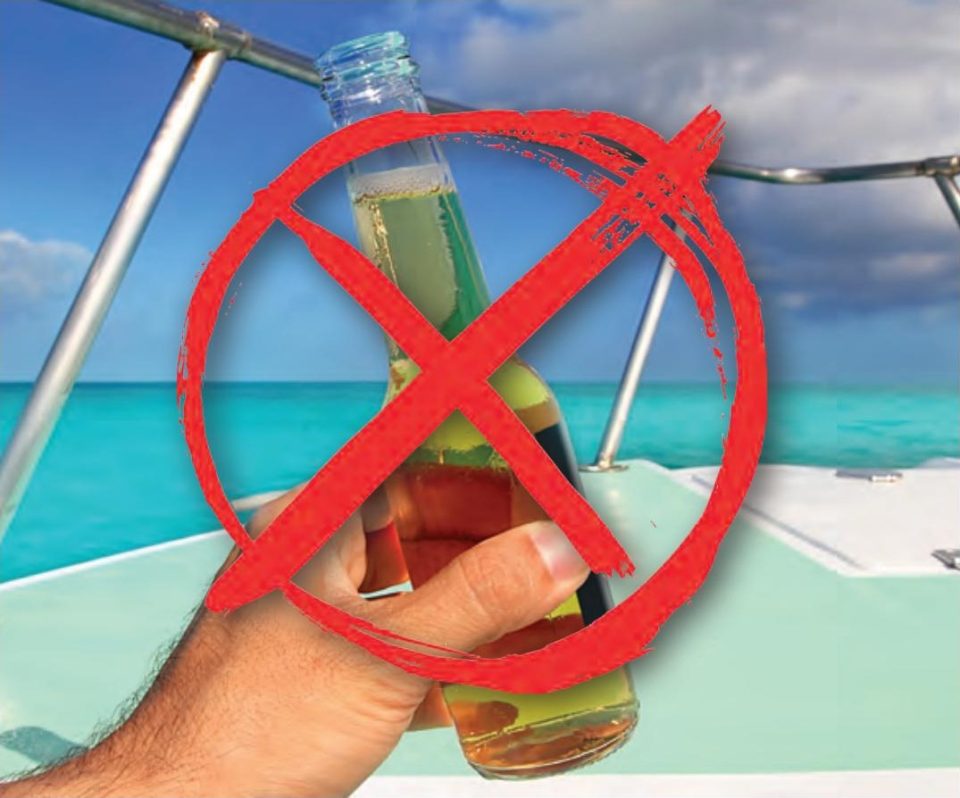
No glass bottles allowed!
Bringing glass bottles on boats might seem harmless, but it poses serious risks to safety and the environment. Whether you’re heading out for a day of fishing or a leisurely cruise, leaving glass behind is one of the simplest ways to ensure a safe and enjoyable outing.
Boats are inherently unstable environments due to constant motion from waves and wind. Glass bottles can easily fall and shatter, creating sharp, hazardous fragments. These shards can cause injuries to passengers, especially in a barefoot-friendly boating atmosphere. You can think you’ve cleaned up all the shards and small broken glass fragments and then days, even weeks later you can find yourself trying to remove a piece of glass from your or someone else’s foot. Cleaning up glass on a rocking boat is also a major pain in the arse.
If glass bottles accidentally end up overboard, and they often do, they can have long-lasting effects on aquatic ecosystems. Broken glass can harm marine life and disrupt habitats, while intact bottles may linger for centuries, contributing to waterway pollution.
Glass is far less durable than alternatives like aluminum or plastic. In a boating setting, where space is often limited, and items are jostled, the risk of breakage is high. Replacing glass with reusable bottles or cans not only eliminates this risk but also reduces waste.
For a safer and eco-friendlier boating experience, opt for non-glass alternatives. A variety of durable, reusable options, such as stainless-steel bottles or lightweight plastic containers, are designed to withstand the rigors of life on the water. Leave the glass at home and enjoy your time on the water without the worry of injury or environmental harm or really pissing off the boat owner. Put very simply: “Don’t bring glass on my or anyone else’s boat!”