

SAY GOODBYE TO WINTER… SAY HELLO TO SPRING!!! Due to all the closures on those endangered gags, American reds and flounder March could be a very challenging month for bringing fish home, but we must learn to change our tactics As our Marines would say… “adapt and overcome”! God bless these brave warriors! and all our military personnel and their families!!!
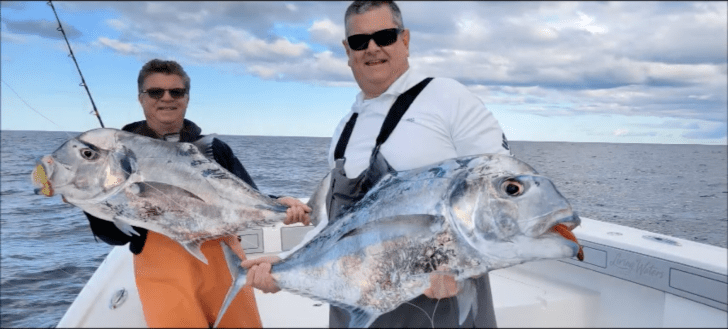
March will be the time to go deep and fish for Wahoo, African Pompano, B-liners and trigger fish to fill the grocery cart. It’s going to be a long ride to find 68+ degree water now due to the extremely cold temperatures of February. However, you always have nearshore Black Seabass. The Black Seabass is right at the very top of my preferred fish to eat, however, you are restricted by closures of everything else. Pay close attention to the rules and assume you are being watched by drones. This is the new enforcement. You are not going to be checked offshore often but there are more drones out there watching you than you think.
Wahoo will be along the edge of the warm water along with the Kings, Blackfins, dolphin, sailfish, etc. etc., but the B-liners and triggers can withstand cooler temperatures. As I said before, this is a prime time to target African Pompano out on the edge. I would keep at least a couple rods equipped with jigs to throw at surface busting and/or fish marking on the recorder between 50 and 100 feet deep. These fish could be anything from Blackfin to Wahoo. It’s always a good idea to be able to fish a bait at least 50 to 100’ deep. For all the die hard trollers out there a lot of you may have noticed that the troll bite dies around 9:30 to 10 o’clock in the morning. This is because anything with a large eye, for example, Yellowfin, Blackfin and Wahoo don’t have Maui Jims, but they regulate how much sunlight they absorb with depth. After the sun shines its bright rays on the surface, they will descend to the depths and keep an eye on everything above them. They will follow the squid to the surface after dark and follow with them back down after daylight, but not all the way back to the bottom. This is why I suggest putting a suspended bait down 75 to 100’ deep (as shown in photo) and continue your drift and jig baits on or near the bottom while keeping the light line out. This takes real effort from the entire crew. You must dedicate one person to keeping the light line(s) fished properly to avoid getting tangled in other lines.
The African Pompano are highly vulnerable to that Squid Jig and or flutter jigs. While I am talking about African Pompano, I will put in a shameless plug for Captain Rick Croson of Living Waters Guide Service. There is no one that I know of any better at this game than Captain Rick.
As you drift down the edge, keep a bait in the mid column and light line(s) on or near the surface and you will come home with a lot of wonderful dinners.
All the best fishing.