


By: Alex Baumann
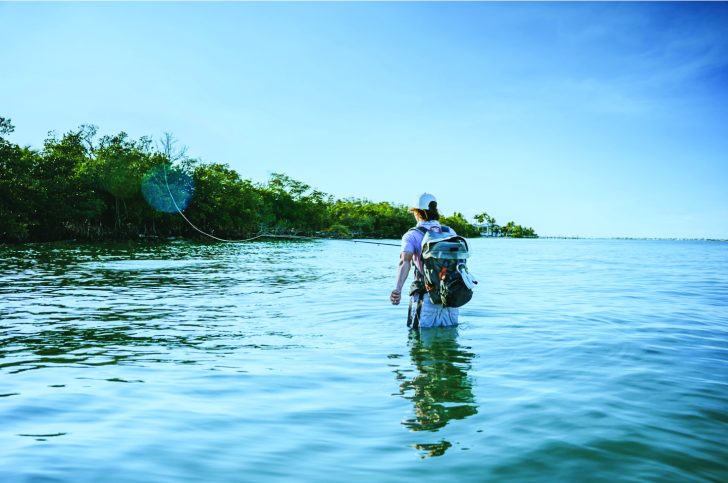 March fly fishing around Sanibel Island is not really about chasing one specific species. It is about understanding movement. As winter fades and spring starts to settle in, the shallow water ecosystem begins to shift all at once. Fish, bait, and predators are all on the move. Anglers who pay attention to where fish are going and why usually do better than those who stay locked into one target.
Water temperature is the biggest factor this time of year. March sunshine slowly warms the shallows, especially dark bottom flats, protected bays, and mangrove shorelines. These areas heat up first, pulling in baitfish and crustaceans, and the predators follow close behind. Instead of committing to one flat or shoreline, stay mobile and look for water that feels just a few degrees warmer and shows signs of life.
Tides matter just as much. As fish leave their winter holding areas and shift into spring feeding zones, they use changes in depth like travel routes. The edges of flats, troughs, creek mouths, and small drains become natural stopping points where fish pause to feed as water moves. On low tides, fish stack along these edges. As the water rises, they spread out and push shallow to hunt. Knowing this rhythm helps fly anglers stay one step ahead instead of constantly reacting.
March often brings clearer water on calm days, which makes sight fishing a big part of the experience. A shadow sliding across sand, nervous bait, or a subtle push of water can give away a fish long before you see a fin. Instead of worrying about the species right away, smart anglers focus on behavior. Is the fish cruising, sitting still, or actively feeding? Those details matter more for fly choice and presentation than the name of the fish.
Wind and weather still play a role, but March is usually more forgiving than winter. Lighter winds and steadier conditions open up more water, especially in the backcountry of Pine Island Sound. When the breeze does pick up, deeper edges and protected mangrove shorelines continue to hold fish that are on the move. What makes March special on Sanibel is that patterns start to repeat. Fish move shallow with warmth, slide deeper when it cools off, and follow bait through predictable paths. Anglers who take the time to notice these movements, instead of chasing reports, start to see how the whole system works together.
March on Sanibel, fly fishing becomes less about what you are casting to and more about understanding the why and when happening beneath the surface. To learn my fly fishing techniques, contact me directly at 704-999-0571 and let me show you how I do it!